
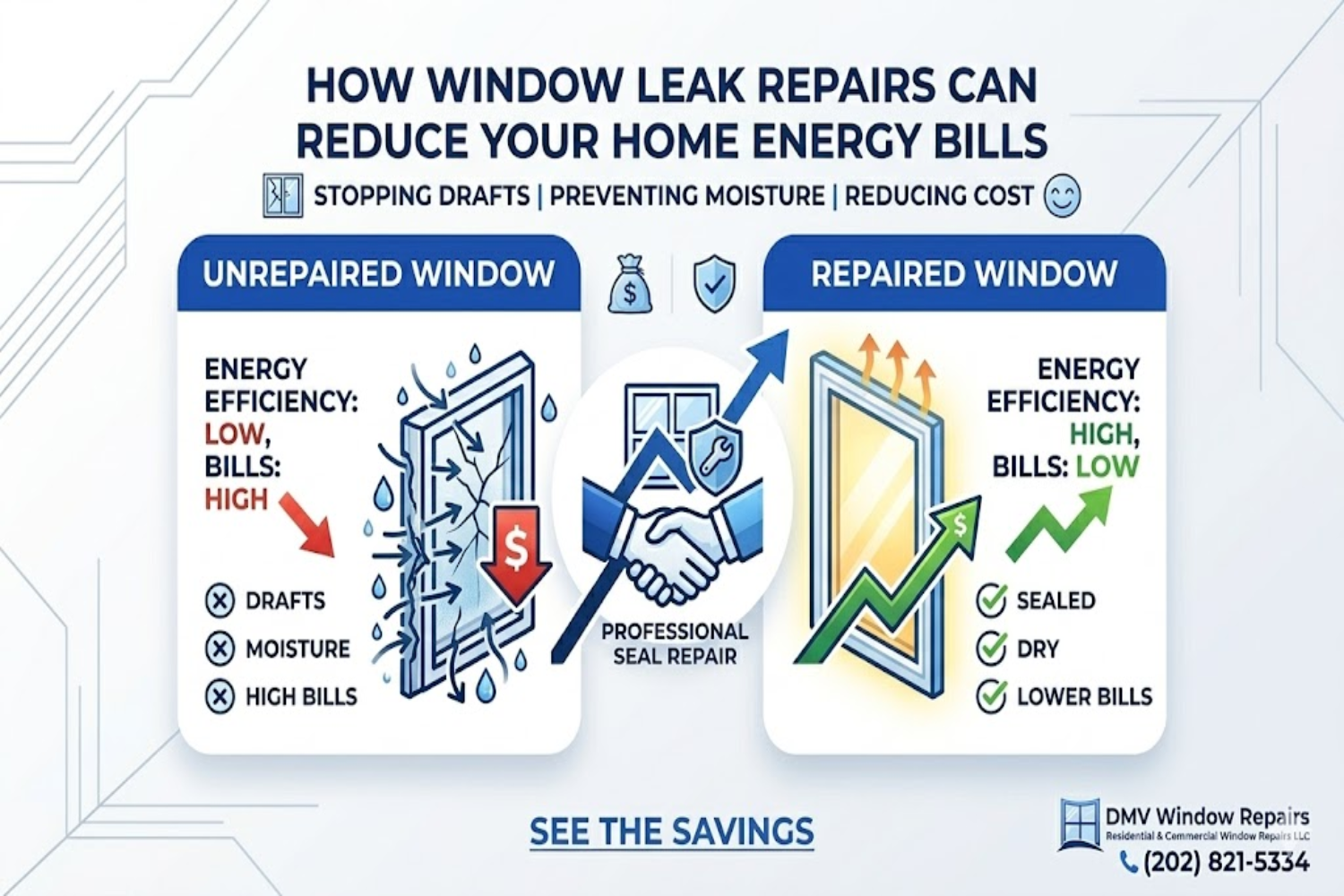
Window leaks quietly drain energy from homes by allowing conditioned air to escape while unconditioned outside air infiltrates, forcing heating and cooling systems to operate longer and harder than necessary. Drafts near windows create uneven temperatures, compelling thermostats to cycle frequently and consume extra electricity or fuel. Water intrusion from leaks adds humidity issues that make rooms feel clammy in summer or overly dry in winter, further straining HVAC performance.
Simple repairs like recaulking, replacing weatherstripping, or fixing failed seals often deliver quick, noticeable reductions in monthly utility costs. Homeowners who address these leaks promptly enjoy more consistent indoor comfort without constant temperature adjustments. Energy savings compound over seasons, turning small upfront investments into substantial long-term financial benefits. In areas with pronounced seasonal temperature variations, such as Woodbridge VA, sealing window leaks proves particularly effective at stabilizing bills year-round.
Drafts near windows create uneven temperatures, compelling thermostats to cycle frequently and consume extra electricity or fuel. Water intrusion from leaks adds humidity issues that make rooms feel clammy in summer or overly dry in winter, further straining HVAC performance. Simple repairs like recaulking, replacing weatherstripping, or fixing failed seals often deliver quick, noticeable reductions in monthly utility costs. Homeowners who address these leaks promptly enjoy more consistent indoor comfort without constant temperature adjustments.
The Direct Connection Between Window Leaks and Higher Energy Costs
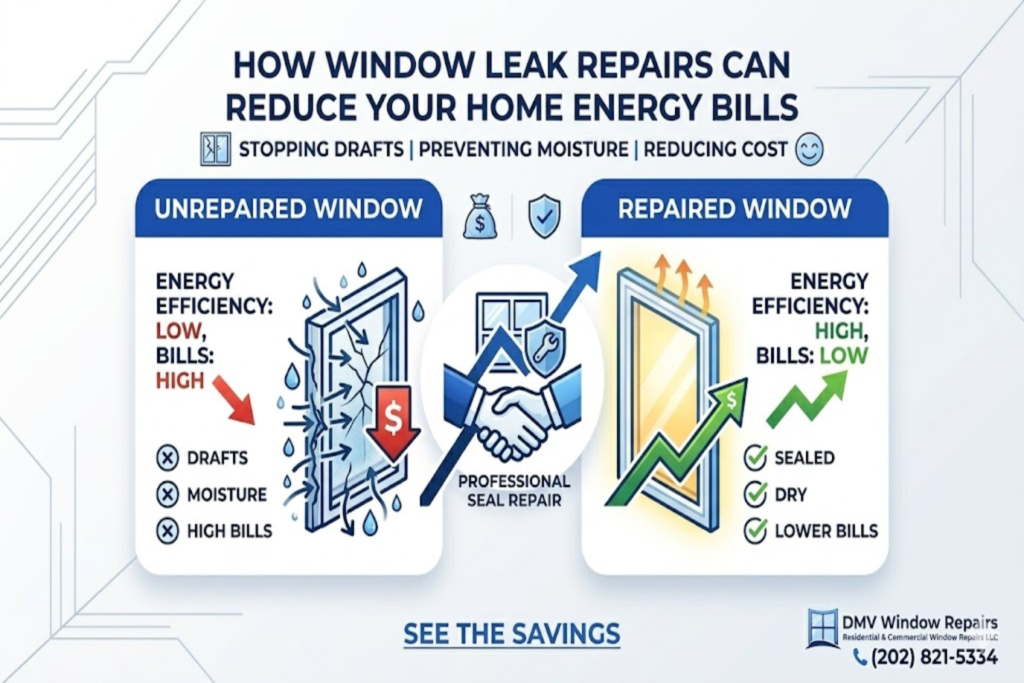
Leaky windows permit uncontrolled air exchange that bypasses the home’s insulation system entirely. Heated air escapes during winter while cold air enters, requiring furnaces to run excessively to compensate. In summer, cool air leaks out as hot, humid air infiltrates, overloading air conditioners. The U.S. Department of Energy estimates that heat gain and loss through windows accounts for 25-30% of residential heating and cooling energy use, with leaks exacerbating this significantly. Even minor gaps around frames or between sashes contribute disproportionately because they create constant, 24-hour energy loss. Addressing leaks restores the building envelope’s integrity, allowing HVAC systems to maintain set temperatures more efficiently.
Window leaks quietly drain energy from homes by allowing conditioned air to escape while unconditioned outside air infiltrates, forcing heating and cooling systems to operate longer and harder than necessary. Drafts near windows create uneven temperatures, compelling thermostats to cycle frequently and consume extra electricity or fuel. Water intrusion from leaks adds humidity issues that make rooms feel clammy in summer or overly dry in winter, further straining HVAC performance.
How Air Leaks Around Windows Waste Energy
Air leaks function like open vents, exchanging indoor conditioned air with outdoor temperatures continuously. This infiltration/exfiltration cycle forces heating or cooling equipment to work harder to recover lost energy. Drafts near windows create perceptible cold spots in winter and hot zones in summer, prompting occupants to raise or lower thermostats further. Over time, this inefficiency accumulates into higher consumption of electricity, natural gas, or oil. Sealing these pathways dramatically reduces the workload on mechanical systems.
Window leaks quietly drain energy from homes by allowing conditioned air to escape while unconditioned outside air infiltrates, forcing heating and cooling systems to operate longer and harder than necessary. Drafts near windows create uneven temperatures, compelling thermostats to cycle frequently and consume extra electricity or fuel. Water intrusion from leaks adds humidity issues that make rooms feel clammy in summer or overly dry in winter, further straining HVAC performance.
Quantifying Energy Loss from Typical Window Leaks
- Small gaps equivalent to a few square inches can mimic the effect of leaving a window partially open. S
- tudies show air leaks around windows and doors contribute to 10-20% of total home energy waste in many residences.
- Fixing them often yields immediate bill reductions as systems no longer compensate for constant air exchange.
Real-World Impact on Monthly Utility Bills
Homeowners frequently report noticeable drops in heating bills after sealing window leaks, sometimes by 10-15% during peak seasons. Summer cooling costs decrease similarly when hot air infiltration stops. Savings vary by climate, home size, and leak severity but consistently prove worthwhile.
Common Window Leak Repairs and Their Energy-Saving Mechanisms
Basic repairs target the most frequent leak sources: deteriorated caulk, worn weatherstripping, failed insulated glass seals, and misaligned frames. Each fix blocks air pathways, restores thermal barriers, and prevents moisture-related efficiency losses. These interventions are often low-cost and high-impact.
Window leaks quietly drain energy from homes by allowing conditioned air to escape while unconditioned outside air infiltrates, forcing heating and cooling systems to operate longer and harder than necessary. Drafts near windows create uneven temperatures, compelling thermostats to cycle frequently and consume extra electricity or fuel. Water intrusion from leaks adds humidity issues that make rooms feel clammy in summer or overly dry in winter, further straining HVAC performance.
Recaulking Exterior Window Frames
Applying fresh, high-quality exterior caulk seals gaps where frames meet siding or brick. This prevents rainwater entry and air infiltration along perimeters. Proper caulking reduces drafts significantly while protecting against water damage.
Replacing or Adding Weatherstripping
- Weatherstripping fills gaps around operable sashes, casings, and thresholds.
- Compression, V-strip, or foam types create tight seals when windows close.
- Renewing this material stops most sash-related leaks effectively.
Addressing Failed Insulated Glass Units (IGUs)
Fogging between panes indicates seal failure, allowing gas escape and moisture entry. Replacing the IGU restores insulation properties and eliminates associated energy loss.
Adjusting and Lubricating Window Mechanisms
Sticking or misaligned windows leave unintended gaps. Cleaning tracks, lubricating hardware, and realigning sashes improve closure tightness and reduce air exchange.
Step-by-Step Guide to Identifying and Repairing Window Leaks
Start with visual inspections on windy or rainy days to spot drafts or water stains. Use simple tests like incense smoke or hand-feel along edges to locate leaks precisely. Prioritize high-impact areas like sashes and perimeters first. Gather basic tools: caulk gun, weatherstripping, utility knife, and cleaner. Clean surfaces thoroughly before applying new materials for maximum adhesion and durability.
Performing Effective Leak Detection Tests
Light incense near frames and watch smoke movement on breezy days. Feel for cold currents with hands around edges and sills. Check for daylight visible around closed windows in darkened rooms. These methods pinpoint exact leak locations quickly.
Choosing the Right Materials for Lasting Repairs
Select exterior-grade silicone or polyurethane caulk for perimeter sealing. Opt for durable foam-backed or vinyl weatherstripping rated for windows. Use high-performance tapes for temporary or supplemental fixes. Quality materials ensure repairs withstand weather cycles effectively.
Expected Energy Savings from Window Leak Repairs
Sealing air leaks around windows and doors typically reduces heating and cooling costs by 5-15%, according to ENERGY STAR and Department of Energy guidelines. Combined with insulation improvements, savings often reach 10-20% annually. Individual results depend on leak extent, home efficiency, and climate. Many homeowners recoup repair costs within 1-3 years through lower bills.
Factors Influencing Actual Savings Amounts
Homes with multiple leaky windows see higher percentage reductions after repairs. Severe drafts yield more dramatic improvements than minor gaps. Colder or hotter climates amplify savings potential noticeably.
Calculating Potential Payback Periods
Divide total repair costs by estimated annual savings to determine payback time. Simple caulking and stripping projects often pay back in under a year. More extensive fixes like IGU replacement take 3-7 years typically.
Overview of Window Leak Repairs and Energy Benefits Table
| Repair Type | Typical Cost Range (per window) | Primary Energy-Saving Mechanism | Estimated Annual Savings Potential | Payback Period Estimate |
| Recaulking Exterior Frames | $20–$80 | Blocks perimeter air & water infiltration | 5–10% on heating/cooling | 6–18 months |
| Weatherstripping Replacement | $30–$150 | Seals sash & operable gaps | 7–12% overall | 1–2 years |
| IGU Seal Failure Replacement | $200–$600 | Restores insulated gas fill & thermal break | 10–20% in affected areas | 3–7 years |
| Frame Adjustment & Lubrication | $50–$200 | Improves closure tightness | 5–15% from reduced drafts | 1–3 years |
| Combined Minor Fixes | $100–$400 total home | Addresses multiple leak sources | 10–15% average | 1–3 years |
Immediate Benefits Beyond Energy Savings
Repaired windows eliminate uncomfortable drafts, creating more uniform room temperatures year-round. Reduced noise infiltration improves indoor peace and quiet. Better humidity control decreases mold risks and enhances air quality noticeably. Families experience greater overall comfort without thermostat battles. Window leaks quietly drain energy from homes by allowing conditioned air to escape while unconditioned outside air infiltrates.
forcing heating and cooling systems to operate longer and harder than necessary. Drafts near windows create uneven temperatures, compelling thermostats to cycle frequently and consume extra electricity or fuel. Water intrusion from leaks adds humidity issues that make rooms feel clammy in summer or overly dry in winter, further straining HVAC performance.
Long-Term Financial and Environmental Advantages
Consistent repairs extend window lifespan, delaying expensive full replacements. Lower energy consumption reduces household carbon footprint meaningfully. Utility bill stability provides budgeting predictability. Enhanced home efficiency boosts resale value when selling.
Window leaks quietly drain energy from homes by allowing conditioned air to escape while unconditioned outside air infiltrates, forcing heating and cooling systems to operate longer and harder than necessary. Drafts near windows create uneven temperatures, compelling thermostats to cycle frequently and consume extra electricity or fuel. Water intrusion from leaks adds humidity issues that make rooms feel clammy in summer or overly dry in winter, further straining HVAC performance.
Choosing Professional vs. DIY Window Leak Repairs
DIY suits minor caulking, weatherstripping, and adjustments with basic skills. Professionals handle complex IGU replacements, extensive water damage, or structural issues reliably. Weigh time, tools, and warranty needs when deciding approach.
Window leaks quietly drain energy from homes by allowing conditioned air to escape while unconditioned outside air infiltrates, forcing heating and cooling systems to operate longer and harder than necessary. Drafts near windows create uneven temperatures, compelling thermostats to cycle frequently and consume extra electricity or fuel. Water intrusion from leaks adds humidity issues that make rooms feel clammy in summer or overly dry in winter, further straining HVAC performance.
Conclusion:
Window leaks quietly drain energy from homes by allowing conditioned air to escape while unconditioned outside air infiltrates, forcing heating and cooling systems to operate longer and harder than necessary. Drafts near windows create uneven temperatures, compelling thermostats to cycle frequently and consume extra electricity or fuel. Water intrusion from leaks adds humidity issues that make rooms feel clammy in summer or overly dry in winter, further straining HVAC performance.
Window leaks quietly drain energy from homes by allowing conditioned air to escape while unconditioned outside air infiltrates, forcing heating and cooling systems to operate longer and harder than necessary. Drafts near windows create uneven temperatures, compelling thermostats to cycle frequently and consume extra electricity or fuel. Water intrusion from leaks adds humidity issues that make rooms feel clammy in summer or overly dry in winter, further straining HVAC performance.
FAQs:
How much can sealing window leaks realistically lower my monthly energy bills?
Most homeowners see 5-15% reductions in heating and cooling costs after sealing leaks, translating to $20–$100+ monthly savings depending on home size and climate. ENERGY STAR estimates average 10% overall from air sealing efforts. Results appear quickly, often within the first full season post-repair.
Are window leak repairs worth the effort if my bills aren’t extremely high?
Yes—even moderate leaks waste noticeable energy continuously. Small fixes like caulking cost little but prevent cumulative losses. Comfort improvements and prevented damage add value beyond direct savings.
What is the cheapest way to start reducing energy loss from leaky windows?
Begin with weatherstripping around sashes and doors plus exterior caulking gaps. These low-cost materials ($20–$100 total) often deliver the quickest, most noticeable bill reductions for minimal investment.
Do failed insulated glass seals cause as much energy waste as drafty frames?
Absolutely—fogged double-pane units lose most insulating gas, reducing efficiency dramatically. Replacing IGUs restores performance and yields higher savings than frame-only leaks in many cases.
How long does it take for energy savings to show up after repairs?
Savings often appear on the very next utility bill cycle, especially during peak heating or cooling seasons. Full effects become clear over 6–12 months as seasonal variations stabilize.
Can window leak repairs help with both winter heating and summer cooling bills?
Yes—sealing prevents heat loss in winter and heat gain in summer equally. Balanced year-round savings make these fixes highly effective across climates.
What mistakes should I avoid when repairing window leaks myself?
Avoid using interior caulk outdoors, skipping surface cleaning before application, or choosing low-quality materials. Improper techniques lead to short-lived fixes and recurring problems.
When should I consider professional help instead of DIY for window leaks?
Opt for pros if leaks involve rotted frames, failed IGUs, extensive water damage, or multiple windows. Experts ensure proper materials and techniques for lasting results.
Do energy-efficient window upgrades offer more savings than basic leak repairs?
Upgrades provide greater long-term efficiency but cost far more upfront. Basic repairs deliver strong initial savings at fraction of replacement expense.
How can I verify that my window leak repairs actually reduced energy use?
Compare utility bills from similar weather periods before and after repairs. Monitor thermostat runtime or use a home energy monitor for precise before/after data.