
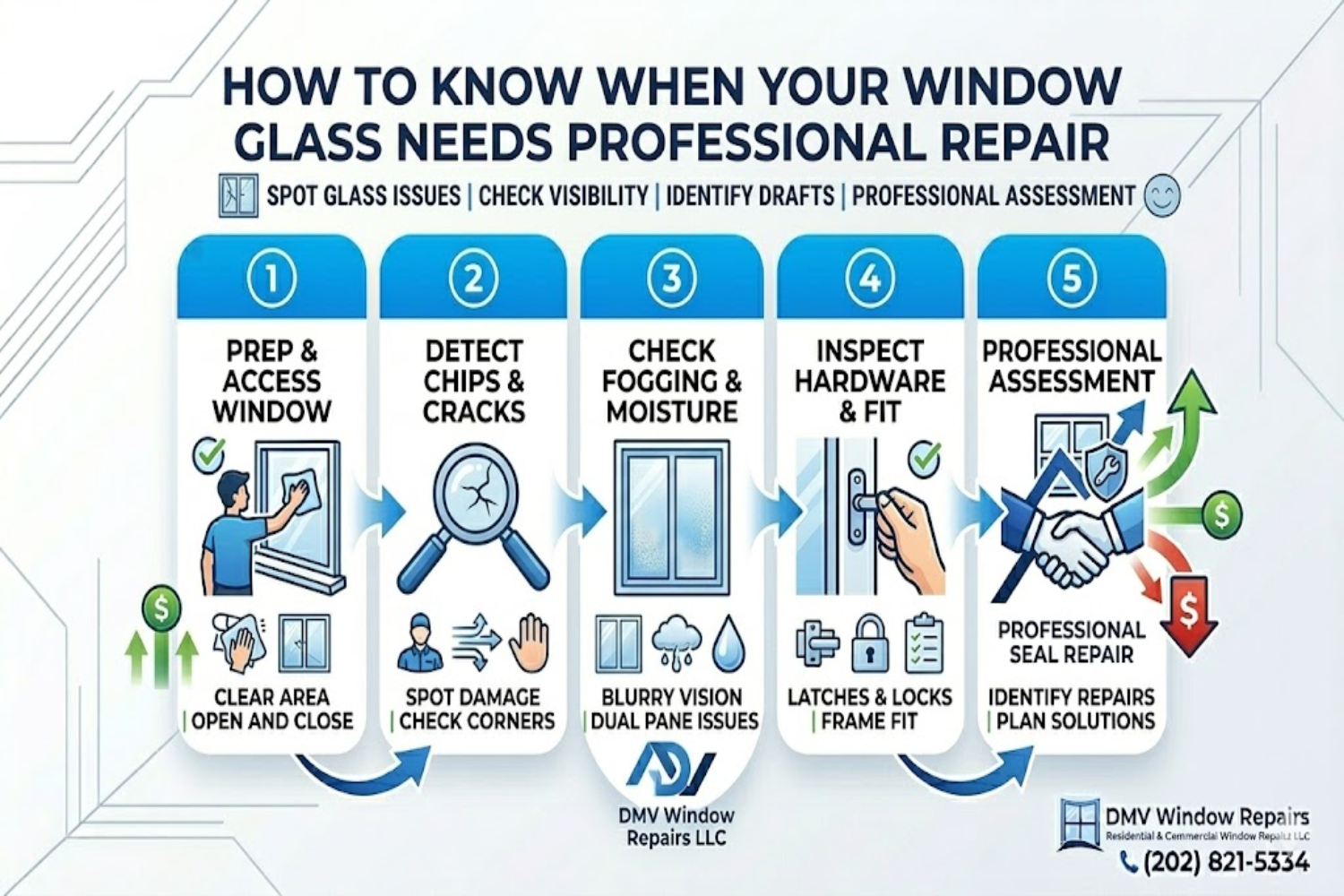
Window glass issues often start subtly but can quickly escalate into major problems affecting energy efficiency comfort safety and home value if ignored. Recognizing the signs that indicate your window glass requires professional repair rather than simple DIY fixes helps homeowners avoid wasted effort temporary solutions and potential further damage. Common indicators include visible damage internal fogging unusual performance drops or structural concerns that go beyond surface cleaning or basic sealing.
Professional repair becomes necessary when problems involve insulated glass unit (IGU) failure frame integrity compromise or safety hazards that demand specialized tools materials and expertise. Attempting complex repairs without proper knowledge risks incomplete restoration injury or voiding warranties on newer windows. Timely professional intervention restores thermal performance acoustic insulation clarity and structural soundness while preventing secondary issues like mold rot or water intrusion.
Understanding these warning signs empowers informed decisions between minor maintenance DIY attempts and calling certified technicians for lasting results. In Woodbridge VA where seasonal humidity temperature swings and occasional storms accelerate glass and seal deterioration many homeowners discover these indicators early through regular observation saving significant costs long-term.
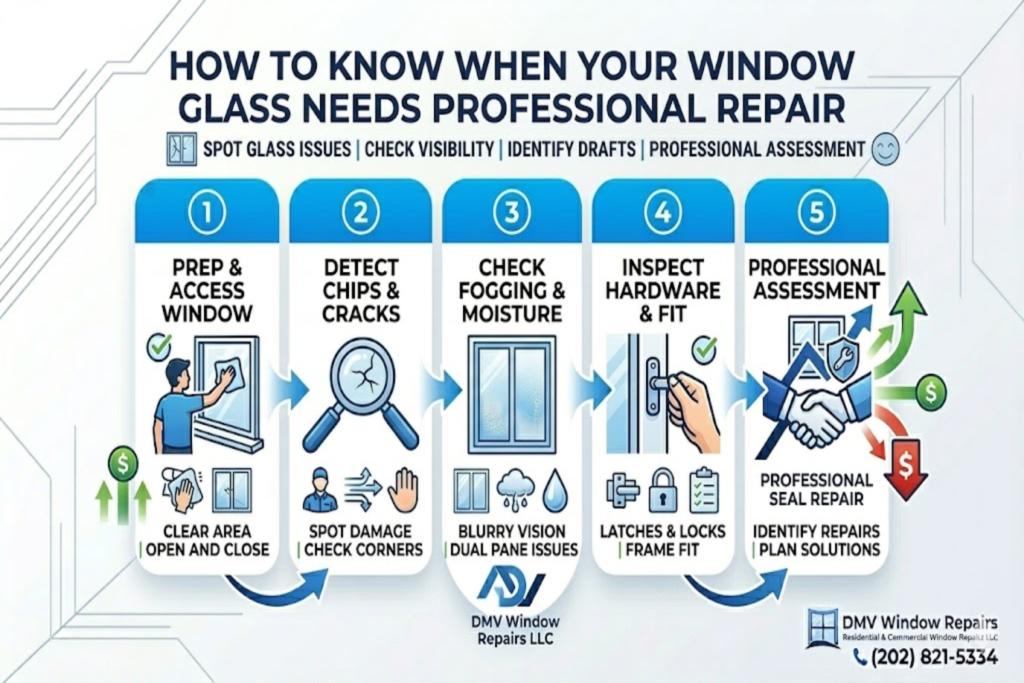
Visible Damage That Signals Professional Attention
Cracks chips scratches or breaks in window glass represent the most obvious red flags requiring immediate evaluation especially when they compromise structural integrity or safety. Even hairline cracks can spread rapidly due to thermal stress wind pressure or minor impacts turning small flaws into major failures. Professional assessment determines whether glass can be repaired patched or needs complete replacement to prevent shattering injury or water entry. Ignoring visible damage often leads to leaks energy loss and expensive interior repairs.
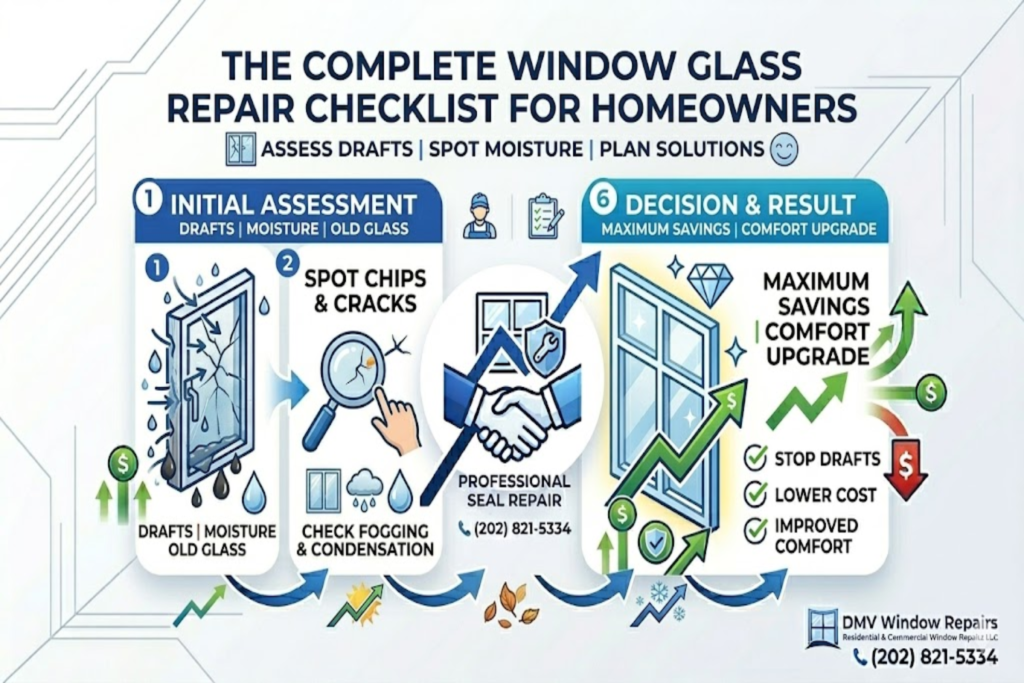
Knowing when window glass needs professional repair saves homeowners from ineffective DIY attempts recurring problems safety risks and unnecessary expenses by addressing root causes promptly and correctly. Key indicators include internal fogging visible cracks chips deep scratches persistent drafts unexplained energy loss noise increase condensation patterns hardware strain and age-related performance decline.
Types of Cracks Requiring Expert Repair
Stress cracks from thermal expansion contraction appear as straight or curved lines often starting at edges or corners and spreading inward. Impact cracks show starburst radial patterns or bullseye shapes from objects striking the glass.
Chips Scratches and Surface Imperfections
Deep chips expose the inner layers risking moisture ingress while deep scratches distort vision reduce strength and allow further cracking under stress or cleaning pressure.
Internal Fogging and Condensation Between Panes
- The most common sign of failing insulated glass units remains permanent fog haze cloudiness or condensation trapped between double or triple panes that cannot be wiped away from either side.
- This indicates primary seal breakdown allowing air moisture and sometimes gas to enter destroying insulation properties.
- Professional repair or IGU replacement restores clarity thermal performance and prevents ongoing moisture-related damage.
- Knowing when window glass needs professional repair saves homeowners from ineffective DIY attempts recurring problems safety risks and unnecessary expenses by addressing root causes promptly and correctly.
- Key indicators include internal fogging visible cracks chips deep scratches persistent drafts unexplained energy loss noise increase condensation patterns hardware strain and age-related performance decline.
Why Fogging Means Seal Failure
When edge seals fail moisture condenses on cold inner surfaces creating persistent fog that worsens with temperature changes and reduces visibility energy efficiency significantly.
Associated Risks of Ignoring Internal Fog
Chronic internal moisture promotes mold growth within the unit edge corrosion spacer degradation and eventual complete seal collapse leading to leaks and frame damage.
Performance Drops Indicating Glass Issues
Sudden or gradual changes in window performance such as increased drafts higher energy bills difficulty operating sashes unusual noise transmission or uneven room temperatures often trace back to glass-related problems. These symptoms suggest compromised insulation gas loss or seal integrity requiring professional diagnosis. Knowing when window glass needs professional repair saves homeowners from ineffective DIY attempts recurring problems safety risks and unnecessary expenses by addressing root causes promptly and correctly. Key indicators include internal fogging visible cracks chips deep scratches persistent drafts unexplained energy loss noise increase condensation patterns hardware strain and age-related performance decline.
Drafts Cold Spots and Energy Loss
Noticeable cold air movement near windows cold glass surfaces or rising utility bills point to failed gas fills or seals allowing heat transfer and air leakage.
Noise Increase and Visibility Reduction
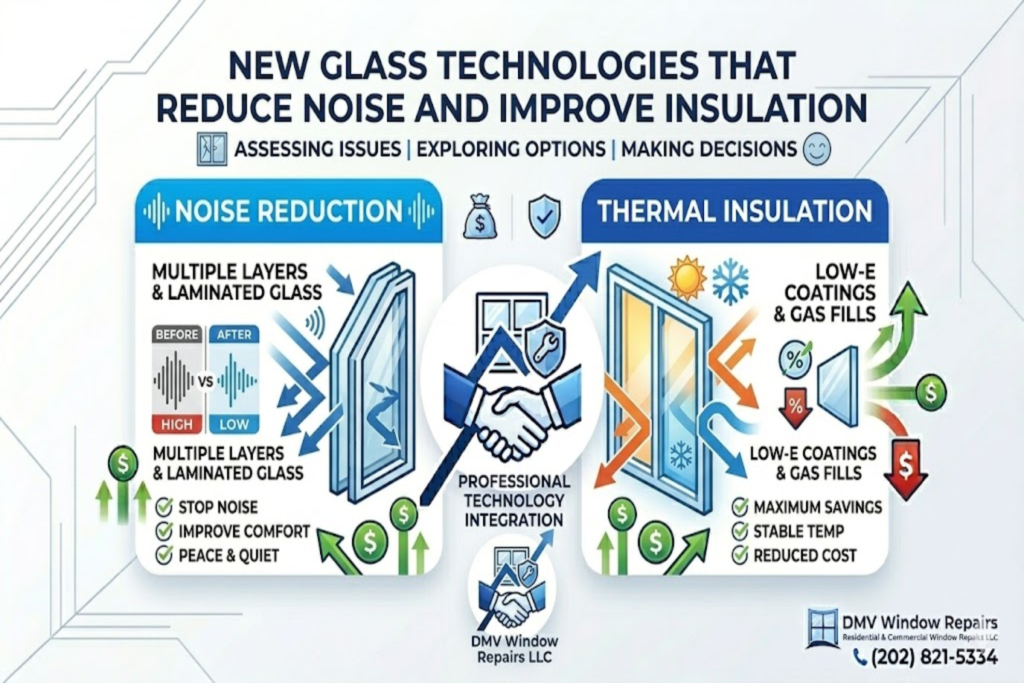
Louder external sounds penetrating indoors distorted reflections hazy views or reduced light transmission indicate glass delamination coating failure or internal degradation.
Hardware and Frame Problems Linked to Glass Issues
Window hardware strain difficulty latching cranking or sliding often results from warped frames bowed glass or seal failure putting uneven pressure on components. Professional evaluation identifies whether glass stress contributes to frame misalignment or vice versa.Knowing when window glass needs professional repair saves homeowners from ineffective DIY attempts recurring problems safety risks and unnecessary expenses by addressing root causes promptly and correctly. Key indicators include internal fogging visible cracks chips deep scratches persistent drafts unexplained energy loss noise increase condensation patterns hardware strain and age-related performance decline.
Signs of Frame or Hardware Stress
Windows that bind stick refuse to close tightly or show gaps at meeting rails frequently indicate glass expansion contraction or seal issues affecting overall alignment.
Safety Concerns with Compromised Glass
Loose rattling panes cracked tempered glass or failing laminated layers create shatter risks especially in high-wind areas or homes with children/pets.
Comparison of DIY vs Professional Repair Indicators
| Symptom / Indicator | Likely DIY Fix Possible | Strongly Indicates Professional Repair Needed | Why Professional Intervention Is Essential |
| Minor surface scratches | Polishing compounds possible | Deep scratches distorting vision | Risk of further cracking weakening glass |
| Hairline edge crack | Rarely sealable effectively | Any visible crack spreading | Thermal stress will propagate crack rapidly |
| Internal fog in one corner | No effective DIY | Fog across entire pane or multiple windows | Seal failure requires IGU replacement or advanced restoration |
| Occasional interior condensation | Ventilation/dehumidifier may help | Persistent between panes | Indicates permanent seal breach gas loss |
| Small exterior chip | Resin filler for cosmetic | Chip deeper than 1/16 inch or near edge | Moisture ingress risk structural weakness |
| Draft near window but no fog | Weatherstripping/caulk possible | Draft persists after sealing attempts | Likely internal seal or glass issue |
| Window difficult to open/close | Lubrication hardware adjustment | Binding after adjustments | Possible frame warp glass bow or seal stress |
| Sudden loud noise penetration | Add weatherstripping | Noise increase without visible gaps | Glass delamination or seal failure reducing acoustic performance |
| Water stains on interior sill | Clean and seal exterior | Recurring stains after sealing | Ongoing leak from failed IGU or frame rot |
| Glass feels wavy/distorted | No DIY | Noticeable optical distortion | Possible delamination temper failure or manufacturing defect |
Safety Hazards That Demand Immediate Professional Repair
Any sign of glass instability shattered tempered glass fragments spiderweb cracking in laminated glass or bowing that threatens detachment requires urgent professional attention to prevent injury property damage or forced emergency replacement.Knowing when window glass needs professional repair saves homeowners from ineffective DIY attempts recurring problems safety risks and unnecessary expenses by addressing root causes promptly and correctly. Key indicators include internal fogging visible cracks chips deep scratches persistent drafts unexplained energy loss noise increase condensation patterns hardware strain and age-related performance decline.
Shattering or Spontaneous Breakage Risk
Tempered glass can explode into small pebbles when stressed while laminated glass may delaminate allowing sheets to separate creating fall hazards.
Structural Integrity Concerns
Bowed cracked or delaminating glass compromises window unit stability especially in larger picture windows or doors exposing the home to wind water and security risks.
When Energy Efficiency Loss Points to Glass Repair
A noticeable spike in heating or cooling costs cold glass surfaces in winter hot spots in summer or poor performance despite clean filters and sealed frames often signals failing IGUs requiring professional restoration or replacement. Knowing when window glass needs professional repair saves homeowners from ineffective DIY attempts recurring problems safety risks and unnecessary expenses by addressing root causes promptly and correctly. Key indicators include internal fogging visible cracks chips deep scratches persistent drafts unexplained energy loss noise increase condensation patterns hardware strain and age-related performance decline.
Measuring Efficiency Decline
Compare utility bills before/after suspected issues use thermal leak detectors or feel for temperature differences near windows versus interior walls.
Professional Diagnostic Tools
Technicians employ thermal imaging moisture meters gas analyzers and pressure tests to confirm whether glass seals or coatings have failed.
Age of Windows as a Key Indicator
Windows over 15–20 years old frequently exhibit seal degradation even without obvious symptoms making professional inspection wise before problems become severe. Knowing when window glass needs professional repair saves homeowners from ineffective DIY attempts recurring problems safety risks and unnecessary expenses by addressing root causes promptly and correctly. Key indicators include internal fogging visible cracks chips deep scratches persistent drafts unexplained energy loss noise increase condensation patterns hardware strain and age-related performance decline.
Typical Lifespan Expectations
Standard double-pane IGUs last 10–25 years depending on quality exposure and maintenance with premium units often reaching 30+ years.
Proactive Inspection for Older Windows
Schedule professional evaluation every 3–5 years for homes with windows over 15 years to catch emerging issues early.
Professional vs DIY Repair Decision Guide
Minor exterior scratches surface cleaning or basic weatherstripping often suit DIY while internal fog cracks deeper than surface level persistent leaks hardware strain or energy performance drops strongly indicate professional repair for safety effectiveness and warranty preservation.
Conclusion
Knowing when window glass needs professional repair saves homeowners from ineffective DIY attempts recurring problems safety risks and unnecessary expenses by addressing root causes promptly and correctly. Key indicators include internal fogging visible cracks chips deep scratches persistent drafts unexplained energy loss noise increase condensation patterns hardware strain and age-related performance decline. These signs often point to insulated glass unit failure seal breakdown or structural stress beyond simple fixes requiring specialized tools expertise and replacement components.
Professional intervention restores clarity insulation acoustic properties safety and energy efficiency delivering long-term comfort and value. In Woodbridge VA where weather variations hasten seal and glass deterioration recognizing these signs early helps many maintain reliable leak-free windows. Woodbridge VA residents benefit significantly from timely professional assessments. Woodbridge VA continues seeing fewer severe window issues through proactive recognition of repair needs.
Frequently Asked Questions (FAQs)
What is the most common sign that window glass needs professional repair?
Permanent fog haze or condensation trapped between double or triple panes that cannot be cleaned from either side almost always indicates failed seals requiring professional IGU restoration or replacement.
Can small cracks in window glass be repaired without replacing the whole pane?
Small surface chips may be filled cosmetically but any crack penetrating through one pane spreading or near edges usually requires full professional replacement for safety and performance.
How can I tell if internal fogging is serious enough for professional help?
If fog persists across most or all of the pane worsens with temperature changes or appears in multiple windows it signals widespread seal failure needing expert evaluation.
Does a sudden increase in energy bills mean my window glass needs repair?
Often yes especially if accompanied by cold/hot spots near windows drafts or foggy glass indicating lost insulation from gas escape or seal breakdown.
When should I call a professional instead of trying DIY window repair?
Call professionals for any internal fogging cracks deeper than surface level persistent leaks hardware strain bowing glass or when DIY sealing fails to stop drafts.
Is cloudy glass between panes always a sign of needing replacement?
Usually yes as it results from permanent moisture ingress after seal failure though some advanced professional drying techniques may help in early-stage cases.
How do I know if my window glass is delaminating or failing structurally?
Wavy distorted appearance bubbling layers separated sheets or visible interlayer issues indicate delamination requiring immediate professional replacement for safety.
Can professional repair restore foggy windows to clear condition?
In many cases yes through desiccant injection moisture evacuation or complete IGU replacement professionals can eliminate fog and restore clarity performance.
What safety risks come from ignoring damaged window glass?
Cracked glass may shatter spontaneously especially tempered creating injury hazards while failing laminated glass can fall out exposing the home to weather and intruders.
How often should I have windows professionally inspected for potential repair needs?
Every 3–5 years for homes with windows over 10 years old or immediately upon noticing any fogging cracks drafts unusual noise or energy performance changes.