
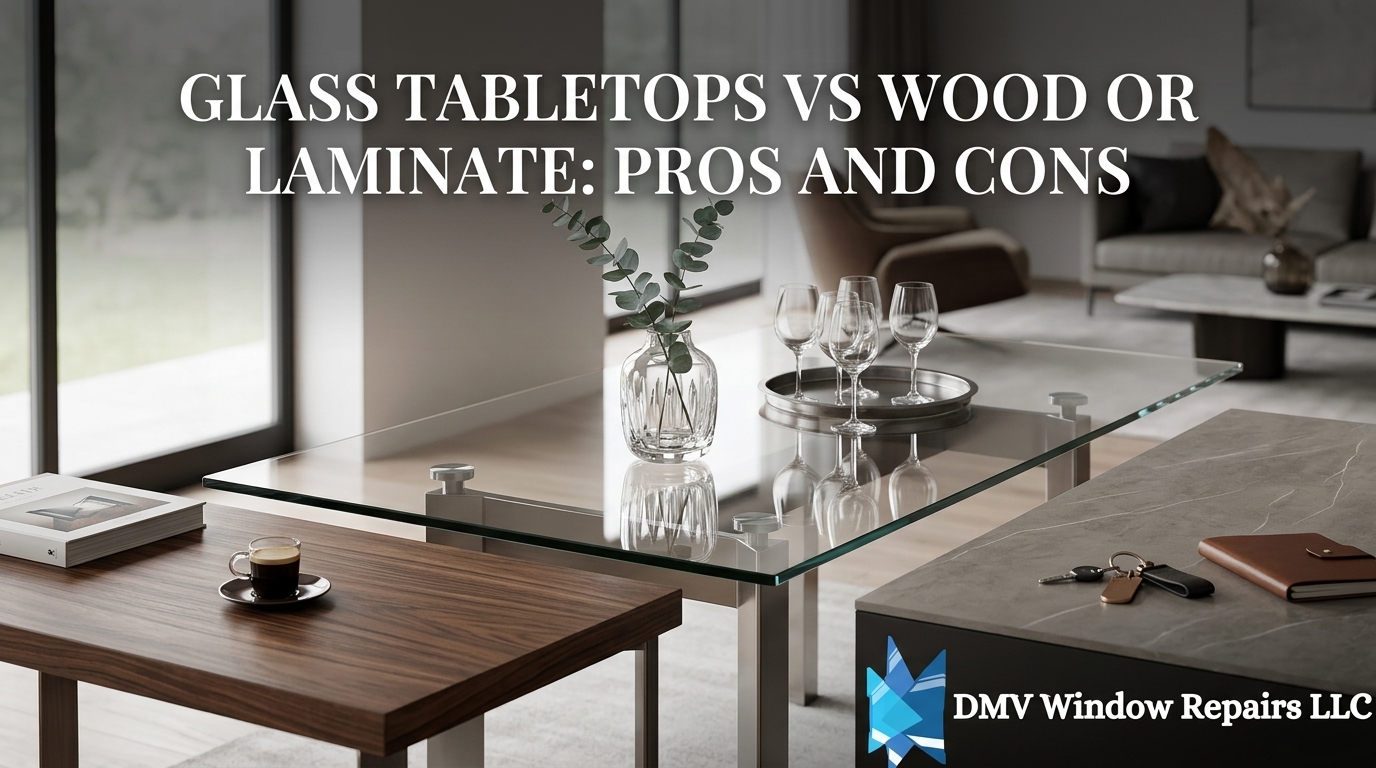
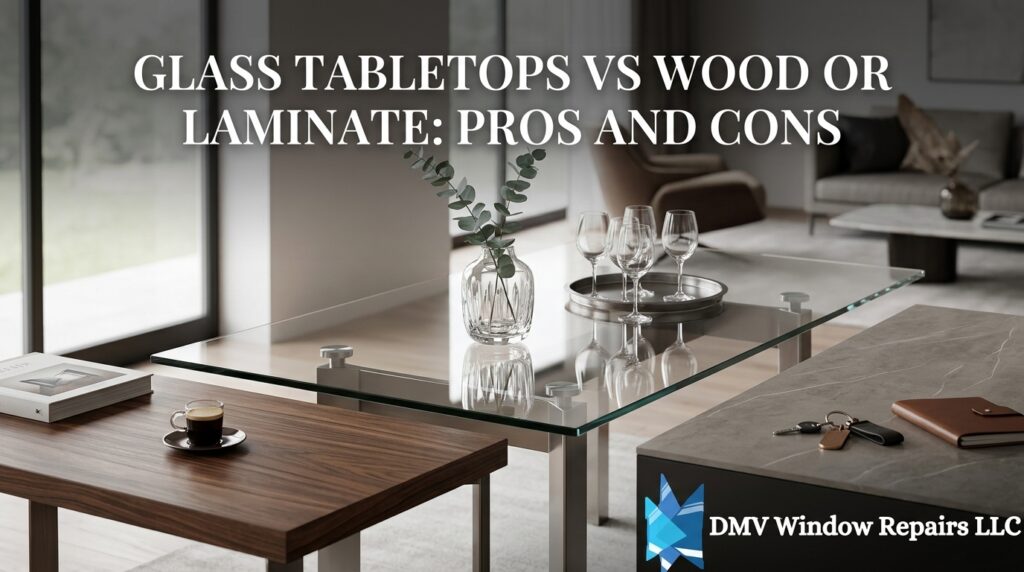
Choosing between glass, wood, and laminate tabletops significantly impacts both the visual style and practical performance of your furniture. Glass brings modern transparency, effortless cleaning, and a sense of spaciousness while reflecting light beautifully throughout the room. Solid wood offers timeless warmth, natural grain patterns, and heirloom-quality durability that improves with age. Laminate provides budget-friendly versatility with countless printed patterns mimicking wood, stone, marble, or solid colors.
Each material excels in different areas—glass for contemporary minimalism, wood for organic luxury, and laminate for everyday practicality. Understanding the detailed pros and cons helps match the right surface to your lifestyle, budget, family needs, and design vision. No single material wins universally; the best choice depends on priorities like maintenance, safety, longevity, and aesthetic goals. Homeowners in Woodbridge VA frequently weigh these options when updating dining areas, home offices, or family rooms to balance modern appeal with real-world durability.
Visual Style and Aesthetic Impact
Glass tabletops create an airy, open feeling by allowing light to pass through and reflect off underlying floors or rugs. Wood introduces rich organic texture and natural variation that warms any space instantly. Laminate delivers consistent color and pattern reproduction at a fraction of solid material cost. The choice dramatically influences whether a room feels sleek and contemporary, cozy and traditional, or casually practical. Modern interiors often favor glass for its clean lines, while traditional or rustic homes lean toward genuine wood character.
Laminate bridges the gap when budget or specific looks are priorities. Clear glass reveals fine scratches more visibly than frosted or back-painted versions. Solid wood accepts scratches that can be sanded out during refinishing. High-pressure laminate resists scratching exceptionally well in daily use. Laminate generally performs best against visible scratch accumulation.
Glass Aesthetic Advantages
Completely transparent glass makes rooms appear larger and brighter instantly. Low-iron ultra-clear versions eliminate green tint for crystal-like purity. Reflective surface bounces ambient and natural light enhancing overall illumination. Minimalist frames or bases keep visual focus on the surface itself. Glass suits ultra-modern, Scandinavian, and contemporary designs perfectly.
Wood and Laminate Aesthetic Strengths
Solid wood grain tells a unique story with knots, color variation, and aging patina. Different species (oak, walnut, mahogany, teak) offer distinct tones and figures. Laminate replicates exotic woods, stones, or concrete convincingly. Printed patterns remain uniform without natural defects. Both provide warmth and texture glass cannot match naturally.
Durability and Longevity Comparison
Durability determines how well each surface withstands daily wear, impacts, spills, and time. Tempered glass resists scratching better than most expect but can chip on edges. Solid wood withstands decades of use when properly finished and maintained. Laminate handles scratches and stains exceptionally well but cannot be refinished once damaged. Expected lifespan varies dramatically based on quality, thickness, and care routine.
Clear glass reveals fine scratches more visibly than frosted or back-painted versions. Solid wood accepts scratches that can be sanded out during refinishing. High-pressure laminate resists scratching exceptionally well in daily use. Laminate generally performs best against visible scratch accumulation.
Glass Durability Profile
Tempered glass withstands significant impact without shattering into dangerous shards. Surface hardness resists most household scratches effectively. Edges remain vulnerable to chipping if struck directly. Proper thickness prevents noticeable flexing under load. With care, glass tabletops last 15–30 years easily.
Wood vs Laminate Durability
Solid hardwood tables endure generations with periodic refinishing. Softwoods dent more readily but accept stain beautifully. High-pressure laminate resists scratches, burns, and stains remarkably well. Laminate cannot be sanded or refinished once top layer wears through. Quality solid wood generally outlasts laminate significantly.
Maintenance Requirements and Ease of Cleaning
Maintenance effort directly affects long-term satisfaction with any tabletop material. Glass requires simple wiping but shows every fingerprint and water mark. Wood demands regular dusting, occasional polishing, and periodic refinishing. Laminate needs minimal care beyond basic wiping and occasional deep cleaning. Ease of maintenance often determines the best material for busy households.
Clear glass reveals fine scratches more visibly than frosted or back-painted versions. Solid wood accepts scratches that can be sanded out during refinishing. High-pressure laminate resists scratching exceptionally well in daily use. Laminate generally performs best against visible scratch accumulation.
Glass Cleaning Reality
- Daily wiping with microfiber and ammonia-free cleaner keeps glass pristine.
- Fingerprints and smudges appear instantly on clear surfaces.
- Water marks from glasses require immediate attention to prevent etching.
- Coasters and placemats reduce visible marks dramatically.
- Overall cleaning remains quick and straightforward.
Wood and Laminate Care Differences
Wood benefits from regular dusting and occasional furniture polish application. Spills must be wiped promptly to prevent staining or water rings. Periodic waxing or oiling maintains finish quality. Laminate wipes clean instantly with mild soap solution. No special products or refinishing needed throughout its lifespan.
Safety Considerations for Households
Safety remains paramount especially in homes with children, elderly residents, or pets. Tempered glass breaks into small rounded pebbles rather than sharp shards. Solid wood presents no breakage risk but can splinter if damaged. Laminate offers no shattering hazard and resists burns better than untreated wood. Edge profiles and thickness influence perceived safety significantly.
Clear glass reveals fine scratches more visibly than frosted or back-painted versions. Solid wood accepts scratches that can be sanded out during refinishing. High-pressure laminate resists scratching exceptionally well in daily use. Laminate generally performs best against visible scratch accumulation.
Glass Safety Advantages
Fully tempered glass meets strict safety standards (ANSI Z97.1 / CPSC 16 CFR 1201). Rounded or pencil-polished edges minimize injury risk from bumps. Thick glass reduces flexing that could cause stress cracks. Laminated options hold together even when impacted. Safety features make glass surprisingly family-friendly.
Wood and Laminate Safety Notes
Solid wood avoids any shattering risk completely. Splinters occur only when finish wears through or damage happens. Laminate presents no sharp-edge or breakage concerns. Both materials feel warmer to touch than glass in cold weather. Overall safety remains comparable with proper edge treatment.
Heat Resistance and Hot Item Performance
Heat tolerance determines whether hot dishes, mugs, or laptops can be placed directly on the surface. Glass handles temperature changes well but extreme shocks risk cracking. Wood withstands moderate heat but darkens or burns without protection. Laminate resists heat better than most expect but scorches under prolonged high temperature.
Clear glass reveals fine scratches more visibly than frosted or back-painted versions. Solid wood accepts scratches that can be sanded out during refinishing. High-pressure laminate resists scratching exceptionally well in daily use. Laminate generally performs best against visible scratch accumulation.
Glass Heat Performance
Tempered glass tolerates hot plates better than annealed glass. Sudden extreme temperature differences pose greatest risk. Trivets or hot pads recommended for very hot cookware. Consistent daily use with protection causes no issues. Heat resistance remains adequate for normal tabletop applications.
Wood vs Laminate Heat Comparison
Solid wood darkens or burns when exposed to direct high heat. Protective pads essential under hot items always. High-pressure laminate withstands brief hot contact better than wood. Prolonged heat causes scorching or bubbling of laminate surface. Neither matches specialized heat-resistant materials.
Cost Comparison Across Materials
Initial price varies dramatically based on size, thickness, material quality, and fabrication details. Glass tabletops fall in middle price range for custom work. Solid hardwood represents premium investment with lasting value. Laminate offers lowest upfront cost with excellent performance-to-price ratio. Long-term value considers replacement frequency and refinishing needs.
Clear glass reveals fine scratches more visibly than frosted or back-painted versions. Solid wood accepts scratches that can be sanded out during refinishing. High-pressure laminate resists scratching exceptionally well in daily use. Laminate generally performs best against visible scratch accumulation.
| Material / Feature | Initial Cost Range (48×30 in. example) | Long-Term Maintenance Cost | Expected Lifespan | Replacement Frequency | Aesthetic Longevity |
| Standard Clear Tempered Glass | $250–$550 | Low ($20–$50/year) | 15–30 years | Rare | Excellent |
| Low-Iron Ultra-Clear Glass | $350–$750 | Low ($20–$50/year) | 20–35 years | Very Rare | Outstanding |
| Back-Painted or Printed Glass | $450–$950 | Low ($20–$50/year) | 15–25 years | Rare | Excellent |
| Solid Hardwood (Oak/Walnut) | $600–$1,800+ | Medium ($80–$200/year) | 30–100+ years | Very Rare | Improves with Age |
| Engineered / Veneered Wood | $400–$1,200 | Medium ($60–$150/year) | 15–40 years | Occasional | Good |
| High-Pressure Laminate | $150–$450 | Very Low ($10–$30/year) | 10–25 years | Occasional | Consistent |
| Economy Laminate / Melamine | $80–$250 | Very Low ($10–$20/year) | 5–15 years | Frequent | Fades over Time |
Environmental and Sustainability Factors
Solid wood from certified sustainable forests offers excellent eco-credentials when responsibly sourced. Glass production requires significant energy but lasts decades reducing replacement frequency. Laminate often uses recycled paper core and resin binders of varying environmental impact. Low-VOC finishes on wood and eco-friendly laminates improve indoor air quality. Longevity and recyclability contribute to overall sustainability score.
Eco-Friendly Choices
FSC-certified hardwoods ensure responsible forest management practices. Recycled-content laminate reduces virgin material demand. Durable glass minimizes replacement waste over decades. Low-iron glass production improvements lower energy consumption. Sustainable choices align environmental values with design preferences.
Combining Materials for Hybrid Designs
Many designers create stunning hybrid tabletops blending strengths of multiple materials. Glass over wood bases showcases beautiful grain while providing easy-clean surface. Wood frames with glass inserts maintain warmth with modern lightness. Laminate bases with glass tops offer budget-friendly durability and elegance. Mixed-material designs maximize visual interest and practical performance simultaneously.
Clear glass reveals fine scratches more visibly than frosted or back-painted versions. Solid wood accepts scratches that can be sanded out during refinishing. High-pressure laminate resists scratching exceptionally well in daily use. Laminate generally performs best against visible scratch accumulation.
Conclusion
Glass, wood, and laminate tabletops each bring distinct advantages that suit different priorities perfectly. Glass excels in light reflection, easy cleaning, and contemporary style while requiring careful handling. Solid wood delivers unmatched warmth, heirloom durability, and natural beauty with higher maintenance needs. Laminate provides exceptional value, scratch resistance, and pattern variety at the lowest long-term cost. The right material depends entirely on your lifestyle, design direction, budget, and family requirements.
Thoughtful comparison ensures the chosen tabletop enhances both daily living and home aesthetics for many years. In Woodbridge VA, these versatile surfaces help families create beautiful, practical spaces that withstand busy schedules. Clear glass reveals fine scratches more visibly than frosted or back-painted versions. Solid wood accepts scratches that can be sanded out during refinishing. High-pressure laminate resists scratching exceptionally well in daily use. Laminate generally performs best against visible scratch accumulation.
Frequently Asked Questions
- Which tabletop material is easiest to keep clean every day?
Glass wins for everyday cleaning—just wipe with microfiber and glass cleaner. Laminate follows closely with instant spill removal using mild soap. Wood requires more care to prevent water rings and staining. Glass and laminate both resist permanent marks far better than unprotected wood.
- Is glass tabletop safe for homes with small children?
Yes, fully tempered safety glass breaks into small rounded pebbles instead of sharp shards. Rounded edge profiles further reduce injury risk from bumps. Supervision remains important with active toddlers. Overall, tempered glass ranks among safest options when properly specified.
- Does solid wood really last longer than glass or laminate?
Quality solid hardwood often outlasts both with proper refinishing every 10–20 years. Glass endures decades without refinishing but can chip on edges. Laminate typically lasts 10–25 years until surface wear becomes visible. Wood offers generational potential when well maintained.
- Will fingerprints and smudges drive me crazy on a glass tabletop?
They appear instantly on clear glass but disappear quickly with microfiber wiping. Using coasters, placemats, and daily quick wipes keeps surface pristine. Frosted or satin-etched glass hides fingerprints much better. Most owners adapt within days and appreciate easy cleaning.
- Can hot dishes be placed directly on any of these tabletop materials?
Tempered glass handles moderate heat well but trivets prevent thermal shock risk. Solid wood darkens or burns without protection—always use hot pads. High-pressure laminate withstands brief hot contact better than wood but scorches under prolonged heat. Trivets or pads recommended for all three materials.
- Which material shows scratches most easily?
Clear glass reveals fine scratches more visibly than frosted or back-painted versions. Solid wood accepts scratches that can be sanded out during refinishing. High-pressure laminate resists scratching exceptionally well in daily use. Laminate generally performs best against visible scratch accumulation.
- How much more expensive is custom glass compared to laminate?
Custom tempered glass tabletops typically cost 2–5 times more than similar-sized laminate tops. Low-iron, thicker glass, or special finishes increase price further. Solid wood falls between laminate and premium glass in cost range. Long-term durability and aesthetics often justify glass investment.
- Can laminate really look like real wood or stone convincingly?
Modern high-pressure laminate with photographic reproduction looks remarkably authentic from normal viewing distance. Textured surfaces mimic grain feel convincingly. Edges reveal printed layer on closer inspection. Quality laminate satisfies most homeowners seeking wood or stone appearance affordably.
- Does glass tabletop make a room feel colder in winter?
Glass feels cooler to touch than wood, especially in unheated rooms. However, reflective surface bounces warmth from lighting and heating back into space. Wood naturally feels warmer due to lower thermal conductivity. Difference remains minor in normally heated living areas.
- Which material holds resale value best when selling a home?
Solid hardwood tabletops often add perceived value due to timeless quality and refinishing potential. Premium custom glass impresses buyers seeking modern sophistication. High-quality laminate maintains good appearance without premium pricing. Well-maintained surfaces of any type enhance overall home appeal positively. In Woodbridge VA, updated glass or wood tabletops frequently help homes stand out during showings.
Visit our DMV Window Repairs LLC blog to explore our residential and commercial glass services for customers in Woodbridge, VA.