
Selecting the best materials and technologies for long-lasting window seals ensures superior durability energy efficiency and consistent performance over decades while minimizing maintenance and replacement costs. Modern window seals combine advanced elastomers sealants spacers gas fills and coatings engineered to withstand UV exposure thermal cycling moisture ozone wind-driven rain and mechanical stress without degrading prematurely. High-performance options like EPDM rubber silicone-based compounds hybrid polymers warm-edge spacers low-E coatings and inert gas fills such as argon or krypton create airtight insulated glass units (IGUs) that resist fogging condensation gas loss and edge failure common in older systems.
These innovations dramatically extend seal lifespan often to 20–40+ years compared to traditional materials that fail in 10–15 years due to brittleness cracking or poor adhesion. Proper material selection depends on climate window type frame material exposure level and performance goals such as maximum thermal resistance noise reduction or ultraviolet protection. Investing in premium components from reputable manufacturers pays off through lower utility bills enhanced indoor comfort reduced mold risks and preserved home value.
Professional installation and regular inspections further maximize longevity by ensuring correct application pressure equalization and early detection of any issues. In Woodbridge VA where humid summers cold winters and variable weather accelerate seal wear these advanced solutions deliver reliable long-term protection against seasonal extremes.
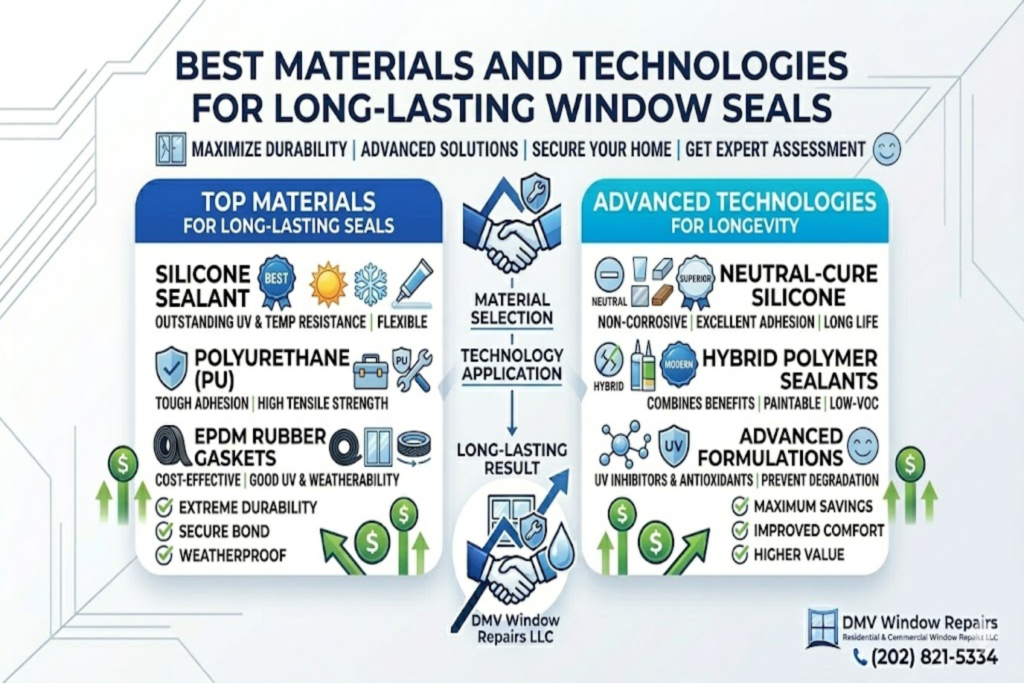
Essential Materials for Durable Window Perimeter Seals
- Window perimeter seals the exterior and interior caulking around frames require materials that remain flexible adhere strongly resist weathering and accommodate building movement without cracking or peeling.
- Traditional acrylic latex caulks offer paintability but limited longevity in exterior exposure while premium options provide superior performance.
- Choosing UV-resistant moisture-curing formulations ensures seals maintain integrity through freeze-thaw cycles intense sunlight and high humidity.
Silicone Sealants for Maximum Weather Resistance
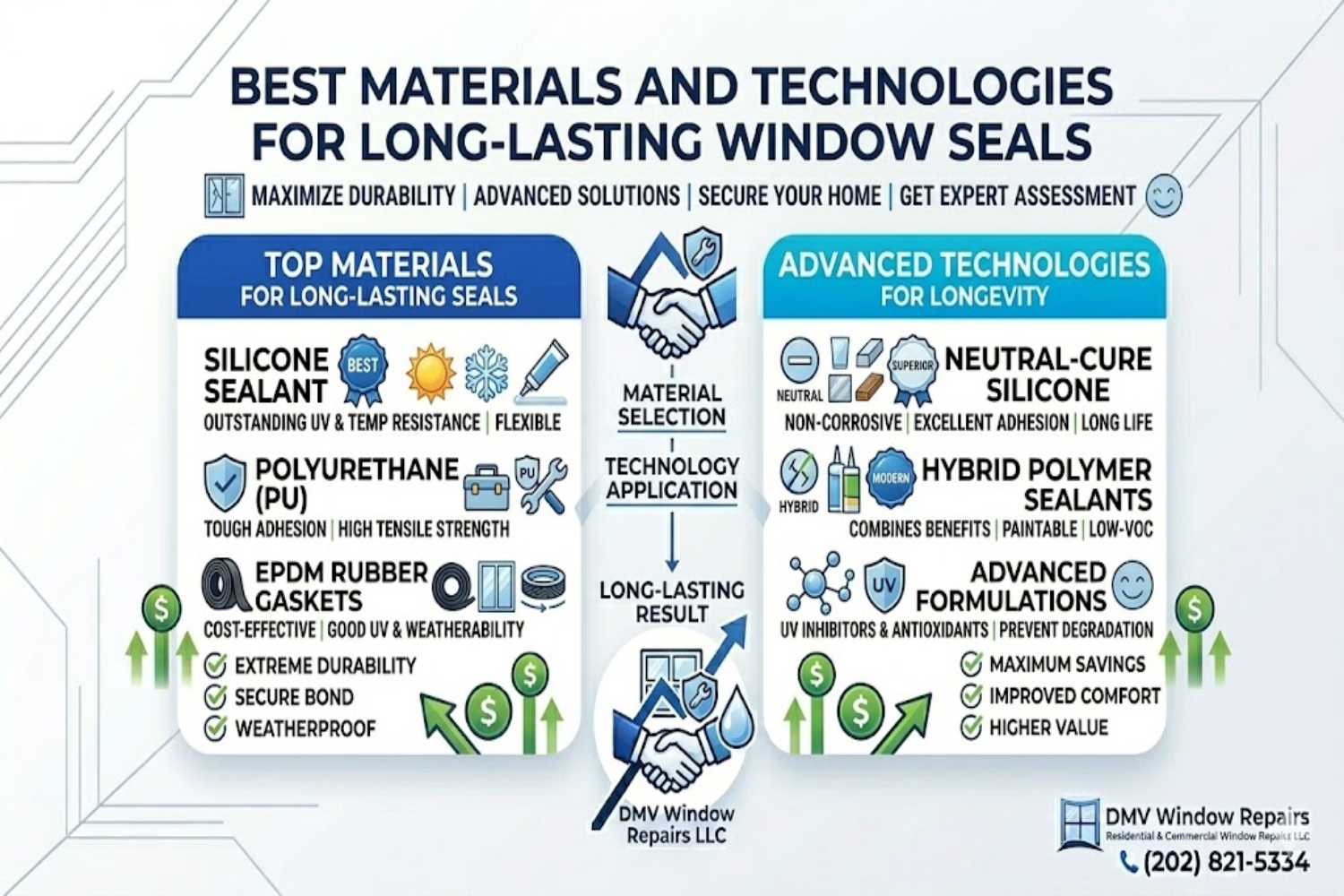
100% silicone sealants excel in exterior applications due to exceptional UV ozone and temperature resistance remaining flexible from -40°F to over 400°F without hardening or cracking. Neutral-cure silicones prevent corrosion on sensitive substrates like aluminum or coated glass while offering mold resistance ideal for high-humidity areas. These sealants form durable watertight bonds that last 20–50 years with minimal shrinkage or discoloration.
Polyurethane and Hybrid Sealants Advantages
Polyurethane sealants deliver high tensile strength and excellent adhesion to porous surfaces like wood brick or concrete making them suitable for structural joints and paintable applications. Hybrid MS polymer sealants combine polyurethane strength with silicone weatherability providing primerless adhesion UV stability non-staining properties and paintability while maintaining elasticity for high-movement areas. These hybrids often outperform traditional options in longevity and versatility.
Advanced Elastomers for Operable Window Gaskets
Gaskets and weatherstripping on moving sashes doors and casements demand materials with superior compression set recovery elasticity and abrasion resistance to maintain tight seals through thousands of cycles. Poor recovery leads to gaps drafts and energy loss while high-quality elastomers ensure consistent performance year after year.
Choosing the best materials and technologies for long-lasting window seals transforms home performance by delivering exceptional durability energy efficiency and comfort through resistant elastomers advanced sealants warm-edge spacers low-E coatings and inert gas fills. EPDM silicone hybrids polyurethane warm-edge systems and argon/krypton combinations resist environmental stresses mechanical wear and time far better than outdated options preventing fogging drafts condensation and premature failure. These innovations extend seal life dramatically reduce maintenance needs lower utility costs and enhance indoor living quality for decades.
EPDM Rubber Top Choice for Longevity
Ethylene Propylene Diene Monomer (EPDM) rubber stands out for outstanding resistance to UV ozone weathering water and extreme temperatures maintaining flexibility and sealing ability for 20+ years. EPDM gaskets resist compression set cracking and ozone degradation making them ideal for exterior exposed applications in harsh climates.
Silicone and TPV Alternatives for Specialized Needs
Silicone rubber gaskets provide extreme temperature tolerance and non-stick surfaces while Thermoplastic Vulcanizates (TPV) blend EPDM-like durability with thermoplastic processability offering excellent compression recovery elasticity and aesthetics. TPV resists marking and maintains performance in luxury or high-traffic installations.
Technologies Enhancing Insulated Glass Unit Seal Durability
Modern IGUs incorporate multiple innovations to prevent primary and secondary seal failure gas leakage moisture ingress and thermal bridging at edges. These technologies work synergistically to achieve superior longevity and energy performance. Choosing the best materials and technologies for long-lasting window seals transforms home performance by delivering exceptional durability energy efficiency and comfort through resistant elastomers advanced sealants warm-edge spacers low-E coatings and inert gas fills.
EPDM silicone hybrids polyurethane warm-edge systems and argon/krypton combinations resist environmental stresses mechanical wear and time far better than outdated options preventing fogging drafts condensation and premature failure. These innovations extend seal life dramatically reduce maintenance needs lower utility costs and enhance indoor living quality for decades.
Warm-Edge Spacers for Reduced Condensation Risk
Warm-edge spacers made from polymer composites or stainless steel with insulating cores minimize heat transfer at glass edges raising edge temperatures 1–2°F and reducing condensation risk. Unlike traditional aluminum spacers they improve durability by accommodating expansion without stressing seals.
Low-E Coatings and Inert Gas Fills
Low-emissivity (low-E) coatings reflect infrared heat while argon or krypton gas fills slow conductive heat transfer with argon providing cost-effective performance in standard gaps and krypton excelling in narrower spaces for ultra-low U-factors. Combined with high-quality PIB primary seals and silicone secondary seals these features extend IGU life significantly.
Comparison of Seal Materials and Technologies
| Material / Technology | Key Advantages | Typical Lifespan | Best Applications | Limitations / Considerations |
| 100% Silicone Sealant | UV/ozone/temp resistance mold-resistant flexible | 20–50+ years | Exterior perimeters wet areas glazing | Not paintable potential staining on porous surfaces |
| Hybrid MS Polymer Sealant | Adhesion weatherability paintable elasticity | 15–30+ years | Versatile exterior/interior high-movement | Slightly higher cost than basic polyurethane |
| Polyurethane Sealant | High strength adhesion paintable | 10–25 years | Structural joints wood/concrete frames | Less UV resistant longer cure time |
| EPDM Rubber Gaskets | Weather/ozone resistance compression recovery | 20–40+ years | Operable sashes exterior exposed areas | Chemical sensitivity in some environments |
| Silicone Rubber Gaskets | Extreme temp tolerance non-stick | 15–30+ years | High-heat or frequent movement areas | Higher cost than EPDM |
| TPV (Thermoplastic Vulcanizate) | Elasticity aesthetics durability | 15–30 years | Luxury residential commercial frames | Newer material less long-term field data |
| Warm-Edge Spacers | Reduced edge heat loss condensation resistance | Enhances IGU 20–40 years | All modern IGUs energy-efficient homes | Slightly higher initial cost |
| Low-E Coatings | Heat reflection solar control | Matches IGU lifespan | All climates energy savings focus | Requires quality manufacturing |
| Argon Gas Fill | Cost-effective insulation improvement | 15–30+ years retention | Standard double/triple glazing | Gradual loss if seals fail |
| Krypton Gas Fill | Superior performance in narrow gaps | Similar to argon | Triple glazing high-performance units | Higher cost denser gas |
Primary and Secondary Seal Systems in IGUs
High-performance IGUs use dual-seal systems with polyisobutylene (PIB) as primary seal for gas/moisture barrier and silicone or hybrid as secondary for structural bonding and weather resistance. These combinations achieve exceptional gas retention and longevity passing rigorous testing like 80+ weeks dew point stability.
Choosing the best materials and technologies for long-lasting window seals transforms home performance by delivering exceptional durability energy efficiency and comfort through resistant elastomers advanced sealants warm-edge spacers low-E coatings and inert gas fills. EPDM silicone hybrids polyurethane warm-edge systems and argon/krypton combinations resist environmental stresses mechanical wear and time far better than outdated options preventing fogging drafts condensation and premature failure. These innovations extend seal life dramatically reduce maintenance needs lower utility costs and enhance indoor living quality for decades.
Silicone Secondary Sealants
Silicone secondary sealants offer chemical stability UV resistance and flexibility creating weathertight bonds that withstand weathering without significant property change over decades.
Advanced Hot-Melt and Reactive Options
Hot-melt sealants with high-boost technology provide fast curing productivity and durability while reactive thermoplastic spacers integrate desiccant eliminating traditional components for streamlined durable IGUs.
Emerging Technologies for Future-Proof Seals
Vacuum insulated glass (VIG) aerogel-filled glazings and slim triple glazing with ultra-thin glass push boundaries for ultra-low U-factors while maintaining seal integrity through advanced edge designs. These innovations promise even longer lifespans and higher performance in demanding applications.
Choosing the best materials and technologies for long-lasting window seals transforms home performance by delivering exceptional durability energy efficiency and comfort through resistant elastomers advanced sealants warm-edge spacers low-E coatings and inert gas fills. EPDM silicone hybrids polyurethane warm-edge systems and argon/krypton combinations resist environmental stresses mechanical wear and time far better than outdated options preventing fogging drafts condensation and premature failure. These innovations extend seal life dramatically reduce maintenance needs lower utility costs and enhance indoor living quality for decades.
Vacuum Insulated Glass Potential
VIG achieves very low U-factors with thin profiles suitable for retrofits relying on hermetic seals that resist degradation better than gas-filled units in some conditions.
Aerogel and Insulation-Filled Innovations
Aerogel or honeycomb-filled cavities offer extreme insulation though currently limited in size and viewability representing future directions for seal longevity in specialized uses.
Installation and Maintenance for Maximum Longevity
Proper surface preparation cleaning priming and application technique ensure materials bond optimally while regular inspections cleaning and avoiding damage preserve performance. Professional installation guarantees correct pressure curing and compatibility.
Conclusion
Choosing the best materials and technologies for long-lasting window seals transforms home performance by delivering exceptional durability energy efficiency and comfort through resistant elastomers advanced sealants warm-edge spacers low-E coatings and inert gas fills. EPDM silicone hybrids polyurethane warm-edge systems and argon/krypton combinations resist environmental stresses mechanical wear and time far better than outdated options preventing fogging drafts condensation and premature failure. These innovations extend seal life dramatically reduce maintenance needs lower utility costs and enhance indoor living quality for decades.
Homeowners prioritizing quality components professional execution and routine care achieve reliable protection against weather extremes and maintain peak window efficiency long-term. In Woodbridge VA these advanced seal solutions prove invaluable for handling humid hot summers and cold winters effectively. Woodbridge VA homeowners benefit greatly from investing in durable technologies. Woodbridge VA sees enhanced window reliability through modern seal advancements.
Frequently Asked Questions (FAQs)
What makes EPDM rubber one of the best materials for long-lasting window seals?
EPDM offers outstanding resistance to UV ozone weathering water and temperature extremes maintaining flexibility and compression recovery for 20–40+ years without cracking or degrading significantly.
Why are silicone sealants preferred for exterior window applications?
Silicone provides exceptional UV ozone and temperature resistance mold resistance and long-term flexibility forming durable watertight bonds that last 20–50 years in harsh outdoor conditions.
How do hybrid MS polymer sealants compare to traditional polyurethane or silicone?
Hybrids combine polyurethane adhesion strength with silicone weatherability offering primerless bonding UV stability paintability and elasticity outperforming in versatility and longevity for many uses.
What advantages do warm-edge spacers provide for seal longevity?
Warm-edge spacers reduce thermal bridging at edges raise sightline temperatures minimize condensation stress on seals and enhance overall IGU durability contributing to 20–40+ year lifespans.
Is argon or krypton gas fill better for long-term window seal performance?
Argon provides cost-effective insulation with good retention in standard gaps while krypton excels in narrower spaces for superior performance both relying on high-quality seals for 15–30+ years effectiveness.
How do low-E coatings contribute to longer-lasting window seals?
Low-E coatings reflect heat reduce solar gain and thermal stress on edges/spacers helping maintain seal integrity gas retention and insulation properties over extended periods.
Can modern seal technologies prevent common IGU failures like fogging?
Yes dual-seal systems PIB primary silicone secondary warm-edge spacers and quality gas fills dramatically reduce moisture ingress and gas loss preventing fogging for decades.
What role does professional installation play in seal longevity?
Proper surface prep application pressure testing and compatibility ensure materials perform optimally avoiding premature failure and maximizing lifespan through correct execution.
Are there emerging technologies that promise even longer seal life?
Vacuum insulated glass aerogel fills and advanced reactive sealants offer potential for ultra-low U-factors and enhanced durability though currently more specialized or emerging.
How often should window seals be inspected to maintain longevity?
Biannual visual checks for cracks peeling gaps or condensation plus prompt touch-ups preserve performance with full professional assessment recommended every 5–10 years depending on exposure.