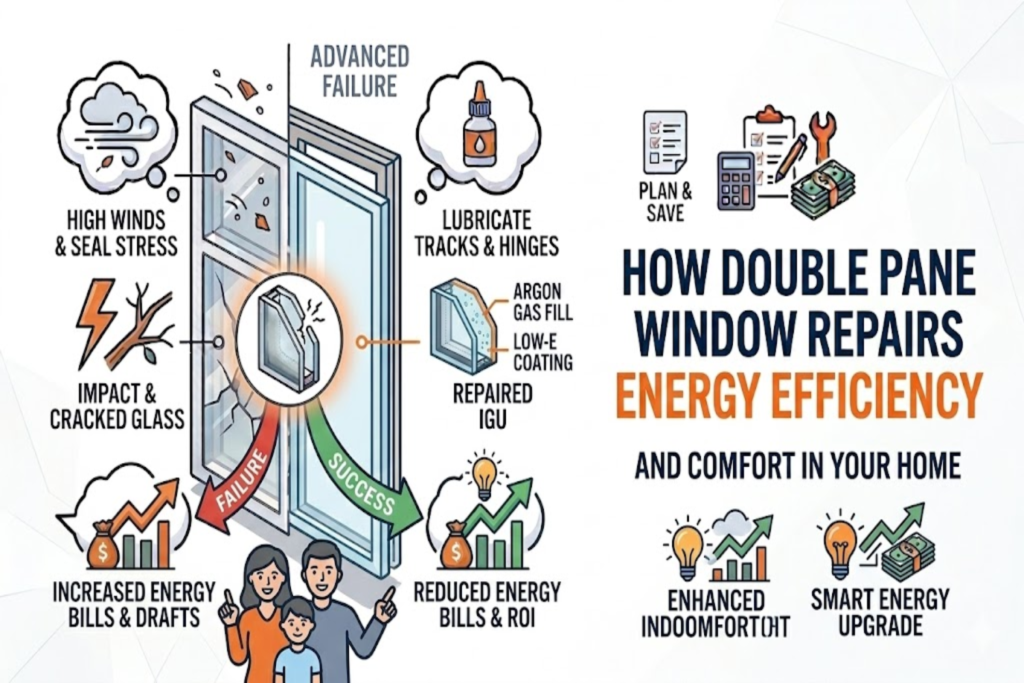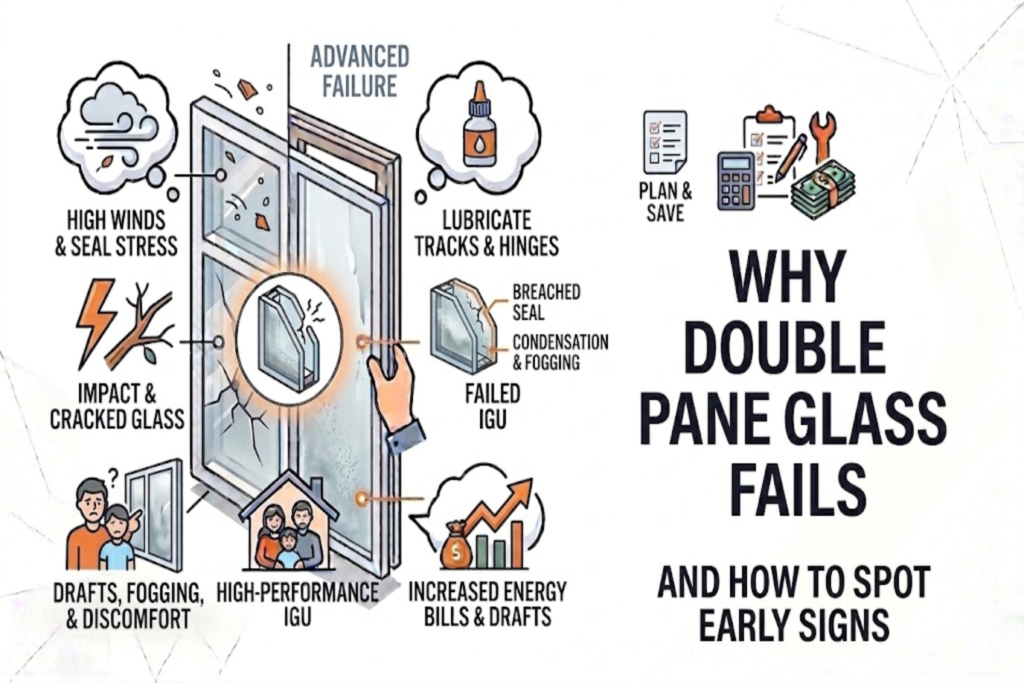

Fogging between the panes of double-glazed or insulated windows is one of the most frequent complaints homeowners have, and it almost always signals that the sealed unit has failed in some way. When moisture appears permanently trapped inside the glass layers, it destroys the thermal insulation the double-pane design was meant to provide, turning an energy-efficient window into a major source of heat loss or gain. The problem starts invisibly with tiny seal breaches and progresses to visible condensation, haze, or even water droplets that never dry. In regions with high humidity swings and temperature extremes,
fogging appears faster and causes more noticeable spikes in energy bills. Early identification of the root cause allows homeowners to choose between affordable repair options and full insulated glass unit (IGU) replacement. Ignoring fogging leads to mold risk, reduced comfort, and accelerated deterioration of surrounding frame materials. Professional diagnosis is usually required to confirm the extent of damage and the best fix. This detailed guide explains every major cause of internal fogging and the practical ways to address each one effectively.
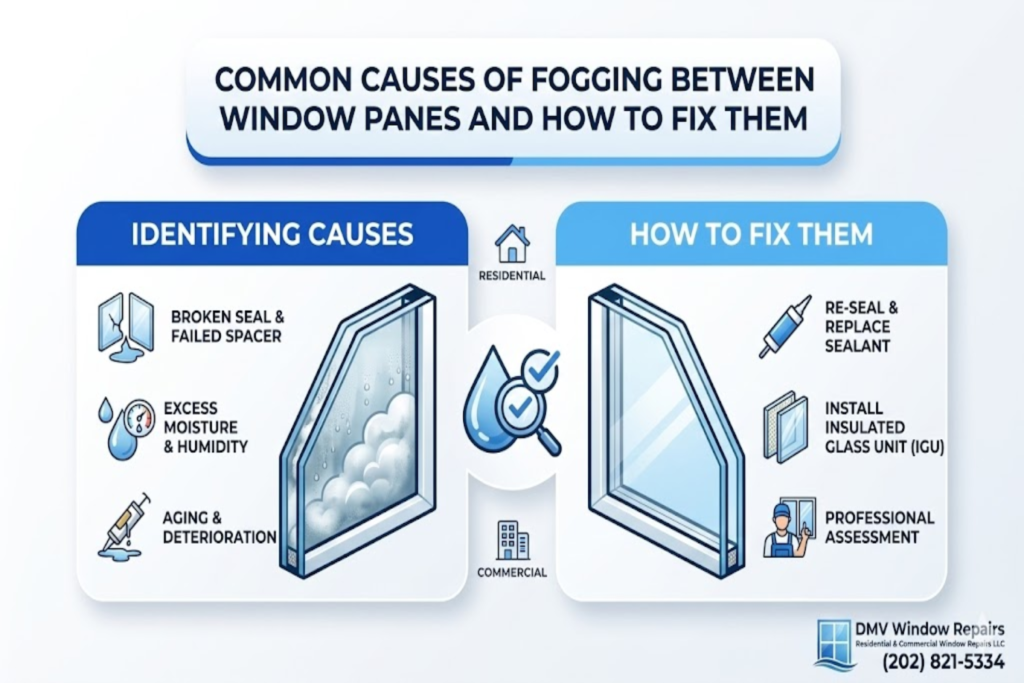
Seal Failure – The Number One Cause of Fogging
- The hermetic edge seal is the most vulnerable part of any double-pane window.
- Made of butyl rubber or polyisobutylene with an outer silicone layer, the seal is designed to keep out moisture and hold insulating gas (argon or krypton) inside for decades.
- Over time, ultraviolet radiation, constant thermal expansion/contraction, and humidity cycles cause the sealant to lose adhesion and develop micro-cracks.
- Once even a tiny pathway opens, humid outside air slowly infiltrates while the inert gas leaks out.
- The desiccant inside the spacer bar absorbs initial moisture, but it quickly becomes saturated.
- When the desiccant can no longer hold more water, condensation begins on the cold inner surfaces during temperature drops.
- Seal failure is responsible for the vast majority—over 80%—of all fogging cases. It is progressive and rarely reverses without intervention.
Why Older Windows Fog More Frequently
Windows manufactured before the mid-1990s often used narrower air spaces, less effective desiccants, and butyl seals without robust outer silicone protection. These older units typically show fogging between 10–20 years. Modern double-pane windows with warm-edge spacers, molecular sieve desiccants, and dual-seal systems frequently last 20–35 years before visible failure. Age alone is not the only factor—poor installation, extreme climate exposure, and manufacturing defects accelerate breakdown even in newer units. Regular inspection of edge seals helps catch problems long before fog becomes obvious.
Thermal Stress and Differential Expansion
Rapid or uneven temperature changes across a single pane create internal stresses that concentrate at the glass edges where the seal is bonded. When one section of glass heats or cools faster than another (due to partial sun exposure, interior heat vents, or reflective surfaces nearby), the resulting expansion difference pulls and twists the perimeter seal. Over thousands of daily and seasonal cycles, these micro-movements cause adhesive fatigue and tiny gaps to form. Large south- and west-facing windows without adequate shading suffer the worst thermal stress. In climates with hot afternoons followed by cool nights, or sudden cold fronts after warm spells, stress accumulates rapidly. Thermal-induced seal failure often appears first as haze along the edges or corners before spreading inward.
Keep indoor relative humidity between 30–50% year-round using dehumidifiers, exhaust fans, and proper ventilation to reduce pressure on seals. Clean weep holes and drainage channels twice a year to prevent water backup. Apply UV-protective window film on sunny exposures to lower thermal stress. Trim vegetation to avoid uneven shading patterns. Use window treatments to moderate rapid temperature swings on glass surfaces. These simple habits significantly slow seal degradation and extend the functional life of double-pane units.
How Partial Shading Worsens Thermal Damage
Partial shading from trees, awnings, neighboring buildings, or interior blinds creates hot spots and cool zones on the same pane simultaneously. The temperature gradient across the glass can exceed 40–60°F in direct sunlight, generating twisting forces far greater than uniform exposure. This differential stress is one of the fastest ways to break down edge seals. Homeowners can reduce risk by trimming vegetation, installing exterior awnings, or using light-colored exterior finishes to minimize reflected heat. Uniform solar exposure significantly extends seal life.
Moisture Intrusion During Manufacturing or Installation
Factory defects or poor installation practices sometimes trap excess moisture inside the sealed unit from the very beginning. Inadequate desiccant loading, contaminated bonding surfaces, incomplete sealant application, or improper spacer alignment allow moisture to remain trapped during assembly. During the first few years, the desiccant absorbs this residual water, but once saturated, fogging appears even without external seal breach. Installation errors—such as excessive frame pressure, poor glazing tape application, or failure to properly seat the IGU—can crack the edge seal immediately or create stress points that fail early. Units that fog within 5–10 years often trace back to manufacturing or installation issues covered under warranty.
Keep indoor relative humidity between 30–50% year-round using dehumidifiers, exhaust fans, and proper ventilation to reduce pressure on seals. Clean weep holes and drainage channels twice a year to prevent water backup. Apply UV-protective window film on sunny exposures to lower thermal stress. Trim vegetation to avoid uneven shading patterns. Use window treatments to moderate rapid temperature swings on glass surfaces. These simple habits significantly slow seal degradation and extend the functional life of double-pane units.
Role of Desiccant Saturation in Early Fogging
The spacer bar contains desiccant (usually molecular sieve or silica gel) specifically to absorb any residual moisture trapped during manufacturing. When the desiccant reaches capacity—either from initial trapped water or slow infiltration through a failing seal—condensation begins immediately on cold mornings or evenings. Once saturated, no amount of external drying or ventilation can prevent fogging. Replacing the entire IGU or performing a full desiccant refresh during repair is the only effective solution.
Physical Impact and Edge Damage
Even small impacts—children’s toys, lawn equipment, closing a window too forcefully, or vibration from nearby traffic—can damage the edge seal or create micro-cracks near the perimeter. Any nick, chip, or stress fracture close to the edge allows air and moisture exchange over time. Edge damage from improper handling during manufacturing or transport also weakens the seal bond. Once the hermetic barrier is compromised at any point, failure becomes inevitable. Protective window films can absorb minor impacts and reduce risk on vulnerable ground-floor or play-area windows.
Keep indoor relative humidity between 30–50% year-round using dehumidifiers, exhaust fans, and proper ventilation to reduce pressure on seals. Clean weep holes and drainage channels twice a year to prevent water backup. Apply UV-protective window film on sunny exposures to lower thermal stress. Trim vegetation to avoid uneven shading patterns. Use window treatments to moderate rapid temperature swings on glass surfaces. These simple habits significantly slow seal degradation and extend the functional life of double-pane units.
How Manufacturing Defects Accelerate Fogging
Nickel sulfide inclusions in tempered glass, uneven sealant thickness, contaminated bonding surfaces, or inadequate desiccant loading cause some units to fail prematurely—sometimes within 5–10 years. These factory flaws are relatively rare with reputable brands but do occur. When confirmed as manufacturing defects, warranty coverage often applies even after the standard period. Professional diagnosis distinguishes factory issues from environmental or installation causes.
| Cause of Fogging | Primary Mechanism | Earliest Visible Sign | Typical Time to Failure | Repair vs Replacement Recommendation |
| Perimeter seal degradation | UV, thermal cycling, humidity exposure | Slight corner haze on cold mornings | 10–25 years | Repair possible early; replacement later |
| Thermal stress from uneven heating | Differential expansion at edges | Haze starting at edges/corners | 8–20 years | Replacement often needed if recurring |
| Trapped moisture from manufacturing | Inadequate desiccant or poor seal | Fogging within 5–10 years | 5–12 years | Warranty claim or full IGU replacement |
| Installation-induced stress | Frame misalignment, over-tightening | Fogging 3–10 years after install | 3–12 years | Warranty or professional reseal |
| Physical impact near edge | Chip/crack damaging seal bond | Fogging appears after impact | Variable | Immediate evaluation; often replacement |
| Spacer bar corrosion | Long-term moisture exposure | Rust-colored haze along bottom edge | 15–30 years | Full IGU replacement required |
| Pressure imbalance / gas loss | Seal breach causing bowing | Wavy/distorted reflection in glass | 10–25 years | Replacement usually necessary |
Preventive Habits That Delay Fogging Onset
Keep indoor relative humidity between 30–50% year-round using dehumidifiers, exhaust fans, and proper ventilation to reduce pressure on seals. Clean weep holes and drainage channels twice a year to prevent water backup. Apply UV-protective window film on sunny exposures to lower thermal stress. Trim vegetation to avoid uneven shading patterns. Use window treatments to moderate rapid temperature swings on glass surfaces. These simple habits significantly slow seal degradation and extend the functional life of double-pane units.
Keep indoor relative humidity between 30–50% year-round using dehumidifiers, exhaust fans, and proper ventilation to reduce pressure on seals. Clean weep holes and drainage channels twice a year to prevent water backup. Apply UV-protective window film on sunny exposures to lower thermal stress. Trim vegetation to avoid uneven shading patterns. Use window treatments to moderate rapid temperature swings on glass surfaces. These simple habits significantly slow seal degradation and extend the functional life of double-pane units.
Choosing Between Repair and Full Replacement
When fogging is recent and limited to corners or edges, professional resealing with gas re-injection often restores 70–90% of original performance at moderate cost. When fogging covers most of the pane, multiple windows are affected, or the unit is over 20–25 years old, full IGU or complete window replacement usually proves more economical long-term. Professional thermal imaging and gas analysis confirm the extent of damage and guide the most cost-effective decision. Acting before secondary damage (spacer corrosion, glass etching) occurs maximizes repair options and savings.
Conclusion
Fogging between double-pane windows almost always signals seal failure, whether from age-related degradation, thermal stress, manufacturing/installation defects, or minor physical damage. The moment moisture enters the sealed space, insulating gas escapes and the thermal barrier collapses—driving up energy bills and creating comfort problems. Spotting early warning signs—corner haze, occasional condensation on cold mornings, subtle bowing, or edge distortion—gives homeowners the chance to act before full-pane fogging occurs.
In Woodbridge VA, where humidity and temperature swings place constant stress on window seals, regular seasonal inspections are especially important. When fogging is limited or recent, professional resealing with gas re-injection can often restore performance at far lower cost than replacement. Once fog covers most of the pane or multiple units are affected, full IGU replacement usually becomes the most reliable long-term solution. Addressing the problem promptly protects your home’s energy efficiency, indoor air quality, and overall value.
Frequently Asked Questions
- What is the most common reason double-pane windows develop internal fogging?
Perimeter seal failure is the leading cause—accounting for over 80% of cases. Age, thermal cycling, UV exposure, and humidity degrade the sealant until moisture can enter the sealed space. Once the seal is breached, fogging becomes inevitable.
- How can I tell if fogging is between the panes or just on the surface?
Fog between panes cannot be wiped away and usually appears uniform or patchy across the entire surface. Surface condensation (on the interior pane) disappears when you warm the glass with your hand. Internal fogging is permanent and signals complete seal failure.
- Can fogged double-pane windows be repaired without replacing the whole window?
Yes—specialized services can disassemble the unit, remove moisture, replace desiccant, reseal, and re-inject gas, restoring clarity and efficiency in many cases. Success depends on frame condition and overall unit age. Full IGU replacement is often more reliable long-term.
- Is internal fogging dangerous or just cosmetic?
It is more than cosmetic—fogging indicates total loss of insulating gas and thermal performance, increasing energy bills and comfort issues. Persistent moisture can also cause spacer corrosion and glass etching over time. Prompt repair prevents escalation.
- Why do some double-pane windows fog in corners first?
Corners are the weakest points of the edge seal due to higher stress concentrations during thermal expansion. Moisture enters here first, and the nearby desiccant saturates quickest. Corner fogging is an early warning sign that failure is beginning.
- Does high indoor humidity make fogging appear faster?
Yes—higher indoor humidity increases the amount of moisture available to enter through even tiny seal breaches. Keeping relative humidity between 30–50% year-round significantly slows progression. Dehumidifiers and ventilation help delay visible fogging.
- Can thermal stress from partial shading cause seal failure?
Definitely—uneven shading creates hot spots and cool zones on the same pane, generating twisting forces that stress edge seals more severely than uniform exposure. Windows with inconsistent shading commonly fail earlier. Trimming trees or adding awnings helps.
- How long after fogging appears should I get the windows repaired?
Schedule professional evaluation as soon as fogging becomes noticeable—ideally within weeks or months. Waiting allows moisture to saturate the desiccant fully and begin corroding the spacer bar, making repair less effective. Early action often preserves repair options.
- Are newer double-pane windows less likely to fog prematurely?
Yes—modern units use improved sealants, warm-edge spacers, higher-capacity desiccants, and better quality control, extending average lifespan significantly. Windows produced in the last 10–15 years generally outlast older ones. Choosing reputable brands further reduces risk.
- What should I do immediately if I notice fogging starting in one window?
Take dated photos, reduce indoor humidity to slow progression, and contact a professional glass repair specialist promptly. Early intervention sometimes allows resealing before complete saturation. Delaying usually results in full IGU replacement. Quick action saves money.
Visit our DMV Window Repairs LLC blog to explore our residential and commercial glass services for customers in Woodbridge, VA.