
Single-pane and double-pane windows represent two fundamentally different approaches to residential glazing, each with distinct impacts on comfort, energy costs, noise control, security, and overall home performance. Single-pane windows consist of one layer of glass, offering basic visibility and light transmission but minimal insulation against temperature extremes. Double-pane windows feature two layers separated by a sealed air or gas-filled space, creating a thermal barrier that significantly reduces heat transfer in both directions. Homeowners upgrading or replacing windows frequently face this choice,
especially when energy bills rise, drafts appear, or condensation forms. In regions experiencing hot summers and cold winters, the differences become particularly noticeable in monthly utility expenses and indoor comfort levels. Understanding these distinctions helps make informed decisions that balance upfront costs with long-term savings and livability. This guide compares the two types across key categories homeowners care about most. Knowing the differences empowers better choices for your specific home needs.
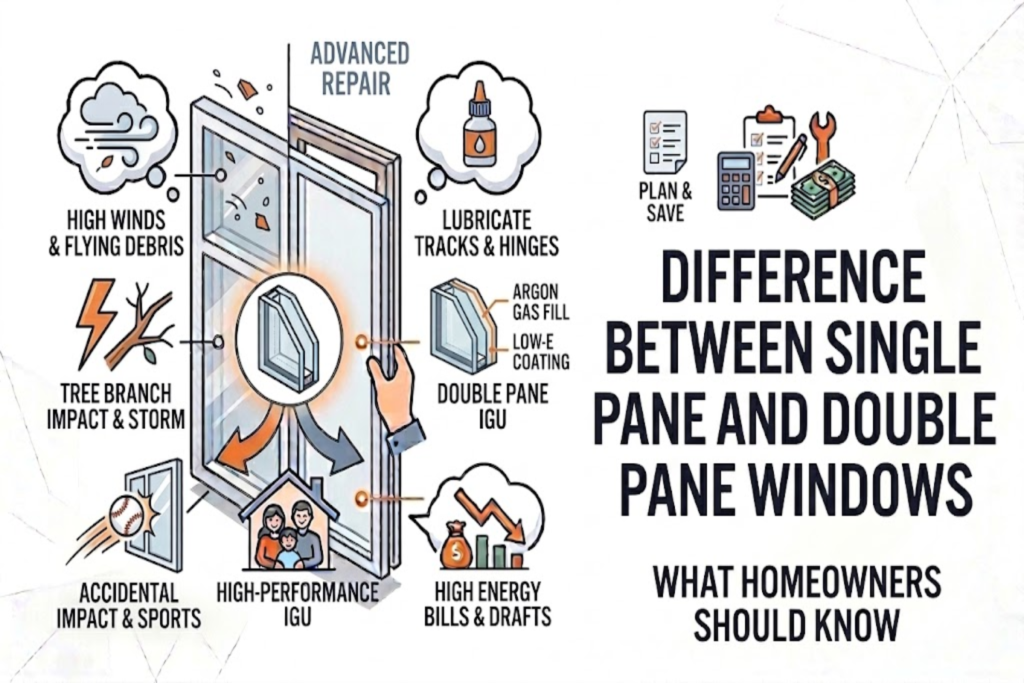
Basic Construction and Design Differences
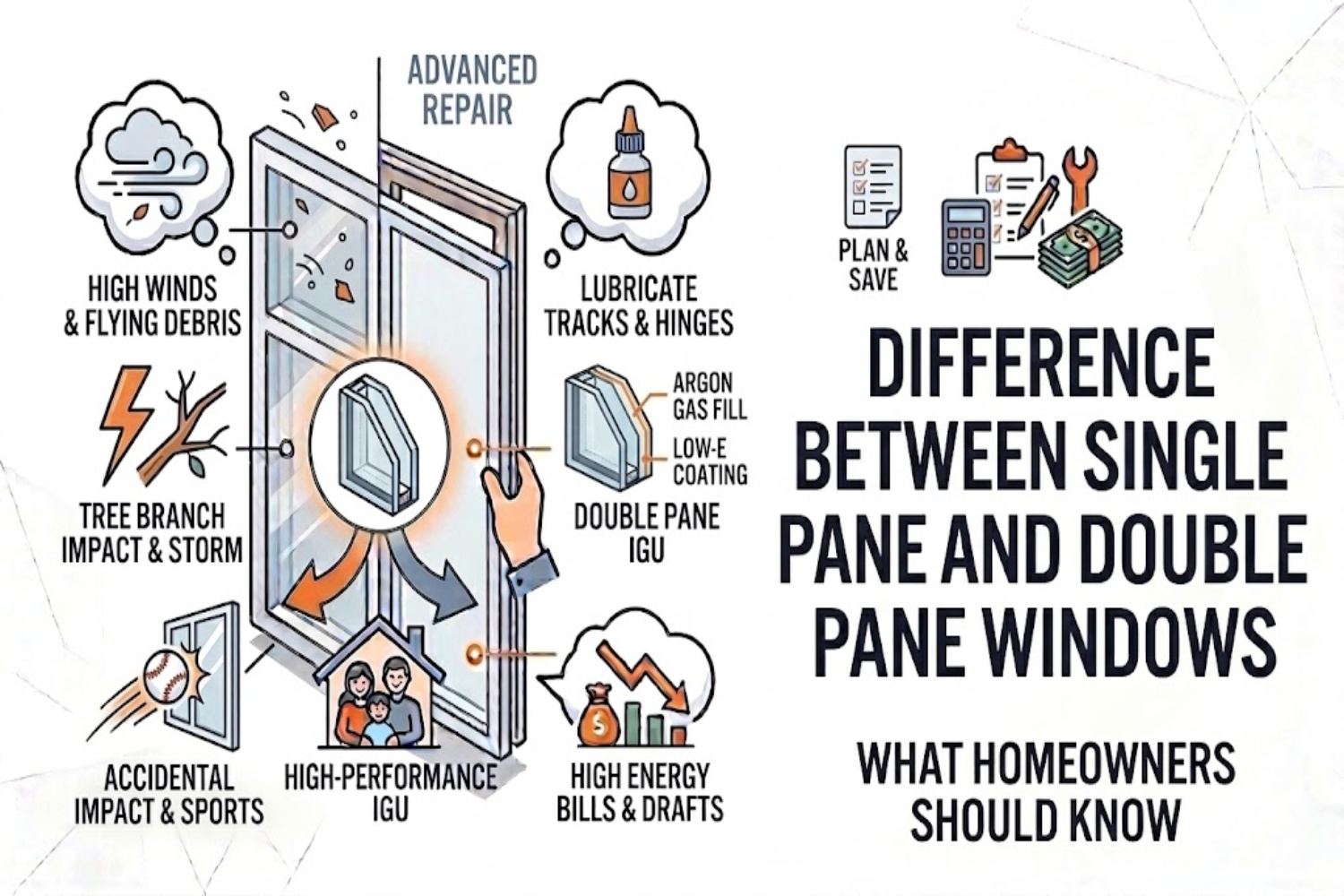
Single-pane windows use one continuous sheet of glass, typically 3/32 to 1/8 inch thick, mounted directly into the frame with glazing compound or stops. The simplicity results in lower manufacturing and installation costs but provides almost no resistance to heat flow. Double-pane (also called insulated glass units or IGUs) feature two separate glass panes separated by a spacer, usually 1/4 to 1/2 inch apart, creating an enclosed space. The edges are sealed hermetically with butyl rubber or silicone to prevent gas leakage. The spacer often contains desiccant to absorb residual moisture. Modern double-pane units frequently include low-emissivity coatings and inert gas fills like argon or krypton. These design elements create dramatically better thermal performance compared to single glass.
How the Air Gap in Double-Pane Windows Works
The sealed air space between double panes acts as a poor conductor of heat, slowing both conductive and convective transfer. Still air has very low thermal conductivity, making it an effective insulator when trapped and motionless. Argon or krypton gas fills further reduce convection currents and lower the U-factor even more. Without this gap, single-pane windows allow rapid heat escape in winter and quick solar heat gain in summer. The sealed design also prevents moisture from entering the space, reducing internal condensation risks when properly manufactured. This fundamental difference drives most performance advantages homeowners notice daily.
Energy Efficiency Comparison
Single-pane windows typically have U-factors around 1.0 to 1.2, meaning they lose heat very quickly in cold weather and gain it rapidly in hot conditions. Double-pane windows achieve U-factors of 0.25 to 0.55 depending on coatings, gas fills, and spacer technology—often 50–75% more efficient. This translates to significantly lower heating and cooling costs year-round. In mixed climates with both heating and cooling seasons, double-pane units reduce energy consumption by 20–40% compared to single-pane equivalents. Low-E coatings on double-pane glass reflect infrared heat while allowing visible light, providing dual-season benefits. Single-pane windows force HVAC systems to work harder constantly. The energy savings from double-pane often recoup higher initial costs within 5–10 years.
Impact on Heating and Cooling Bills
- Homes with single-pane windows commonly experience 25–50% higher energy bills due to uncontrolled heat loss/gain through glass.
- Double-pane windows stabilize indoor temperatures, reducing thermostat adjustments and HVAC runtime.
- In winter, heat stays inside; in summer, solar gain stays outside.
- Real-world studies show average annual savings of $200–$600 for typical homes after upgrading from single to double-pane.
- These savings grow with larger window areas or extreme temperature swings.
- Energy efficiency differences become immediately noticeable after replacement.
Noise Reduction Capabilities
Single-pane glass offers minimal sound insulation, allowing most exterior noises—traffic, conversations, aircraft, lawn equipment—to pass through easily. Double-pane windows provide substantially better acoustic performance due to the air gap and mass of two panes. Sound transmission class (STC) ratings for single-pane typically fall around 25–28, while quality double-pane units reach 30–38 or higher with laminated interlayers. The sealed space disrupts sound waves, and gas fills can further dampen certain frequencies. Homes near busy roads, schools, or commercial areas notice dramatic quieting after double-pane installation. For maximum noise control, laminated or acoustic-specific double-pane glass delivers superior results.
The edges are sealed hermetically with butyl rubber or silicone to prevent gas leakage. The spacer often contains desiccant to absorb residual moisture. Modern double-pane units frequently include low-emissivity coatings and inert gas fills like argon or krypton. These design elements create dramatically better thermal performance compared to single glass.
Acoustic Laminated Options for Extra Quiet
Laminated double-pane glass uses a PVB interlayer that absorbs vibrations and blocks sound more effectively than standard air-filled units. This combination often achieves STC ratings of 35–42, reducing perceived noise by 50% or more. It works particularly well against low-frequency sounds like traffic rumble. While adding moderate cost, the comfort improvement justifies the investment in noisy neighborhoods. Single-pane windows cannot match this level of sound control regardless of thickness.
Condensation and Moisture Control
Single-pane windows frequently develop interior condensation in cold weather when warm, moist indoor air contacts the cold glass surface. This can lead to water damage, mold growth, and peeling paint on sills. Double-pane windows maintain warmer interior surface temperatures due to the insulating gap, greatly reducing or eliminating condensation under normal humidity levels. The sealed construction also prevents moisture from entering between panes, avoiding permanent fogging issues common in failed single-pane retrofits. Proper humidity control indoors further minimizes condensation risks. Double-pane technology provides a clear advantage in moisture management.
Preventing Mold and Interior Damage
Condensation on single-pane glass creates damp conditions that promote mold spores and mildew, especially on wood sills and jambs. Double-pane windows keep interior surfaces drier, reducing mold risk significantly. Regular humidity monitoring and ventilation help both types, but double-pane offers inherent protection. Addressing condensation early prevents costly interior repairs.
Security and Durability Differences
Single-pane glass breaks easily and shatters into large, sharp pieces, creating safety hazards and easy entry points for intruders. Double-pane units are inherently stronger due to two layers and sealed construction—breaking through both requires significantly more force. Tempered or laminated double-pane options provide even greater resistance to impact and forced entry. Laminated interlayers hold glass together when cracked, preventing full penetration. Single-pane windows offer minimal security; double-pane versions enhance protection noticeably. Durability advantages make double-pane the safer, longer-lasting choice.
The edges are sealed hermetically with butyl rubber or silicone to prevent gas leakage. The spacer often contains desiccant to absorb residual moisture. Modern double-pane units frequently include low-emissivity coatings and inert gas fills like argon or krypton. These design elements create dramatically better thermal performance compared to single glass.
Impact-Resistant and Laminated Upgrades
Laminated double-pane glass uses a tough plastic interlayer that maintains integrity even when shattered, ideal for ground-floor or storm-prone areas. Impact-resistant versions withstand flying debris better during severe weather. These upgrades add moderate cost but provide substantial safety and security benefits. Single-pane glass cannot incorporate these protective features effectively.
| Feature | Single-Pane Windows | Double-Pane Windows | Winner & Why |
| Thermal Insulation (U-factor) | 1.0 – 1.2 (poor) | 0.25 – 0.55 (good to excellent) | Double-pane – dramatically lower heat transfer |
| Energy Savings Potential | Minimal | 20–40% reduction in heating/cooling costs | Double-pane – significant utility bill savings |
| Noise Reduction (STC rating) | 25–28 (minimal) | 30–38+ (moderate to good) | Double-pane – noticeably quieter interiors |
| Condensation Resistance | High risk on interior surface | Very low risk due to warmer inner pane | Double-pane – prevents mold and water damage |
| Security & Break-In Resistance | Easily shattered, large sharp pieces | Much harder to break through | Double-pane – stronger, safer against intrusion |
| UV Protection | Minimal unless coated | Excellent with low-E coatings | Double-pane – better furniture/flooring protection |
| Durability & Longevity | 10–20 years typical | 20–40 years with proper seals | Double-pane – longer service life |
| Initial Cost (per window) | $150–$400 | $400–$1,200+ | Single-pane – lower upfront cost |
| Long-Term Value (ROI) | Low | High (energy savings + comfort) | Double-pane – better return on investment |
When to Upgrade from Single-Pane to Double-Pane
Consider upgrading when energy bills rise noticeably, condensation appears frequently, drafts feel uncomfortable, exterior noise disrupts sleep or work, or windows show signs of aging like difficulty operating or visible seal failure. Homes with large window areas benefit most dramatically from the efficiency gains. If planning to stay long-term or sell in the near future, double-pane upgrades often increase resale appeal and value. Professional energy audits help quantify potential savings. Timing upgrades during replacement cycles maximizes cost-effectiveness.
The edges are sealed hermetically with butyl rubber or silicone to prevent gas leakage. The spacer often contains desiccant to absorb residual moisture. Modern double-pane units frequently include low-emissivity coatings and inert gas fills like argon or krypton. These design elements create dramatically better thermal performance compared to single glass.
Professional Assessment Before Major Decisions
Before replacing single-pane windows, schedule professional inspections to evaluate frame condition, overall window age, and existing performance metrics. Accurate U-factor and SHGC measurements reveal true efficiency gaps. Technicians can recommend specific double-pane configurations suited to your home’s orientation and climate exposure. They also identify any related issues like frame rot or hardware wear that single-pane maintenance may have masked. Expert input prevents choosing the wrong solution or wasting money on inadequate upgrades. Professional guidance ensures decisions align with both immediate needs and long-term goals.
Conclusion
Single-pane windows offer basic functionality at lower upfront cost but fall short in energy efficiency, noise control, condensation resistance, security, and long-term durability compared to double-pane alternatives. Double-pane windows provide substantial improvements in comfort, utility savings, sound insulation, and protection against weather extremes while increasing home value and livability. In regions like the DMV with distinct seasonal changes, the performance gap becomes especially noticeable in energy bills and indoor comfort.
While single-pane may suffice for short-term ownership or mild climates, double-pane delivers clear advantages for most modern homes. In Woodbridge VA, where temperature swings and humidity challenge window performance year-round, upgrading to double-pane often proves the smarter long-term investment. Carefully weigh your priorities—budget, energy goals, noise concerns, and future plans—then consult professionals for accurate assessments and quotes. The right choice enhances both daily living quality and property protection for years to come.
Frequently Asked Questions
- How much can I save on energy bills by switching from single-pane to double-pane windows?
Most homeowners see 20–40% reductions in heating and cooling costs after upgrading, depending on window area, climate, and original condition. Savings often range from $200–$600 annually for average homes. Payback typically occurs within 5–10 years. Energy modeling during quotes provides personalized estimates.
- Do double-pane windows really make a noticeable difference in indoor comfort?
Yes—double-pane windows reduce hot and cold spots near glass, minimize drafts, and stabilize indoor temperatures significantly. Rooms feel warmer in winter and cooler in summer without constant thermostat adjustments. The improvement becomes especially clear during extreme weather.
- Are single-pane windows ever a better choice than double-pane?
Single-pane may suit historic homes with strict preservation rules, very mild climates, short-term ownership, or tight budgets where upfront cost outweighs long-term savings. In most modern applications, double-pane provides far superior performance and value.
- How do double-pane windows help with noise coming from outside?
The air gap and added mass of two panes reduce sound transmission noticeably compared to single glass. Acoustic laminated double-pane options further improve performance against traffic, aircraft, or neighborhood noise. Many homeowners report dramatically quieter interiors after upgrading.
- Will double-pane windows stop condensation on the inside of my windows?
Double-pane windows keep the interior glass surface much warmer, greatly reducing or eliminating condensation under normal indoor humidity levels. This helps prevent mold, water damage, and peeling paint on sills that commonly occur with single-pane windows in cold weather.
- Is it possible to add a second pane to existing single-pane windows?
Retrofit double-pane inserts or storm windows can add insulation to single-pane frames in some cases. However, full double-pane replacement usually provides better performance, longevity, and aesthetics. Professionals assess frame condition to determine retrofit feasibility.
- How much more expensive are double-pane windows compared to single-pane?
Double-pane windows typically cost 2–4 times more than single-pane equivalents, depending on size, features, and frame material. However, energy savings, comfort improvements, and increased home value often justify the higher initial investment over time.
- Do double-pane windows require special maintenance compared to single-pane?
Maintenance remains similar—regular cleaning with ammonia-free solutions, seal inspections, and hardware lubrication. Avoid abrasive cleaners that could damage low-E coatings. Professional checks every 3–5 years ensure long-term performance. Care requirements do not increase significantly.
- Can double-pane windows improve home security compared to single-pane?
Yes—double-pane units are inherently harder to break through due to two layers and sealed construction. Laminated or impact-resistant double-pane options provide even greater protection against forced entry and flying debris during storms.
- How long do double-pane windows typically last compared to single-pane?
Quality double-pane windows last 20–40 years with proper installation and maintenance, while single-pane units often show significant wear after 10–20 years. Seal failure remains the most common long-term issue in double-pane, but modern manufacturing has improved longevity dramatically.
Visit our DMV Window Repairs LLC blog to explore our residential and commercial glass services for customers in Woodbridge, VA.