
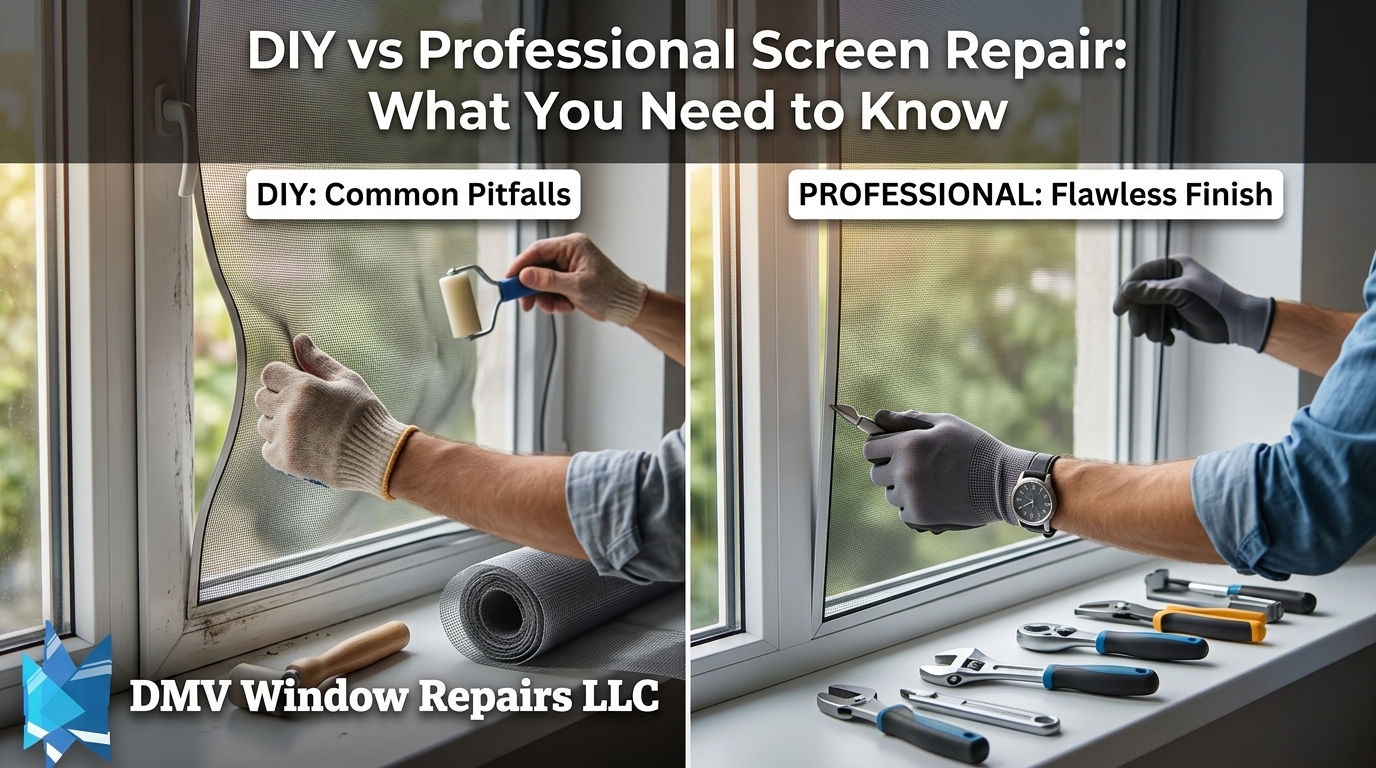
Deciding between DIY and professional screen repair for window and door screens involves balancing upfront cost savings against long-term performance, durability, appearance, and overall home comfort. DIY approaches appeal to many homeowners because they seem quick, inexpensive, and straightforward—often using basic tools and patch kits available at local hardware stores. However, screens are more than just mesh stretched over frames; proper tension, precise frame alignment, material compatibility, and perimeter sealing all affect insect protection, airflow, energy efficiency, and visual appeal.
Professional repair ensures factory-correct tension, square frames, durable mesh types, and warranties that protect against premature failure. Many DIY attempts result in loose, wavy, or short-lived patches that fail within months, requiring repeated effort or eventual professional intervention. The choice depends on damage severity, screen quantity, homeowner skill level, available time, and desired outcome quality. Understanding both options helps avoid wasting money on temporary fixes or unnecessary full replacements. This guide compares the two approaches in detail so you can choose the method that delivers the best value for your specific situation..
Advantages of DIY Screen Repair
DIY repair offers immediate cost savings since you avoid labor charges that professionals typically add. Basic tools like screwdrivers, spline rollers, mesh rolls, and utility knives usually already exist in most home toolkits or cost under $50 total if purchased. Homeowners control timing completely—no waiting for appointments or scheduling around contractor availability.
Simple tears or small holes respond well to patch kits or spot re-meshing when only one or two screens need attention. Learning basic re-screening techniques builds useful skills for future home maintenance projects. DIY success feels rewarding and provides satisfaction from completing visible home improvements personally. For minor cosmetic damage on accessible ground-floor windows, DIY often delivers acceptable short-term results.
Tools and Materials Needed for DIY
Standard DIY kits include fiberglass or aluminum mesh rolls ($15–$40), spline (rubber cord) in various diameters ($5–$15), spline roller tool ($10–$25), utility knife or screen cutter ($5–$15), flat-head screwdriver, needle-nose pliers, and measuring tape. Cleaning supplies like mild soap, soft brush, and microfiber cloths remove old adhesive and debris. Optional items include corner crimpers, mesh stretcher clamps, and pet-resistant or solar screen material for specialized needs. Most supplies remain reusable for multiple screens or future repairs. Total startup cost usually stays under $100 even for beginners.
Common DIY Repair Techniques
For small tears, cut a patch slightly larger than the hole, apply adhesive or use self-adhesive mesh tape, and press firmly for 24 hours. Spot re-meshing involves removing old spline with a screwdriver, cleaning the groove, laying new mesh taut, and rolling in fresh spline while maintaining even tension. Frame straightening uses clamps and gentle pressure for minor warping. Cleaning tracks and lubricating related hardware completes basic restoration. These methods work reasonably well on single-story accessible windows with limited damage.
Limitations and Risks of DIY Screen Repair
- DIY repairs frequently fail to achieve uniform mesh tension, resulting in wavy, sagging, or bubbling surfaces that look unprofessional and reduce airflow.
- Incorrect spline size or poor rolling technique creates loose edges where insects enter easily.
- Reusing old frames with hidden corrosion or warping leads to recurring problems within months.
- Beginners often cut mesh too small or stretch it unevenly, causing permanent distortion or tearing during installation.
- Safety risks increase when working on upper-floor windows without proper ladders or fall protection.
- Warranty coverage voids on manufacturer screens when non-professional work is evident.
- Time investment multiplies with mistakes requiring redo attempts or eventual professional correction.
Common DIY Mistakes That Shorten Lifespan
Overstretching mesh during installation causes premature sagging or tearing under normal use. Using incorrect spline diameter prevents proper seating in grooves, leading to loose fit and gaps. Failing to clean old adhesive residue creates uneven surfaces and weak bonding. Cutting corners too short or unevenly results in visible gaps at frame edges. Ignoring frame squareness perpetuates misalignment and tension loss. These errors reduce repair longevity to 6–18 months instead of 10–15+ years with professional methods.
When DIY Becomes False Economy
Multiple screens needing attention multiply time and frustration significantly. Repeated failed attempts waste materials and increase total cost above professional rates. Poorly repaired screens allow ongoing pest entry, allergen infiltration, or restricted airflow that raises energy bills. Cosmetic failures detract from curb appeal and home value. When damage involves frame corrosion, warping, or pet-resistant needs, DIY rarely achieves lasting results. Professional expertise often proves more economical long-term despite higher initial price.
Benefits of Professional Screen Repair
Professional technicians possess specialized tools like tensioning machines, corner crimpers, spline cutters, and frame straighteners unavailable to most homeowners. They achieve consistent, factory-correct mesh tension that prevents sagging, bubbling, or edge gaps for years. Experience allows quick diagnosis of underlying frame issues, material incompatibilities, or installation errors from previous attempts.
Professionals stock high-quality mesh varieties—pet-resistant, finer insect mesh, solar screens, or No-See-Um—for specific household needs. Workmanship warranties (typically 1–10 years) cover defects and provide peace of mind. Efficient service minimizes disruption and completes multiple screens in one visit. The result delivers superior appearance, airflow, insect protection, and longevity.
Specialized Tools and Techniques Professionals Use
Professional spline rollers apply even pressure for perfect seating without stretching mesh unevenly. Mesh stretchers and clamps hold material taut during installation for uniform tension. Precision cutters ensure exact sizing without waste or weak spots. Frame alignment jigs restore squareness on warped units. High-capacity production equipment handles large or numerous screens quickly. These tools and methods produce results far beyond standard DIY capabilities.
Warranties and Quality Assurance
Most reputable companies offer written warranties covering both labor and materials for 1–10 years depending on mesh type. Warranty documentation proves professional work for future claims or home resale. Quality assurance includes final inspection for tension, fit, and appearance before payment acceptance. Professionals stand behind their work with free adjustments if issues arise during warranty period. This protection eliminates risk of premature failure common in DIY attempts.
Cost Comparison: DIY vs Professional Repair
DIY repair costs primarily involve materials—mesh rolls ($15–$40 per 100 sq ft), spline ($5–$15 per 100 ft), and basic tools ($20–$60 if not already owned). Total per screen usually stays under $50 even for beginners. Professional repair ranges $75–$250 per standard window screen, depending on size, mesh type (standard fiberglass vs pet-resistant or solar), and regional labor rates. Multiple screens often qualify for volume discounts or package pricing. While DIY appears cheaper initially, failed attempts, wasted materials, repeated effort, and eventual professional correction frequently make total cost comparable or higher. Professionals complete work faster with guaranteed results.
| Aspect | DIY Repair | Professional Repair | When DIY Makes Sense | When Professional Wins | Typical Cost Difference | Long-Term Outcome Difference |
| Upfront Cost per Screen | $20–$80 (materials only) | $75–$250 (labor + materials) | Single screen, minor tear | Multiple screens, frame issues | $50–$200 savings DIY | Professional lasts 3–5x longer |
| Tools Required | Basic (screwdriver, utility knife, roller) | Specialized (tensioner, crimper, stretcher) | Tools already owned | No access to pro tools | $0–$100 DIY | Better tension & fit |
| Time Investment | 1–4 hours per screen (plus learning curve) | 15–45 minutes per screen | Plenty of free time | Limited time, multiple screens | Hours saved pro | Faster completion |
| Tension & Appearance Quality | Often uneven, wavy, or sagging | Factory-tight, flat, professional finish | Not concerned about looks | Want showroom-quality results | Visible difference | Professional looks new longer |
| Durability & Lifespan | 6 months–3 years typical | 8–15+ years with quality mesh | Temporary fix acceptable | Long-term reliability needed | Professional 3–5x longer | Fewer repeat repairs |
| Warranty Coverage | None (materials only) | 1–10 years workmanship + materials | No warranty needed | Want protection against failure | Professional covered | Peace of mind |
| Risk of Further Damage | High (improper technique, frame stress) | Very low (experienced handling) | Confident in skills | Risk-averse or upper floors | Potential added cost DIY | Professional minimizes risk |
| Insect/Allergen Protection | Partial (gaps common) | Complete (tight fit, proper mesh) | Minor damage only | Allergy/pest concerns | Professional superior | Healthier indoor air |
| Curb Appeal Impact | Often noticeable patch or poor finish | Seamless, uniform restoration | Not visible from street | Exterior-facing windows | Professional enhances | Better property appearance |
When to Choose DIY Over Professional
DIY suits very minor damage—small tears smaller than a quarter, isolated pet scratches on ground-floor accessible windows, or cosmetic mesh discoloration without structural issues. Homeowners with prior experience, proper tools, and patience achieve acceptable results on single screens. When budget constraints are tight and appearance matters less than basic function, DIY provides reasonable short-term solutions. Simple cleaning, spline replacement, or patch application on newer screens often succeeds without professional help. For one-off repairs on low-visibility windows, DIY remains practical and cost-effective.
Woodbridge VA homeowners often start with DIY for minor screen tears before seeking professionals for frame or widespread damage.
Woodbridge VA residents benefit from professional repair when humidity accelerates corrosion or pet damage occurs frequently.
Woodbridge VA properties maintain better airflow and comfort when DIY attempts give way to professional expertise.
Woodbridge VA sees growing preference for durable professional screen services over repeated DIY fixes.
When Professional Repair Proves More Economical
Multiple damaged screens multiply DIY time and frustration exponentially while professionals complete entire houses efficiently. Frame warping, corner separation, corrosion, or pet-resistant needs exceed typical DIY capabilities and tools. Warranty coverage, consistent quality, and long-term durability justify higher upfront cost. Professionals prevent recurring issues that turn DIY into false economy through repeated purchases and labor. When allergies, pests, or energy efficiency matter significantly, professional results deliver measurable improvements. For upper-floor, large, or specialty screens, professional safety and precision prevent accidents and ensure proper performance.
Conclusion
DIY screen repair offers tempting cost savings and convenience for very minor, isolated damage on accessible windows where appearance and longevity matter less. Professional repair provides superior tension, durability, fit, warranties, and overall performance that DIY rarely matches—especially with frame issues, multiple screens, or specific needs like pet resistance. While DIY suits simple patches or budget constraints, professional service prevents recurring failures, saves time long-term, and delivers healthier, more comfortable homes.
Accurate assessment of damage extent, screen quantity, and personal skill level guides the smartest choice. Whether handling basic fixes yourself or investing in professional expertise, proper repair restores effective insect protection, airflow, and visual appeal reliably. The right decision balances immediate cost against lasting comfort, efficiency, and home value.
Frequently Asked Questions
- When is DIY screen repair actually worth trying instead of calling a professional?
DIY works best for small, isolated tears on ground-floor windows where frames remain straight and corrosion-free. If you already own basic tools and have some patience, minor patches or spot re-meshing can save money short-term. Success depends on achieving even tension and clean installation.
- How much money can I realistically save with DIY screen repair?
DIY typically costs $20–$80 per screen in materials compared to $75–$250 for professional service. Savings appear largest on single screens with simple mesh tears. Multiple screens or frame issues often erase savings through repeated attempts or eventual professional correction.
- What are the biggest risks of attempting screen repair myself?
Uneven tension causes sagging, bubbling, or premature tearing within months. Improper frame handling warps corners or misaligns fit. Poor material selection leads to recurring damage or inadequate insect protection. Mistakes multiply costs and frustration when repairs fail repeatedly.
- Can professional screen repair really last significantly longer than DIY?
Yes—professionals achieve factory-correct tension and use durable mesh that resists stretching or tearing for 8–15+ years. Proper frame alignment prevents recurring stress points. Warranties cover defects that DIY attempts lack. Longevity difference often reaches 3–5 times longer service life.
- How do I know if my screen damage is too complicated for DIY?
Frame warping, corner separation, rust/corrosion, pet-resistant needs, or multiple damaged screens usually exceed DIY capabilities. Upper-floor access, large sizes, or specialty mesh requirements increase difficulty significantly. When appearance, longevity, or health concerns matter, professional service proves wiser.
- Does professional screen repair improve airflow and comfort noticeably?
Absolutely—proper tension and flush fit restore full ventilation capacity without gaps or resistance. Stronger cross-breezes cool interiors naturally and reduce AC use. Tight seals block allergens and dust more effectively. Homeowners report immediate comfort improvements after professional restoration.
- Are there situations where DIY actually looks better than professional work?
Rarely—professionals achieve uniform tension, clean spline seating, and precise frame alignment that DIY struggles to match consistently. Patches often appear wavy or mismatched. Only very minor cosmetic fixes on low-visibility screens might blend acceptably when done carefully.
- How long does professional screen repair usually take compared to DIY?
Professionals complete one screen in 15–45 minutes and entire houses in one visit. DIY takes 1–4 hours per screen plus learning curve and cleanup. Multiple screens multiply DIY time dramatically while professionals maintain efficiency and consistency.
- Will professional screen repair increase my home’s curb appeal?
Yes—taut, clean, uniformly fitted screens look well-maintained and attractive from outside. Damaged or poorly patched screens signal neglect. Professional restoration enhances exterior appearance noticeably and complements overall property condition.
- What should I look for when choosing a professional screen repair company?
Seek companies with 5+ years experience, positive local reviews, and written workmanship warranties. Confirm they use quality mesh (fiberglass/aluminum/pet-resistant) and proper tensioning tools. Ask about volume discounts for multiple screens and cleanup policies. Reliable professionals provide free estimates and clear communication.
Visit our DMV Window Repairs LLC blog to explore our residential and commercial glass services for customers in Woodbridge, VA.