
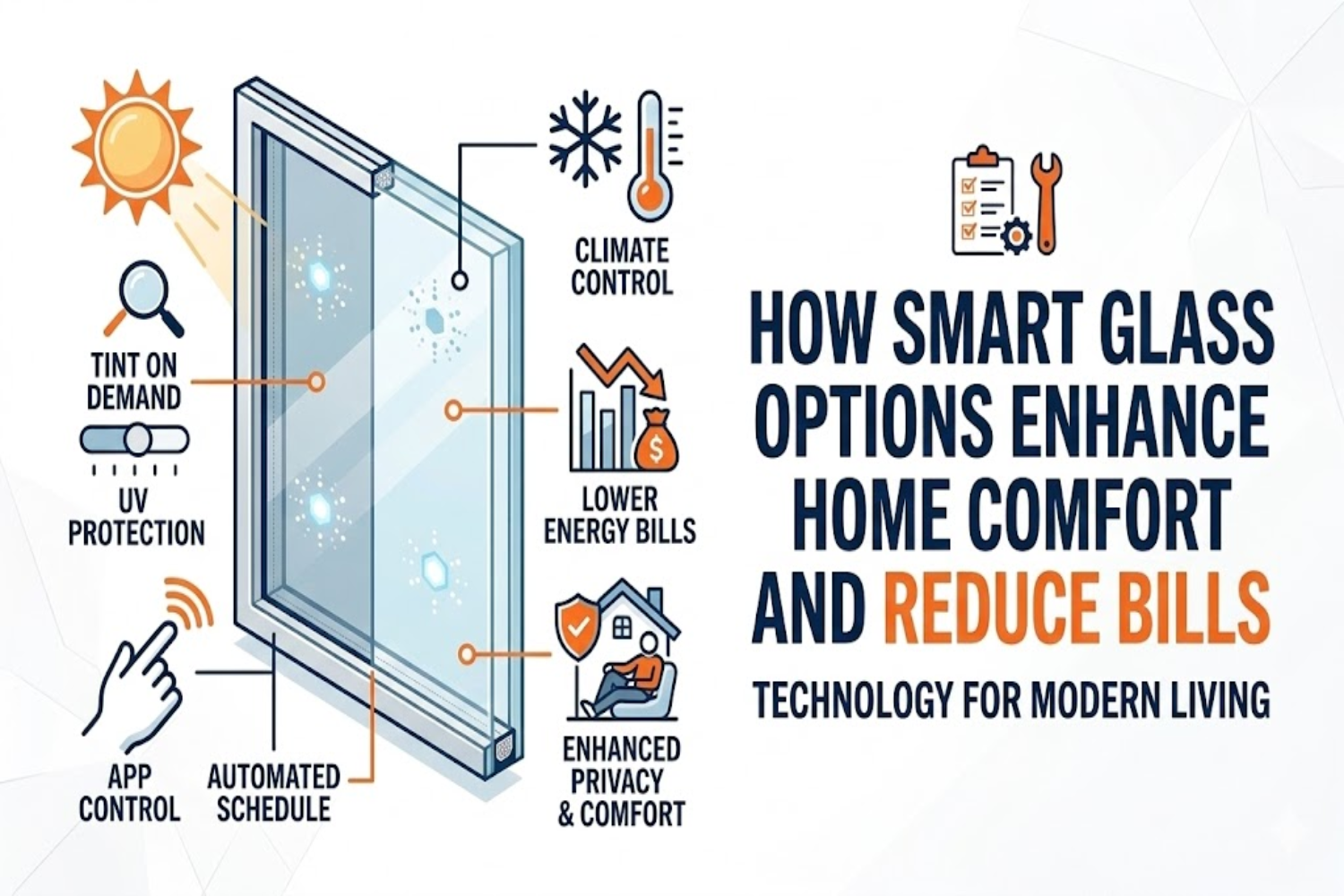
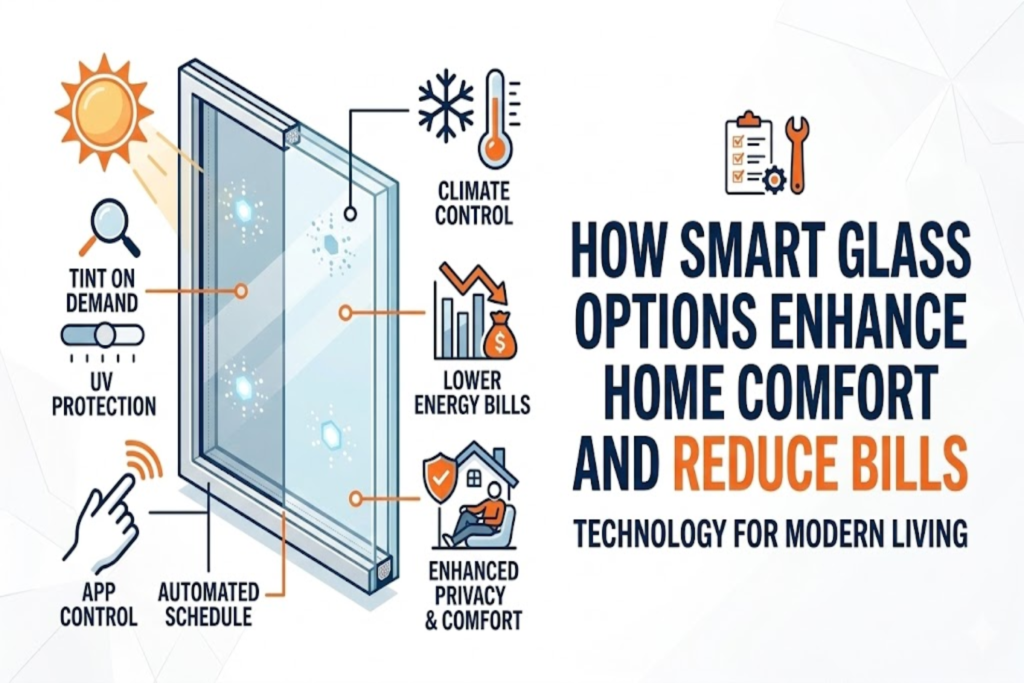
Smart glass technologies give homeowners dynamic control over light, heat, privacy, and glare without ever needing traditional blinds, shades, or curtains, making them one of the most impactful modern upgrades for year-round comfort and noticeable utility bill savings. These switchable or tintable glass solutions change opacity or tint level on demand—via app, voice command, schedule, or sensor—allowing precise management of solar heat gain in summer and heat retention in winter. In homes facing both cold winters and hot, humid summers, smart glass actively reduces the workload on heating and cooling systems by rejecting unwanted solar heat when the sun is strong and preserving interior warmth when temperatures drop. Beyond energy efficiency, smart glass eliminates hot spots near windows,
cuts glare on screens, provides instant privacy at the touch of a button, blocks up to 99% of harmful UV rays, and significantly lowers noise transmission. The combination of comfort improvements and energy savings often delivers payback periods of 5–12 years depending on climate, window area, and usage patterns. Modern options integrate seamlessly with home automation systems for effortless daily operation. This guide explores the leading smart glass technologies and explains exactly how they enhance living quality while cutting monthly bills. For homeowners in variable climates, smart glass represents one of the highest-ROI window upgrades available today.
What Is Smart Glass and Why Homeowners Are Switching
Smart glass (also called switchable glass, privacy glass, or dynamic glass) uses electrical current, heat, or light to change its light-transmission properties almost instantly. The three main technologies—electrochromic, suspended particle device (SPD), and polymer dispersed liquid crystal (PDLC)—each offer unique switching characteristics tailored to different needs.
Electrochromic glass tints gradually from clear to dark shades (like sunglasses) when voltage is applied, providing smooth solar control. SPD glass switches very quickly and excels at blocking heat and glare. PDLC glass flips from fully frosted (private) to crystal clear in milliseconds, ideal for on-demand privacy. All three eliminate the need for mechanical window treatments that collect dust, block views, and wear out over time. Homeowners switch because smart glass delivers cleaner aesthetics, better energy performance, and unmatched convenience in one permanent upgrade.
How Electrochromic Smart Glass Controls Heat and Light
Electrochromic glass contains a thin gel or film between two glass layers that darkens when low voltage (typically 3–5 volts) is applied, reducing visible light transmission from ~70% (clear) to as low as 0.1–3% (fully tinted). The tint level is adjustable, allowing homeowners to dial in the exact amount of light and heat desired throughout the day. In summer, darker tints reject up to 99% of UV rays and significantly lower solar heat gain coefficient (SHGC), keeping interiors cooler.
In winter, the glass stays clear to allow passive solar heating. The gradual transition (30 seconds to several minutes depending on model) feels natural and avoids abrupt changes. Electrochromic remains the most popular smart glass for whole-home applications due to its excellent energy performance and color-neutral appearance.
Energy Savings Through Active Solar Heat Management
Smart glass actively reduces cooling costs in summer by tinting automatically or on command when direct sunlight hits the window, blocking infrared heat before it enters the room. Studies show reductions in cooling energy use of 20–40% on sun-exposed windows compared to static clear or low-E glass alone. In winter, keeping the glass clear maximizes free solar heat gain, lowering heating demands. The combination of dynamic tinting and underlying low-E coatings creates a “smart” thermal barrier that adapts to real-time conditions. Homes with large south- and west-facing windows see the most dramatic savings. Utility bill reductions often become noticeable within the first cooling or heating season after installation.
Real-World Energy Bill Reductions Homeowners Report
- Typical homeowners in mixed climates report 15–35% lower annual heating and cooling costs after installing smart glass on key exposures.
- Savings are highest in homes with high window-to-wall ratios or poor-performing older windows.
- ENERGY STAR modeling tools and utility monitoring confirm these figures in most installations.
- Payback periods commonly fall between 5–12 years depending on local energy rates and window area.
- The comfort improvement—fewer hot/cold spots, less glare—adds value beyond dollars saved.
Instant Privacy Without Traditional Window Treatments
PDLC smart glass switches from fully transparent to completely frosted/opaque in less than one second when power is applied, providing instant privacy at the touch of a button, voice command, or motion sensor. Unlike blinds or shades, there are no moving parts to break, no dust-collecting slats, and no obstruction of views when clear. Electrochromic and SPD glass offer adjustable tint levels for partial privacy while still allowing some natural light. Bathrooms, bedrooms, home offices, and street-facing living areas benefit most from on-demand privacy. Smart glass eliminates the visual clutter of window coverings and creates cleaner, more modern interiors.
Integrating Smart Glass with Home Automation Systems
Most smart glass systems connect directly to major platforms including Crestron, Control4, Lutron, Savant, Alexa, Google Home, and Apple HomeKit. Homeowners set schedules (clear at sunrise, tint at peak sun hours), link to occupancy sensors, or use geofencing so windows adjust when the family leaves or returns. Voice commands (“Alexa, make the living room private”) provide hands-free convenience. Integration with smart thermostats coordinates tinting with HVAC settings for maximum efficiency. Automation unlocks the full potential of smart glass for effortless daily use.
Noise Reduction and Acoustic Comfort Benefits
Smart glass with laminated interlayers or thicker configurations reduces sound transmission noticeably compared to standard double-pane windows. Acoustic PDLC or laminated electrochromic glass achieves STC ratings of 35–42, cutting perceived noise from traffic, aircraft, neighbors, or construction by 40–60%. The sealed, multi-layer construction disrupts sound waves more effectively than single or basic double glazing. Homes near busy roads, schools, airports, or commercial zones experience the most dramatic quieting. Reduced noise pollution improves sleep quality, concentration, and overall well-being.
UV Protection and Interior Fade Prevention
Smart glass blocks 98–99% of harmful UV rays in both clear and tinted states, protecting furniture, flooring, artwork, and fabrics from fading. Laminated interlayers and low-E coatings enhance UV rejection further. Unlike regular glass, smart glass maintains high UV protection even when fully clear. Homeowners notice colors staying vibrant longer after installation. UV control also contributes to healthier indoor environments by limiting UV exposure. This benefit adds significant long-term value to furnishings and finishes.
| Smart Glass Type | Switching Speed | Privacy Level (when activated) | Solar Heat Rejection | Noise Reduction (STC) | Typical Cost Range (per sq ft installed) | Best Use Cases |
| Electrochromic (tintable) | 30 sec – 5 min | Adjustable (light to dark tint) | High (up to 99% UV) | 32–38 | $80 – $150 | Living rooms, offices, sun-exposed walls |
| PDLC (privacy/frosted) | <1 second | Fully opaque/frosted | Moderate | 35–42 (with laminate) | $60 – $120 | Bathrooms, bedrooms, conference areas |
| SPD (fast tint) | Milliseconds | Dark tint | Very High | 34–40 | $90 – $160 | Skylights, sunny exposures, glare control |
| Photochromic (auto-tint) | 1–5 minutes | Automatic tint | High | 30–36 | $70 – $130 | Passive solar control, no wiring needed |
| Thermochromic (heat-activated) | Gradual | Automatic tint | Moderate–High | 30–35 | $65 – $125 | South-facing windows, minimal electricity |
Choosing the Right Smart Glass for Your Home
Assess your primary needs—solar heat control, instant privacy, noise reduction, or passive automation—to select the best technology. South- and west-facing windows benefit most from electrochromic or SPD for heat/glare management. Bathrooms and bedrooms prioritize PDLC for privacy. Noisy locations call for laminated acoustic versions. Consider home automation compatibility if you already use smart systems. Professional site evaluation determines the optimal type, tint range, and integration for your specific exposures and lifestyle. Matching technology to your priorities maximizes satisfaction and performance.
Installation and Integration Considerations
Smart glass requires professional installation due to electrical wiring, precise sealing, and system integration requirements. Frames must accommodate low-voltage wiring channels or edge connections without compromising appearance. Power supply planning, switch placement, and automation setup should be decided before installation. Post-install testing verifies tinting speed, clarity, and energy performance. Warranties (typically 10–20 years) usually require certified installers. Proper setup guarantees reliable operation and longevity. Trust experienced professionals for flawless execution.
Conclusion – Smart Glass Delivers Comfort, Savings, and Modern Living
Smart glass options transform ordinary windows into intelligent, adaptive features that actively manage light, heat, privacy, noise, and UV exposure—delivering superior comfort and measurable reductions in energy bills year-round. Electrochromic glass excels at dynamic solar control, PDLC provides instant privacy, and SPD offers fast heat/glare rejection, while all types eliminate dust-collecting blinds and enhance modern home aesthetics. In Woodbridge VA, where summers bring intense heat and humidity and winters deliver cold snaps, smart glass reduces HVAC runtime, stabilizes indoor temperatures, and blocks unwanted solar gain without sacrificing natural daylight.
The combination of energy savings (often 20–40% on window-related loads), noise reduction, UV protection, and effortless privacy makes smart glass one of the highest-value window upgrades available today. Installation costs are higher than traditional glass, but payback through lower bills, increased home value, and improved quality of life typically occurs within 5–12 years. For homeowners seeking long-term comfort and efficiency, smart glass represents the future of residential glazing.
Frequently Asked Questions
- How much can smart glass reduce my energy bills in a mixed climate?
Smart glass typically cuts cooling costs by 20–40% and heating costs by 10–25% on sun-exposed windows by actively managing solar heat gain and loss. Annual savings often range from $200–$800 depending on window area, orientation, and local rates. Payback periods commonly fall between 5–12 years.
- Does smart glass provide complete privacy like frosted glass?
PDLC smart glass switches to fully frosted/opaque in under one second for complete privacy when powered off. Electrochromic and SPD types darken progressively for adjustable privacy levels while still allowing some light. No technology blocks 100% view when clear, but all eliminate see-through when activated.
- Is smart glass difficult to install in an existing home?
Retrofit smart films or inserts can be applied to existing windows in many cases, but full smart glass replacement provides better performance and longevity. Installation requires electrical wiring and precise sealing. Professional crews handle framing modifications if needed. Most homes can be upgraded without major reconstruction.
- How long does smart glass last and what is the warranty?
High-quality smart glass lasts 20–30+ years with proper installation. Switching performance warranties typically cover 10–20 years. The glass itself carries standard lifetime or 20-year warranties against seal failure. Regular cleaning and avoiding physical damage extend lifespan significantly.
- Can smart glass be controlled remotely when I’m away from home?
Yes—most systems connect to Wi-Fi and integrate with smartphone apps, allowing remote tinting, scheduling, and monitoring from anywhere. Geofencing can automatically adjust windows when you leave or return home. This feature is ideal for vacation homes or energy optimization.
- Does smart glass block UV rays and protect furniture from fading?
Yes—all major smart glass types block 98–99% of harmful UV rays in both clear and tinted states. Laminated interlayers and low-E coatings enhance protection further. This significantly reduces fading on furniture, flooring, and artwork. UV control remains active regardless of tint level.
- How much electricity does smart glass use when tinting or holding a state?
Electrochromic and SPD glass use very low power—typically 3–5 watts per square meter during switching (a few seconds to minutes) and less than 1 watt per square meter to hold a tint state. PDLC uses slightly more when frosted (around 4–6 watts per square meter). Overall consumption is negligible compared to other home electronics.
- Is smart glass suitable for bathrooms and bedrooms?
Absolutely—PDLC privacy glass is especially popular in bathrooms and bedrooms because it provides instant full opacity at the touch of a button or voice command. Electrochromic offers adjustable tinting for softer privacy while maintaining some light. No mechanical parts eliminate maintenance issues.
- Can smart glass reduce outside noise coming into the home?
Yes—laminated smart glass or thicker configurations reduce sound transmission noticeably compared to standard double-pane windows. Acoustic interlayers tuned for specific frequencies deliver STC ratings of 35–42, cutting perceived noise by 40–60%. The sealed, multi-layer construction disrupts sound waves effectively.
- What maintenance does smart glass require compared to regular windows?
Maintenance is very similar—clean with ammonia-free solutions and microfiber cloths, inspect seals annually, keep weep holes clear, and lubricate hardware if applicable. Electrical components are sealed and require no routine service. Avoid harsh chemicals near edges. Overall care remains simple and comparable to conventional high-quality windows.
Visit our DMV Window Repairs LLC blog to explore our residential and commercial glass services for customers in Woodbridge, VA.