

Seasonal window glass care keeps your home comfortable, energy-efficient, and protected throughout the year in the DMV region, where hot humid summers, colorful but pollen-heavy springs, crisp falls, and cold wet winters create unique challenges for glass and frames. Regular attention to cleaning, sealing, hardware lubrication, drainage, and inspections prevents small problems from turning into expensive repairs or replacements. Proper seasonal routines reduce drafts in winter, control heat gain in summer, minimize condensation issues, and extend the life of both glass and surrounding components.
Homeowners who follow a structured seasonal plan notice lower utility bills, fewer emergency calls, and clearer, brighter interiors year-round. Basic tools and safe DIY methods handle most preventive tasks effectively. When issues exceed simple maintenance—such as persistent fogging, spreading cracks, or frame rot—professional evaluation becomes essential. This comprehensive guide provides detailed, season-specific steps tailored to the Mid-Atlantic climate. Implementing these habits protects your investment and enhances daily living quality.
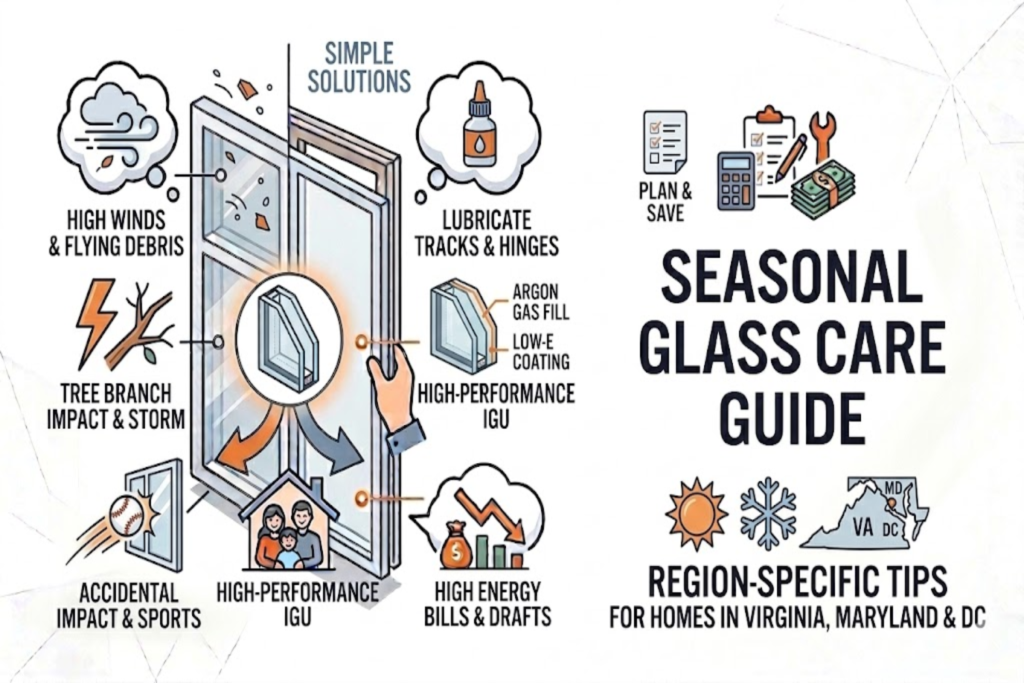
Spring Window Glass Care Essentials
Spring brings pollen, rain showers, and rising temperatures that stress window seals and frames after winter dormancy. Begin by removing and thoroughly cleaning all screens with mild soap and a soft brush to eliminate winter dust and insect debris. Inspect exterior caulking and weatherstripping for winter damage—cracks from freeze-thaw cycles or shrinkage—and refresh any failing sections with high-quality exterior-grade sealant. Clean both interior and exterior glass using a vinegar-water solution to remove hard-water spots, pollen film, and acid rain residue. Lubricate all sash tracks, hinges, cranks, and locks with silicone spray to restore smooth operation after cold-weather stiffness. Check weep holes at the bottom of frames with a toothpick to ensure they remain open for proper drainage. Spring maintenance prepares windows for summer heat and humidity while addressing any winter wear before it worsens.
Pollen and Rain Preparation Steps
Pollen coats exterior glass and clogs weep holes and tracks, reducing drainage and causing water backup during spring rains. Vacuum tracks and sills first, then wash frames and glass from top to bottom to avoid streaking. Use a microfiber cloth or squeegee for streak-free results on coated low-E glass. Reinstall freshly cleaned screens only after confirming no tears or bent frames. Apply UV-protective window film on south- and west-facing windows if fading has been an issue. These steps minimize interior dust tracking and maintain clear views during the high-pollen season. Consistent spring cleaning prevents buildup that attracts more dirt later.
Summer Window Glass Maintenance Strategies
Summer heat, intense sunlight, high humidity, and occasional thunderstorms demand focus on solar control, moisture management, and exterior protection. Deep-clean exterior glass to remove dust, bugs, and tree sap that reduce clarity and increase heat absorption. Inspect low-E coatings for any visible damage or delamination—though rare, early detection prevents efficiency loss. Keep weep holes and drainage channels clear of leaves, pollen residue, and insect nests to prevent water ponding during heavy rains. Apply or refresh exterior caulk around frames to block humidity intrusion that causes swelling or rot in wood components. Lubricate hardware again if operation feels sticky from pollen or heat expansion. Use breathable mesh screens to allow airflow while blocking insects. Summer care emphasizes preventing heat gain and water-related issues before fall arrives.
Managing Heat Gain and UV Exposure
- Strong summer sun accelerates fading of furnishings and increases cooling costs through uncontrolled solar heat gain.
- Confirm that low-E coatings remain intact and effective—cleaning with ammonia-free solutions preserves their performance.
- Consider temporary solar-control films or exterior awnings on particularly sunny exposures.
- Check interior condensation on very humid days; surface moisture is normal, but persistent interior-side fogging signals seal concerns.
- Trim nearby vegetation to reduce shading inconsistencies that cause thermal stress cracks.
- These preventive measures keep indoor temperatures more stable and protect interiors from UV damage.
Fall Window Glass Preparation for Winter
Fall serves as the critical transition period to winterize windows before cold temperatures and wind arrive. Perform a thorough inspection of all seals, weatherstripping, and caulking—replace any hardened, cracked, or missing sections to block drafts. Clean glass one final time to maximize natural light during shorter days. Lubricate all moving parts generously to prevent freezing or binding when temperatures drop. Remove screens and store them flat in a dry location to avoid winter damage and improve insulation slightly. Install storm windows or insulating film kits on single-pane or older double-pane units for added thermal protection. Check locks and operators for secure engagement—tighten screws and lubricate mechanisms. Fall preparation significantly reduces heating costs and prevents cold-weather failures.
Installing Temporary Insulation Solutions
Low-cost window insulation kits with shrink film and double-sided tape create an airtight barrier that reduces drafts and heat loss. Apply film carefully to avoid wrinkles, then use a hairdryer to shrink it taut and clear. These temporary layers can cut heat loss by up to 50% on problem windows. Remove in spring for fresh air and cleaning. For renters or historic homes, magnetic insulating panels offer a non-permanent alternative. These DIY solutions bridge the gap until full upgrades become feasible. Proper application ensures maximum effectiveness without damaging frames.
Winter Window Glass Protection Tips
Winter brings freezing temperatures, wind, ice, and snow that test window seals, frames, and drainage systems. Monitor for interior frost patterns or condensation along edges—significant buildup indicates air leaks or seal failure. Keep weep holes free of ice and snow to prevent water backup that freezes and damages sills. Avoid scraping ice from glass with metal tools—use a plastic scraper or lukewarm water to prevent scratching. Check exterior caulking for new cracks caused by contraction; touch up small gaps with cold-weather caulk if temperatures allow. Lubricate hardware before extreme cold sets in to prevent sticking. Use heavy curtains or cellular shades at night to create an insulating air pocket. Winter vigilance prevents burst seals, water damage, and excessive energy loss.
Preventing Ice and Condensation Buildup
Interior condensation forms when warm moist air meets cold glass—improve ventilation and use dehumidifiers to reduce indoor humidity levels. Exterior ice on glass usually results from poor drainage or leaks; clear weep holes and ensure proper slope. Never pour hot water on frozen glass—thermal shock causes cracking. Use a de-icer spray formulated for automotive glass if needed. Addressing humidity and drainage proactively minimizes winter problems. Consistent monitoring keeps windows safe and functional.
| Season | Priority Tasks | Tools & Materials Needed | Estimated Time per Window | Key Benefits Achieved |
| Spring | Deep clean glass/screens, inspect seals/caulk, lubricate hardware, clear weep holes | Vinegar solution, microfiber, caulk gun, silicone spray | 20–40 minutes | Pollen removal, early damage detection, summer readiness |
| Summer | Exterior glass cleaning, maintain drainage, refresh caulk, trim vegetation | Soft brush, squeegee, mild soap, UV film (optional) | 15–30 minutes | Heat gain reduction, moisture control, clear views |
| Fall | Final cleaning, replace weatherstripping/caulk, install insulation kits, store screens | Caulk, shrink film kits, lubricant, screwdriver | 30–60 minutes | Winter draft prevention, energy savings, hardware protection |
| Winter | Monitor condensation/frost, clear ice safely, check drainage, use insulating shades | Plastic scraper, dehumidifier, heavy curtains | 10–20 minutes (monitoring) | Prevent water damage, reduce heat loss, maintain comfort |
Advanced Seasonal Upgrades to Consider
During spring or fall, evaluate adding low-cost efficiency boosters like cellular shades, magnetic insulating panels, or UV-filtering films. Test for drafts annually with incense or tissue methods to confirm seal performance. Document maintenance dates and observations in a dedicated home notebook or app. Consider professional energy audits every 3–5 years to quantify improvements. These advanced steps bridge DIY care and major upgrades. They maximize performance without full replacement. Consistent tracking helps justify future investments.
Signs It’s Time to Call Professional Help
Persistent interior fogging between panes, visible water stains on sills, spreading cracks, or sashes that bind despite lubrication indicate problems beyond DIY scope. Repeated seal failure, frame rot, or hardware breakage usually requires specialized tools and expertise. Rising energy bills despite maintenance or visible structural damage also warrant professional evaluation. Schedule an inspection when multiple symptoms appear together. Early expert intervention prevents escalation into costly replacements. Knowing when to transition from DIY to pro care protects both safety and investment.
Conclusion
Consistent seasonal window glass care protects your home from the Mid-Atlantic climate’s diverse challenges while maximizing comfort, efficiency, and longevity. Spring cleaning and inspections remove winter residue and prepare for summer heat; summer maintenance controls moisture and solar gain; fall preparation winterizes against drafts and cold; winter monitoring prevents ice and condensation damage. These straightforward DIY routines—cleaning, lubricating, sealing, and inspecting—require minimal time and tools but deliver substantial savings on energy bills and professional repairs. In Woodbridge VA, where humidity, pollen, freeze-thaw cycles, and storms place extra stress on windows, proactive seasonal care proves especially rewarding. When simple maintenance no longer resolves issues—persistent fogging, spreading cracks, frame rot, or hardware failure—professional assessment ensures safe, effective resolution. Make seasonal window care a regular part of home ownership. Your windows will reward you with clearer views, lower costs, and greater comfort all year long.
Frequently Asked Questions
- How often should I clean my windows during the year?
Clean interior and exterior glass at least twice yearly—spring and fall—for optimal clarity and early damage detection. Homes near trees, roads, or with hard water may need quarterly cleaning. Use gentle, ammonia-free solutions on coated glass. Regular cleaning prevents buildup and makes inspections more effective.
- What is the safest way to remove hard-water spots from window glass?
Mix equal parts white vinegar and water, spray liberally, let sit 10–15 minutes, then gently scrub with a non-abrasive pad. Rinse thoroughly and dry immediately with microfiber. Repeat for stubborn deposits. Avoid abrasive tools or harsh chemicals that etch the surface permanently.
- Can I use WD-40 on window tracks and hardware?
No—WD-40 attracts dirt and becomes gummy over time. Use pure silicone spray lubricant or dry graphite powder instead. Apply lightly, operate the window several times, then wipe excess. This keeps parts moving smoothly without collecting grime.
- How do I test for drafts around windows without special equipment?
On a windy day, hold a lit incense stick, candle flame, or lightweight tissue near window edges—flickering or movement indicates air leaks. Feel for cold spots or listen for whistling. Close a dollar bill in the sash; if it pulls out easily, seals need attention. These simple tests reveal problems quickly.
- Is it safe to clean low-E coated glass with regular ammonia-based cleaners?
No—ammonia can damage low-E coatings over time. Use only pH-neutral, ammonia-free cleaners or vinegar-water solutions. Microfiber cloths prevent micro-scratches. Proper cleaning preserves energy performance and coating longevity. Always check manufacturer recommendations.
- Should I remove window screens every season for cleaning?
Yes—remove and clean screens at least once or twice yearly with mild soap and a soft brush. Rinse thoroughly, dry completely, and inspect for tears or bent frames. Cleaning improves airflow and prevents pollen/dust tracking indoors. Store screens flat during winter to extend their life.
- What should I do about condensation on the interior side of windows in winter?
Interior condensation results from high indoor humidity meeting cold glass—improve ventilation, use exhaust fans, or run a dehumidifier to lower moisture levels. Surface moisture is normal; persistent heavy condensation may indicate leaks or seal issues. Address humidity first, then inspect seals if problems continue.
- How do I keep weep holes clear in vinyl or aluminum frames?
Inspect weep holes twice yearly and clear any dirt, insect nests, or paint buildup with a toothpick, small wire, or compressed air. Ensure they remain open for proper drainage. Blocked weep holes cause water backup and frame damage. This quick task prevents costly moisture problems.
- Can I apply window insulation film myself in the fall?
Yes—shrink-film insulation kits are easy DIY projects. Clean glass thoroughly, apply double-sided tape around the frame, attach film, and use a hairdryer to shrink it taut. These temporary layers reduce drafts and heat loss significantly. Remove carefully in spring to avoid residue.
- When should I stop DIY maintenance and call a professional for windows?
Call a pro when you see spreading cracks, persistent internal fogging between panes, water stains on sills, frame rot, or hardware that remains inoperable despite lubrication. Multiple failing seals or unexplained energy bill increases also warrant expert attention. Professional diagnosis prevents escalation and ensures safety.
Visit our DMV Window Repairs LLC blog to explore our residential and commercial glass services for customers in Virginia, Maryland & DC.