

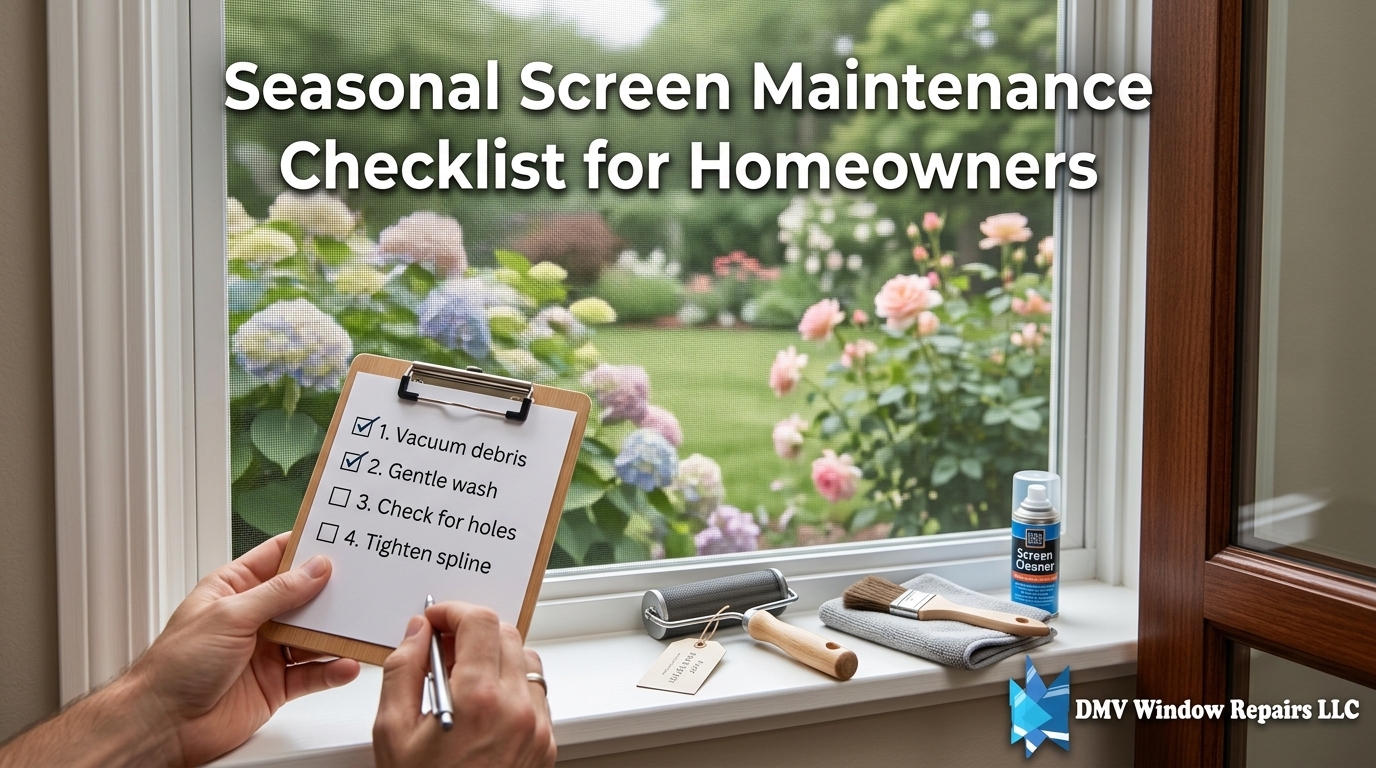
Seasonal screen maintenance keeps window and door screens functioning effectively year-round, ensuring strong natural ventilation, complete insect protection, reduced allergens, lower energy bills, and prolonged screen lifespan. Neglected screens develop tears, sagging mesh, corroded frames, loose spline, blocked channels, and poor fit that allow bugs indoors while restricting airflow dramatically.
A structured seasonal checklist—spring preparation, summer protection, fall cleanup, and winter inspection—catches small issues before they become expensive repairs or full replacements. Regular attention preserves mesh tension, frame integrity, perimeter seals, and overall performance so screens deliver maximum comfort during every season. Homeowners who follow consistent routines report noticeably fewer pests, fresher indoor air, cooler rooms in summer, and less reliance on air conditioning.
Proper maintenance also enhances curb appeal by keeping screens clean, taut, and visually appealing from both inside and outside. These simple steps require minimal tools, basic supplies, and only a few hours spread across the year. Implementing a seasonal checklist transforms screens from potential weak points into reliable, long-lasting home features.

Spring Screen Maintenance – Prepare for Active Season
Spring brings pollen surges, hatching insects, warming temperatures, and increased window use—making thorough screen preparation essential before summer arrives. Remove all screens (with help for upper floors) and lay them flat on a clean surface like a tarp or driveway. Vacuum both sides using a brush attachment to extract winter dust, leaves, spider webs, and dead insects trapped in the mesh. Wash gently with mild dish soap and water using a soft brush—never abrasive pads or pressure washers that damage mesh or coatings.
Rinse thoroughly and air-dry completely in shade to prevent water spots or mildew. Inspect every inch of mesh for small tears, pet scratches, or brittleness from winter UV exposure. Check frames for corrosion (white powder on aluminum, rust on steel), warping, corner separation, or loose spline. Lubricate related window channels, tracks, and hardware with silicone spray to ensure smooth operation. Reinstall screens only after confirming tight fit and flush seating against sashes.
Cleaning Mesh Thoroughly
Mix 1–2 tablespoons mild dish soap in a bucket of warm water. Dip a soft-bristle brush and scrub both sides gently in circular motions—focus on corners and edges where grime accumulates most. Rinse with low-pressure garden hose or clean water bucket. For stubborn pollen or sap, add a little white vinegar to the solution. Dry completely before reinstalling to avoid trapping moisture that causes mildew. Clean screens twice yearly—spring and fall—for best results.
Inspecting for Early Damage
Hold screens up to light to spot micro-tears, thinning strands, or small holes invisible in normal viewing. Run fingers gently along mesh to feel rough spots or loose areas indicating wear. Check spline (rubber cord) for cracking, hardening, or separation from grooves. Examine frame corners for separation or screw loosening. Look for rust stains or white oxidation on metal frames. Document findings with photos for comparison next season.
Summer Screen Maintenance – Protect During Peak Use
- Summer heat, humidity, intense sun, frequent storms, and constant window/door operation accelerate screen wear significantly.
- Check all screens monthly for new tears from wind-blown debris, pet activity, or accidental contact.
- Clean exterior surfaces every 4–6 weeks to remove accumulated pollen, dust, bird droppings, and tree sap that block airflow and degrade mesh coating.
- Use garden hose on low pressure or soft brush with soapy water—never high-pressure washing that forces water through mesh into frames.
- Trim nearby shrubs, vines, or tree branches at least 12–18 inches away from windows to prevent rubbing damage and debris buildup.
- Ensure screens remain firmly seated—vibration from storms or heavy use can loosen fit over time.
- Lubricate window tracks and hardware again mid-summer to maintain smooth operation.
- Monitor for sagging or bulging that develops from heat expansion—adjust tension if possible or schedule professional service.
Managing Pollen and Dust Buildup
Pollen coats mesh heavily during spring/summer—reducing airflow by 20–40% if not cleaned regularly. Rinse exterior weekly during peak pollen weeks with gentle hose spray. Vacuum interior side monthly to remove indoor dust settling on mesh. Avoid letting wet pollen dry on screens—hardened deposits become difficult to remove without damaging strands.
Preventing Storm Damage
Secure loose screens before forecasted high winds or thunderstorms—add temporary braces or clips if needed. Clear gutters and downspouts to prevent overflow splashing against lower screens. After storms, inspect immediately for new tears, dents, or dislodged spline. Address damage promptly before insects exploit fresh openings.
Fall Screen Maintenance – Cleanup and Winter Preparation
Fall brings falling leaves, seed pods, dying insects, and cooler temperatures—ideal for deep cleaning and inspection before winter dormancy. Remove all screens again and clean thoroughly as in spring—focus on leaf debris packed into corners and channels. Vacuum hidden areas behind frames where leaves accumulate unnoticed. Inspect mesh for summer wear—UV fading, small tears from branches, or pet damage.
Check frames for corrosion progression or new warping from heat cycles. Lubricate all window hardware before cold weather stiffens mechanisms. Store screens flat in garage or basement if removable—stack with cardboard separators to prevent bending. For non-removable screens, cover exterior with breathable tarps during heavy leaf drop to minimize debris entry.
Removing Leaf and Debris Accumulation
Leaves trap moisture against mesh and frames, accelerating corrosion and mildew. Use shop vacuum with narrow attachment to extract packed debris from channels and corners. Brush gently to dislodge stuck material—never force or scrape mesh. Rinse lightly and dry completely before reinstalling or storing.
Preparing Frames for Winter
Apply light silicone lubricant to metal frames to protect against moisture and temperature contraction. Check caulk/sealant around window perimeters—reapply exterior-grade caulk if cracked or shrunk. Tighten any loose screws in frames or mounting hardware. Winter preparation prevents small issues from worsening during freeze-thaw cycles.
Winter Screen Maintenance – Inspection and Protection
Winter cold, wind, occasional storms, and reduced window use make screens vulnerable to hidden damage from ice, snow, and contraction. Even with windows mostly closed, inspect visible screens monthly for new tears from wind-blown ice pellets or debris. Check frames for frost heave or contraction stress—look for new corner separation or frame twisting. Clear snow/ice buildup from exterior sills that could press against lower screens.
Maintain indoor humidity below 45% to prevent condensation on cold glass that drips onto frames. Lubricate hardware again before spring to counteract winter stiffness. Schedule professional inspection if multiple issues appear or if screens show widespread wear after seasons of exposure.
Protecting Against Freeze-Thaw Damage
Moisture trapped in channels or spline grooves freezes and expands, loosening fit or cracking frames. Ensure weep holes remain clear for drainage. Avoid directing sprinklers or downspouts toward windows during winter. Check for ice dams on roof edges that could overflow onto lower screens.
Planning Spring Repairs Early
Winter provides time to research professionals, compare quotes, and order specialty mesh (pet-resistant, solar, No-See-Um) if needed. Document all observed issues with photos for accurate professional quotes. Early planning prevents spring rush delays when everyone needs service simultaneously.
| Season | Key Maintenance Tasks | Tools & Supplies Needed | Time Required (per 10 screens) | Priority Level | Primary Benefit | Potential Issues if Skipped |
| Spring | Remove & deep clean all screens, inspect mesh/frames, lubricate hardware, reinstall | Mild soap, soft brush, vacuum, hose, lubricant | 4–6 hours | Very High | Prepares for insect season, maximizes airflow | Heavy pollen/dust entry, weak ventilation |
| Summer | Monthly exterior rinse, trim vegetation, check for new damage, mid-season lubrication | Hose, soft brush, pruning shears, lubricant | 1–2 hours monthly | High | Maintains airflow during peak heat, prevents tears | Overheating indoors, bug surges |
| Fall | Deep clean & remove leaves, inspect wear, lubricate before cold, store removable | Shop vac, soap, brush, lubricant, storage tarps | 3–5 hours | High | Clears debris, catches summer damage, protects winter | Trapped moisture, corrosion acceleration |
| Winter | Monthly visual check, clear snow/ice, maintain low humidity, plan spring repairs | Flashlight, soft cloth, dehumidifier if needed | 30–60 min monthly | Medium | Prevents hidden damage from cold, prepares next year | Ice expansion damage, spring surprises |
| Year-Round | Gentle interior wipe monthly, avoid leaning objects, keep channels clean | Microfiber cloth, vacuum attachment | 15–30 min monthly | Medium | Prevents dust buildup, maintains appearance | Gradual airflow reduction, visible dirt |
Woodbridge VA homeowners rely on spring and fall deep cleaning to combat heavy pollen and leaf seasons effectively.
Woodbridge VA residences maintain excellent ventilation and bug protection with consistent seasonal screen care.
Woodbridge VA properties benefit greatly from winter inspections that catch humidity-related issues early.
Woodbridge VA continues to see improved comfort year-round when homeowners follow structured seasonal checklists.
Additional Tips for Effective Screen Maintenance
Always work on dry, mild days to prevent trapping moisture in frames. Use only Low-E-safe cleaners on glass-adjacent screens to avoid coating damage. Store removable screens flat and stacked with cardboard separators to prevent bending. Label screens by window location for easy reinstallation. Keep a small supply of matching spline and mesh for quick emergency patches. Schedule professional deep inspection every 2–3 years even if no obvious issues appear. Combine screen maintenance with window track cleaning and hardware lubrication for complete performance.
Conclusion
A well-executed seasonal screen maintenance checklist keeps window and door screens performing at peak levels throughout the year—delivering maximum insect protection, unrestricted natural ventilation, cleaner indoor air, better temperature regulation, and significantly extended lifespan. Spring preparation removes winter buildup and catches early damage before summer insect surges. Summer care prevents heat-related wear and maintains airflow during peak usage.
Fall deep cleaning clears debris and prepares for winter dormancy. Winter inspections identify cold-weather issues before spring. Consistent attention to cleaning, inspection, lubrication, and minor adjustments prevents most common failures and eliminates the need for frequent professional repairs. Homeowners who adopt this seasonal routine enjoy pest-free, comfortable, energy-efficient homes with fresh air circulation whenever desired. The modest time investment pays back through lower utility bills, reduced allergies, fewer pest control expenses, and screens that look and function like new for many years.
Frequently Asked Questions
- How often should I clean my window screens during the year?
Clean exterior surfaces monthly during spring and summer pollen seasons, then deep clean both sides in spring and fall. Interior wipe-downs monthly prevent dust buildup. Adjust frequency based on local pollen, dust, and leaf conditions—more frequent in high-exposure areas.
- What’s the best way to clean screens without damaging the mesh?
Use mild dish soap in warm water with a soft-bristle brush—scrub gently in circular motions. Rinse thoroughly with low-pressure hose or clean water. Never use abrasive pads, bleach, or high-pressure washers. Air-dry completely in shade before reinstalling.
- Should I remove all screens every season or just clean them in place?
Remove screens for deep cleaning twice yearly (spring and fall) to access both sides and hidden channels fully. Monthly maintenance can often be done in place with vacuum and gentle rinsing. Removal ensures thorough results and allows frame inspection.
- How do I know if my screens need professional attention instead of DIY care?
Visible tears larger than 1 cm, multiple holes, sagging/bubbling mesh, warped frames, corroded metal, or persistent insect entry despite cleaning indicate professional help. When DIY tensioning or patching fails repeatedly, expert re-screening becomes necessary.
- Can seasonal maintenance really reduce my air conditioning use?
Yes—clean, tight screens enable strong natural ventilation during mild weather, lowering indoor temperatures without AC. Better airflow flushes heat and humidity more effectively. Many homeowners reduce cooling runtime noticeably during shoulder seasons.
- How do I prevent pet damage during maintenance seasons?
Install temporary plastic barriers or pet guards during cleaning periods. Trim nails regularly and provide scratching alternatives. Use pet-resistant mesh on pet-accessible windows for long-term protection. Supervise pets near open windows during maintenance.
- What should I do if I find rust or corrosion during seasonal checks?
Light oxidation can be gently removed with vinegar solution and soft brush—rinse and dry immediately. Significant rust or pitting requires professional frame replacement with corrosion-resistant material. Address early to prevent spreading and structural weakening.
- How do I store removable screens properly during winter?
Store flat in garage or basement—stack with cardboard separators to prevent bending. Avoid leaning against walls or piling heavy items on top. Keep in dry, temperature-stable area away from direct sun or moisture sources.
- Does regular screen maintenance improve indoor air quality noticeably?
Yes—clean mesh filters more pollen, dust, and spores effectively. Strong ventilation carries indoor pollutants outdoors. Reduced allergen infiltration means fewer respiratory symptoms and healthier air overall—especially valuable for allergy-prone households.
- How much time does a complete seasonal maintenance routine take?
Spring/fall deep clean: 4–6 hours for 10–15 screens. Monthly quick checks: 15–30 minutes. Winter inspections: 30–60 minutes monthly. Total annual investment usually under 15–20 hours spread across seasons—well worth the comfort and savings gained.
Visit our DMV Window Repairs LLC blog to explore our residential and commercial glass services for customers in Woodbridge, VA.