
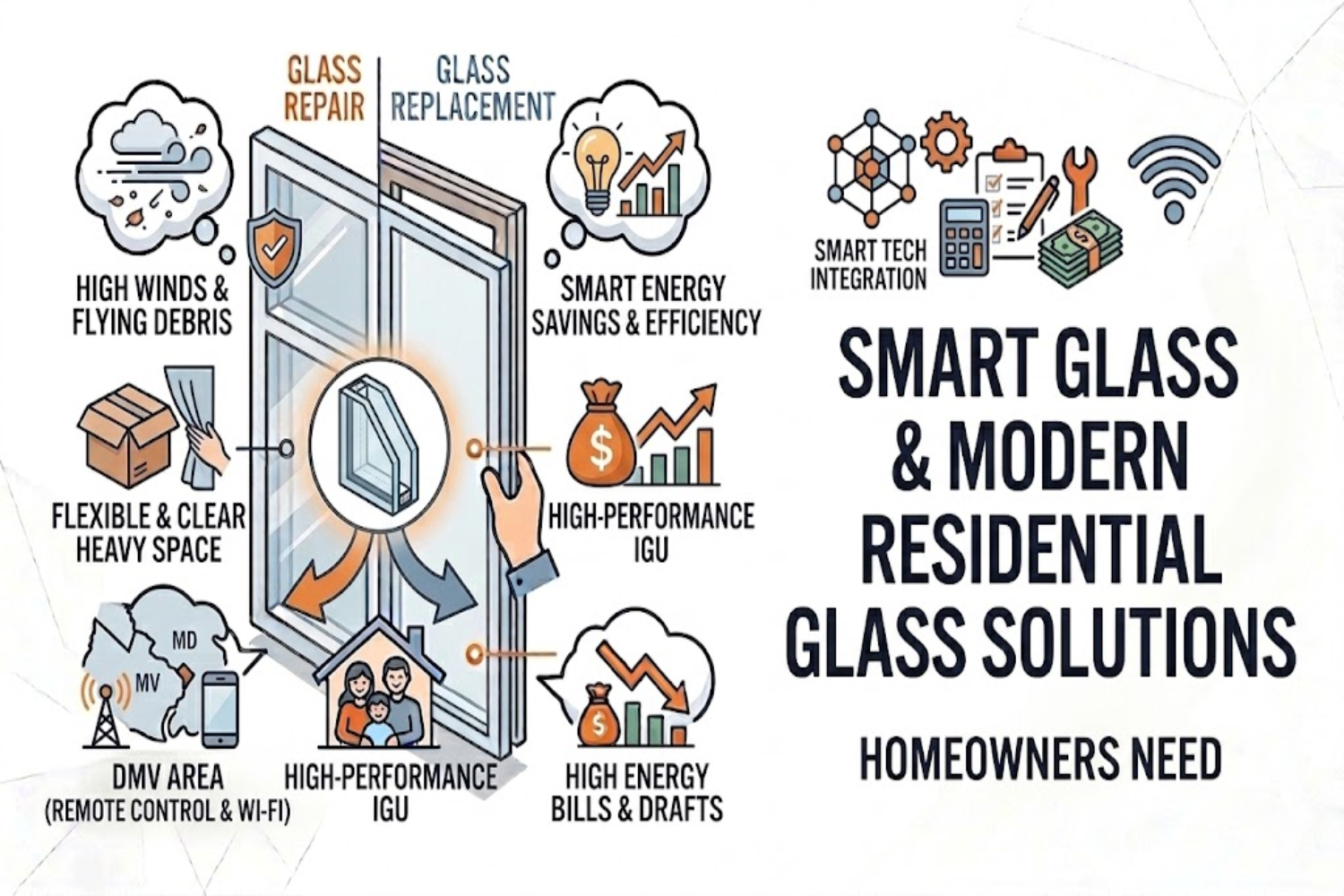
Smart glass and advanced residential glass technologies represent the future of home window solutions, offering homeowners unprecedented control over light, privacy, energy efficiency, and comfort. These innovative materials switch from clear to opaque at the touch of a button, reduce heat gain in summer, retain warmth in winter, block harmful UV rays, and enhance security without traditional blinds or curtains. Modern glass options go far beyond standard clear or tinted panes, incorporating electrochromic films, suspended particle devices, liquid crystal layers, and low-emissivity coatings with nanotechnology. In homes facing variable weather patterns, these solutions dramatically lower heating and cooling costs while improving indoor living quality. Homeowners gain customizable privacy, glare reduction, and natural daylight management without sacrificing views. Upgrading to smart or high-performance glass increases property value and supports sustainable living goals. This comprehensive guide explores the leading modern glass technologies available today. Discover how these solutions can transform your home’s windows into intelligent, energy-smart features.
What Is Smart Glass and How Does It Work?
Smart glass, also known as switchable glass or privacy glass, changes its light-transmission properties in response to electrical voltage, heat, or light exposure. The most common type—electrochromic smart glass—uses a thin gel or film sandwiched between glass layers that darkens when low voltage is applied, tinting the window in seconds. Suspended particle devices (SPD) align microscopic particles to allow light through when powered and scatter them for opacity when off. Polymer dispersed liquid crystal (PDLC) glass switches from frosted (off) to clear (on) almost instantly. These technologies eliminate the need for mechanical shades while providing instant privacy and solar control. Smart glass integrates with home automation systems for voice, app, or schedule-based operation. The result is dynamic windows that adapt to daily needs and seasonal changes automatically.
Types of Smart Glass Technologies Available
Electrochromic glass offers gradual tinting with excellent color neutrality and energy-saving benefits. SPD glass provides faster switching and superior solar heat rejection for bright, sunny exposures. PDLC glass excels at instant privacy with a frosted appearance when powered off. Photochromic and thermochromic variants adjust automatically based on sunlight or temperature without electricity. Hybrid systems combine multiple technologies for optimized performance. Each type suits different priorities—energy efficiency, speed, privacy level, or automation integration. Professional installation ensures proper wiring and compatibility with existing electrical systems.
Energy Efficiency Benefits of Modern Glass Solutions
Modern residential glass dramatically improves home energy performance by controlling solar heat gain, reducing conductive heat loss, and blocking infrared radiation. Low-E (low-emissivity) coatings reflect heat back into the room during winter and reject solar heat in summer, lowering HVAC runtime significantly. Argon or krypton gas fills between panes slow thermal transfer, boosting insulation values. Triple-pane configurations with advanced spacers achieve U-factors as low as 0.15–0.20, far superior to standard double-pane windows. Smart tinting glass actively manages solar gain, potentially cutting cooling costs by 20–40% in warm climates. These technologies qualify for energy rebates and increase overall home efficiency ratings. Long-term savings often offset higher upfront costs within 5–10 years.
How Low-E Coatings and Gas Fills Improve Performance
Low-E coatings are microscopically thin metallic layers that reflect infrared heat while allowing visible light through. Hard-coat (pyrolytic) versions bond permanently during manufacturing; soft-coat (sputtered) versions offer higher performance but require careful handling. Argon gas, denser than air, reduces convection currents inside the sealed unit. Krypton provides even better insulation in narrower gaps. Combined, these features lower both U-factor (heat loss) and solar heat gain coefficient (SHGC). Homeowners experience more stable indoor temperatures and reduced hot/cold spots near windows. Energy modeling shows measurable utility bill reductions after installation.
Privacy Without Traditional Window Treatments
Smart glass delivers instant, on-demand privacy without curtains, blinds, or shades that collect dust and block views. PDLC glass switches from transparent to fully frosted in milliseconds, ideal for bathrooms, bedrooms, or home offices. Electrochromic variants offer adjustable tint levels for partial privacy while maintaining some natural light. These solutions eliminate mechanical parts that wear out or break over time. Home automation integration allows privacy activation via smartphone, voice command, or motion sensors. Aesthetic benefits include cleaner window lines and unobstructed sightlines when clear. Modern privacy glass enhances both functionality and contemporary home design.
Security Enhancements with Laminated and Impact-Resistant Glass
Laminated glass features a tough PVB interlayer that holds shards together even when cracked, preventing easy penetration during break-in attempts. Impact-resistant laminated options withstand forced entry better than standard glass. Tempered glass breaks into small, dull pieces rather than sharp shards, reducing injury risk. Hurricane-rated or blast-resistant variants use thicker laminates for extreme protection. Smart glass can incorporate security films or interlayers without compromising switchable properties. These features provide layered defense while maintaining modern aesthetics. Upgraded glass significantly improves overall home safety.
Noise Reduction Capabilities of Advanced Glass
Acoustic laminated glass with specialized interlayers dampens sound transmission effectively, reducing street noise, traffic, aircraft, or neighbor sounds by 30–50%. Asymmetric pane thicknesses and PVB layers tuned for specific frequencies deliver optimal performance. Triple-pane configurations with gas fills further enhance sound insulation. Smart glass variants can include acoustic interlayers without affecting switchability. Homes near busy roads, schools, or airports benefit most dramatically. Reduced noise pollution improves sleep quality, concentration, and overall well-being. Modern glass solutions create quieter, more peaceful living environments.
UV Protection and Fading Prevention Features
Modern glass blocks up to 99% of harmful UV rays that cause furniture, flooring, artwork, and fabrics to fade over time. Low-E coatings and laminated interlayers provide superior UV filtration compared to standard clear glass. Electrochromic and SPD smart glass maintain high UV rejection even when tinted. This protection preserves interior finishes and reduces indoor heat buildup from solar radiation. Homeowners notice longer-lasting colors and fabrics after upgrade. UV-blocking glass supports healthier indoor environments by limiting UV exposure. These features add significant value to modern window investments.
Integration with Home Automation Systems
Smart glass connects seamlessly to major home automation platforms like Crestron, Control4, Lutron, Savant, and voice assistants such as Alexa, Google Home, or Apple HomeKit. Scheduled tinting follows sunrise/sunset times for automatic energy optimization. Occupancy sensors trigger privacy modes when rooms are in use. Integration with thermostats coordinates tinting with HVAC settings for maximum efficiency. Mobile apps provide remote control and monitoring from anywhere. Voice commands offer hands-free operation for convenience. These smart features elevate window functionality to true home intelligence level.
| Modern Glass Solution | Key Features | Primary Benefits | Typical Cost Range (per sq ft installed) | Best Applications |
| Electrochromic Smart Glass | Voltage-controlled tinting, gradual change | Solar control, privacy, energy savings | $80 – $150 | South/west-facing windows, offices |
| PDLC Privacy Glass | Instant clear-to-frost switch | On-demand privacy, clean aesthetics | $60 – $120 | Bathrooms, bedrooms, conference rooms |
| SPD Smart Glass | Fast switching, excellent solar rejection | Glare reduction, heat control | $90 – $160 | Sunny exposures, skylights |
| Low-E + Argon Double-Pane | Heat reflection, gas insulation | Year-round energy efficiency | $25 – $55 | Standard replacement windows |
| Triple-Pane with Low-E & Krypton | Superior insulation, low U-factor | Maximum energy savings, noise reduction | $45 – $90 | Cold climates, noise-sensitive areas |
| Acoustic Laminated Glass | Specialized PVB for sound dampening | 30–50% noise reduction | $35 – $80 | Urban homes, near roads/airports |
| Impact-Resistant Laminated | PVB interlayer holds glass together | Security, hurricane protection | $40 – $100 | Ground-floor, high-risk areas |
| UV-Blocking Laminated | Blocks 99% UV rays | Fading prevention, healthier interiors | $30 – $70 | Rooms with valuable furnishings/artwork |
Selecting the Right Modern Glass for Your Home
Assess your primary needs—energy savings, privacy, noise control, security, or UV protection—to narrow options. South- and west-facing windows benefit most from solar-control smart glass or low-E triple-pane. Bedrooms and bathrooms often prioritize instant privacy via PDLC. Noisy locations call for acoustic laminates. Consult professionals for on-site evaluation of orientation, climate exposure, and existing frames. Factor in automation compatibility if you use smart home systems. Matching glass technology to specific requirements maximizes satisfaction and performance. Expert guidance ensures the perfect fit.
Installation Considerations for Smart & Advanced Glass
Professional installation proves essential for smart glass due to electrical wiring, precise sealing, and system integration requirements. Frames must accommodate wiring channels or edge connections without compromising appearance. Power supply planning and switch placement should be decided early. Insulation around edges prevents thermal bridging. Post-installation testing verifies tinting speed, clarity, and energy performance. Warranties often require certified installers. Proper setup guarantees reliable operation and longevity. Trust experienced technicians for flawless execution.
Conclusion
Smart glass and modern residential glass solutions give homeowners powerful new ways to control light, privacy, energy use, noise, UV exposure, and security—all from the same window pane. These technologies eliminate traditional compromises between views, privacy, and efficiency, delivering cleaner aesthetics and smarter home performance. Whether choosing switchable privacy glass, advanced low-E configurations, or acoustic/impact-resistant upgrades, the benefits include lower utility bills, enhanced comfort, reduced fading, quieter interiors, and increased property value.
In Woodbridge VA, where seasonal temperature swings and occasional storms challenge conventional windows, these modern solutions provide lasting protection and convenience. Investing in cutting-edge glass upgrades transforms ordinary windows into intelligent features that adapt to your lifestyle. The future of home windows has arrived—embrace these innovations for a more comfortable, efficient, and secure living environment.
Frequently Asked Questions
- What exactly is smart glass and is it worth the higher cost?
Smart glass changes opacity or tint with electricity, heat, or light, providing instant privacy, solar control, and glare reduction without blinds. It delivers significant energy savings, cleaner aesthetics, and convenience. Higher upfront cost often pays back through utility reductions and property value increase. Most homeowners find it worthwhile for key rooms.
- How much does smart glass typically cost per window?
Electrochromic smart glass averages $80–$150 per square foot installed, PDLC privacy glass $60–$120 per square foot. Full window units with frames cost $1,200–$3,000+ depending on size and features. Prices vary by technology, size, and integration. Professional quotes provide exact figures for your home.
- Can smart glass help lower my energy bills noticeably?
Yes, smart glass actively reduces solar heat gain in summer and retains heat in winter, often cutting cooling/heating costs by 20–40% on affected windows. Combined with low-E and gas fills, savings compound significantly. Payback periods typically range 5–10 years. Energy modeling confirms expected reductions.
- Does smart glass provide complete privacy like frosted glass?
PDLC smart glass switches to fully frosted/opaque instantly for complete privacy when powered off. Electrochromic and SPD types darken progressively for adjustable privacy levels. No technology blocks 100% view when clear, but all eliminate see-through when activated. Choose based on desired privacy speed and style.
- Is smart glass difficult to maintain compared to regular windows?
Smart glass cleans like standard glass using non-abrasive cleaners and microfiber cloths. Electrical components are sealed and require no routine maintenance. Avoid harsh chemicals near edges. Professional inspection every 2–3 years ensures optimal performance. Maintenance remains simple and comparable to conventional windows.
- Can existing windows be upgraded to smart glass?
Yes, retrofit films or inserts can add switchable properties to existing windows in many cases. Full smart glass replacement provides better performance and longevity. Frame condition and wiring access determine feasibility. Professionals assess retrofit suitability during consultation. Upgrades bring modern benefits without full reconstruction.
- How durable is smart glass in everyday use?
Modern smart glass uses tempered or laminated substrates for impact resistance similar to standard safety glass. Electrical films are protected within sealed units. Warranties typically cover 10–20 years for switching performance. Proper installation prevents edge stress. Durability matches or exceeds conventional high-quality windows.
- Does smart glass block UV rays and protect furniture from fading?
Yes, most smart glass technologies block 98–99% of harmful UV rays, even when clear. Laminated interlayers and low-E coatings enhance protection further. This significantly reduces fading on furniture, flooring, and artwork. UV control remains active regardless of tint state. Excellent for preserving interiors.
- Can smart glass integrate with my existing smart home system?
Yes, major smart glass systems connect to Crestron, Control4, Lutron, Savant, Alexa, Google Home, and Apple HomeKit. Voice, app, schedule, or sensor control works seamlessly. Integration specialists ensure compatibility during installation. Smart home features unlock full convenience potential.
- Is smart glass suitable for bathrooms and bedrooms?
Absolutely—PDLC privacy glass excels in bathrooms and bedrooms with instant frosted privacy at the touch of a button or voice command. Electrochromic offers adjustable tinting for softer privacy. No mechanical parts eliminate maintenance issues. These applications rank among the most popular for smart glass upgrades.
Visit our DMV Window Repairs LLC blog to explore our residential and commercial glass services for customers in Woodbridge, VA.