
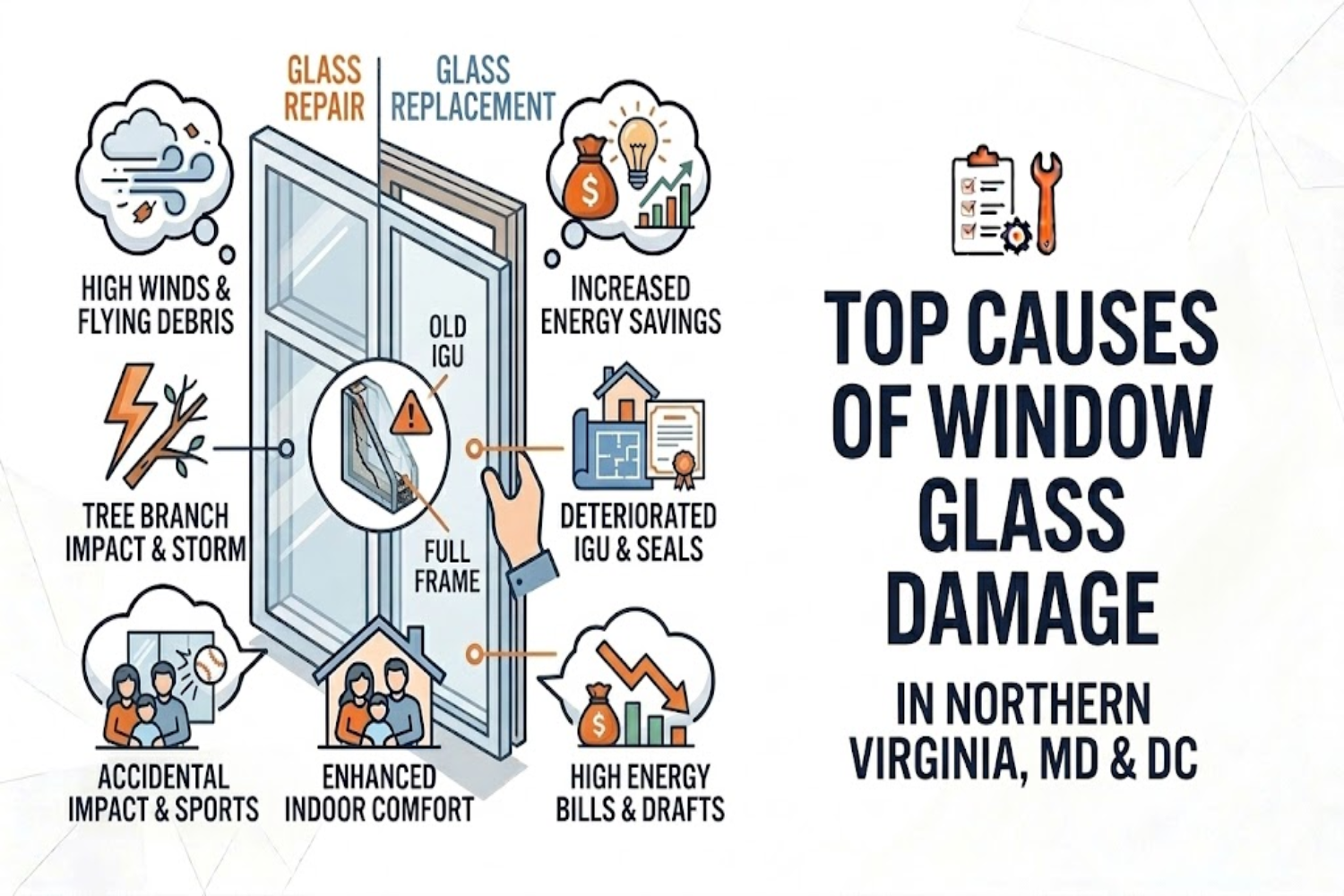
Window glass damage affects homes throughout the region, leading to safety concerns, higher energy bills, and costly repairs if ignored. Common issues range from visible cracks and chips to internal fogging that signals seal failure. These problems stem from environmental stresses, accidental impacts, material aging, and installation flaws that weaken glass integrity over time. In areas with distinct seasonal changes, temperature swings and weather events accelerate wear significantly. Understanding root causes empowers homeowners to spot early signs and seek professional help promptly. Preventing escalation preserves window functionality and home comfort year-round. Proactive awareness reduces emergency situations and extends overall lifespan. This article details the primary culprits behind residential window glass damage.
Impact Damage from External Objects
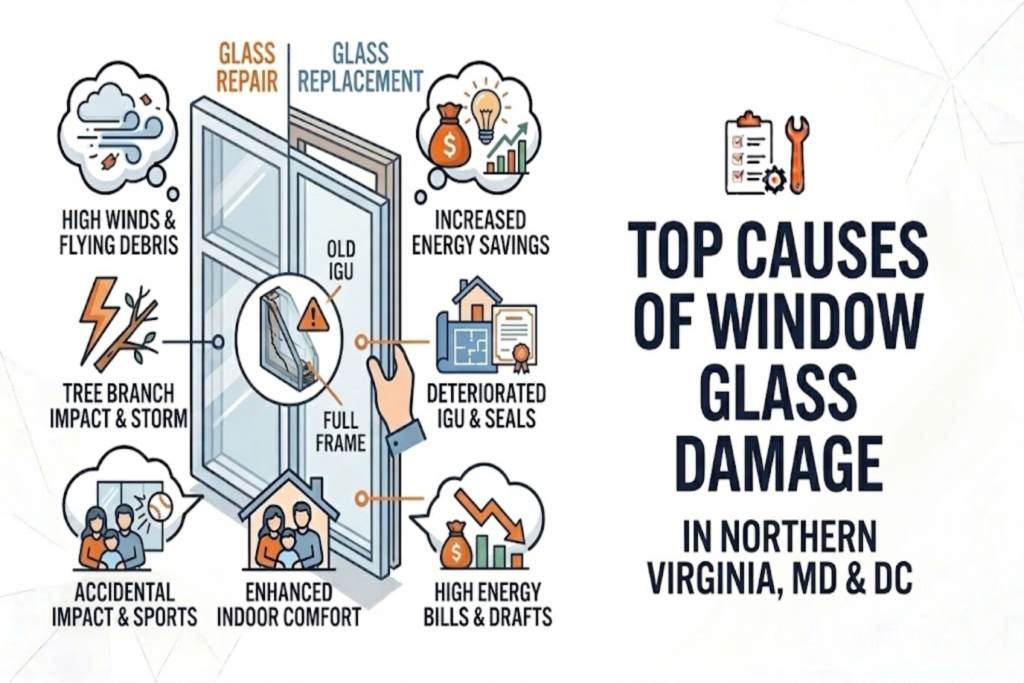
Accidental impacts represent one of the most frequent causes of visible window glass damage in homes. Flying debris during storms, lawn equipment projectiles, or children’s play items like balls strike glass with enough force to create chips, cracks, or full shattering. These incidents often produce starburst patterns or radial fractures that spread under continued stress. Even small impacts weaken the pane, allowing moisture entry or compromising structural strength. Homeowners notice these after windy days or yard work sessions when objects get propelled unexpectedly. Professional assessment determines if resin sealing suffices or full pane replacement becomes necessary. Addressing impact damage quickly prevents safety hazards and further deterioration.
How Everyday Accidents Lead to Serious Cracks
- Indoor accidents such as slamming doors, misplaced furniture, or dropped objects against sashes cause internal pressure that cracks glass over time.
- Outdoor mishaps like falling branches, baseballs, or gravel kicked up by mowers deliver direct blows creating immediate visible flaws.
- These events stress glass edges and surfaces unevenly, initiating micro-fractures that grow with thermal cycles.
- Ignoring minor chips allows them to propagate into larger breaks during temperature changes or wind pressure.
- Experts recommend protective window films or screens in high-risk areas to absorb impacts.
- Early intervention through repair maintains clarity and prevents escalation into replacement needs.
Thermal Stress Cracks from Temperature Fluctuations
Thermal stress stands out as a leading silent cause of window glass damage in regions with pronounced seasonal variations. Uneven heating across the pane—such as intense sunlight on one side while shadows cool the other—creates expansion differences that exceed glass tolerance. This results in curved or edge-to-edge cracks without any external impact. Double-pane units suffer particularly when internal gas pressure shifts or seals weaken under repeated cycles. Homes with large south-facing windows or partial shading from trees experience heightened risk. Professional diagnosis identifies stress patterns versus impact breaks accurately. Preventive measures like awnings or upgraded glazing mitigate future occurrences effectively.
Why Uneven Sun Exposure Worsens Thermal Damage
Partial shading from overhangs, neighboring structures, or vegetation creates hot spots and cool zones on the same pane, amplifying internal stresses dramatically. Reflective blinds or curtains left partially open concentrate heat in specific areas, mimicking a magnifying effect on glass. Rapid temperature drops after sunset or during storms add contraction forces that exploit existing micro-flaws. These conditions commonly produce stress cracks originating at edges or corners. Upgrading to heat-strengthened or tempered glass during repairs distributes forces more evenly. Awareness of orientation and shading helps homeowners anticipate and prevent thermal-related failures.
Severe Weather Events and Storm Damage
Harsh weather frequently causes widespread window glass damage through high winds, hail, heavy rain, or debris propelled at velocity. Strong gusts rattle frames while carrying branches, roofing materials, or other objects that strike surfaces forcefully. Hail impacts create pits, chips, or shattering depending on stone size and speed. Heavy precipitation exploits any existing weaknesses, forcing water intrusion that accelerates seal breakdown. Post-storm inspections reveal hidden micro-cracks or loosened glazing that compromise integrity. Prompt professional boarding and repair secure homes against secondary water or wind damage. Weather-resistant upgrades like laminated glass offer better protection in storm-prone zones.
Hail and Wind-Driven Debris Effects on Glass
Hailstones of varying sizes dent, crack, or shatter exposed glass during intense thunderstorms common in transitional seasons. Wind-driven debris turns ordinary storms into high-impact events that fracture panes unpredictably. These forces often damage multiple windows simultaneously across a property. Micro-damage from smaller hail weakens surfaces over repeated events, leading to sudden failures later. Protective measures such as storm shutters or impact-rated glass reduce vulnerability significantly. Insurance claims frequently cover weather-related incidents when documented promptly. Expert evaluation distinguishes storm damage from other causes for accurate repairs.
Seal Failure and Internal Fogging in Double-Pane Units
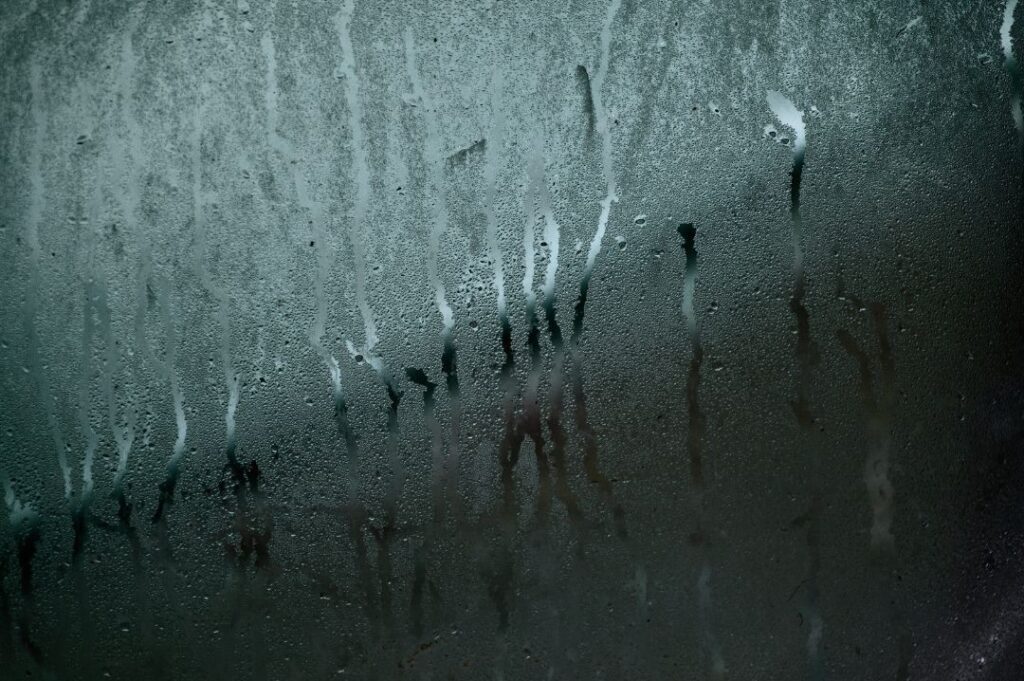
Failed edge seals in insulated glass units allow moisture intrusion, leading to persistent internal fogging and efficiency loss. Aging butyl or silicone seals degrade from UV exposure, temperature cycling, and manufacturing variances over 10-20 years. Once compromised, argon or krypton gas escapes while humid air enters, condensing between panes during temperature shifts. This condition destroys insulating properties entirely, mimicking single-pane performance. Homeowners spot hazy or milky appearances first in humid or cold conditions. Professional disassembly, drying, and resealing restore clarity and thermal resistance. Ignoring fogging invites mold risks and higher utility costs progressively.
Root Causes of Premature Seal Breakdown
Repeated expansion-contraction from seasonal extremes stresses seal adhesives until microscopic gaps form. Poor initial installation or incompatible materials accelerate failure rates noticeably. High humidity levels common in certain areas promote faster degradation through constant moisture exposure. Factory defects occasionally contribute to early breakdowns in batches. Skilled technicians test seal integrity and gas levels during inspections. Preventive upgrades with superior sealants extend unit lifespan effectively. Understanding these factors guides better maintenance decisions long-term.
Aging Materials and Natural Wear Over Time
Window glass and components naturally deteriorate through decades of exposure to elements, UV radiation, and mechanical stress. Older single-pane or early double-pane installations lack modern tempering or coatings, making them brittle and prone to cracking. Frame materials swell or shrink with humidity, applying pressure that stresses glass edges. Glazing compounds harden and crack, allowing water entry that weakens overall structure. Visible signs include discoloration, haze, or spontaneous fractures without impact. Regular inspections catch wear before catastrophic failure occurs. Upgrading aged windows prevents cumulative damage accumulation.
How Material Degradation Contributes to Cracks
Prolonged UV exposure weakens glass molecular structure subtly over years. Thermal cycling fatigues materials, creating internal tensions that manifest as cracks. Corroded hardware or warped frames misalign panes, causing binding and pressure points. Moisture intrusion from failed seals rots adjacent wood, exerting uneven forces. These progressive changes reduce resilience against normal stresses. Professional assessments quantify degradation levels accurately. Timely interventions like reinforcement or replacement halt advancement effectively.
Improper Installation or Manufacturing Defects
Faulty installation introduces stresses that lead to premature glass damage through misalignment, inadequate support, or incorrect glazing techniques. Windows fitted too tightly or loosely experience binding or gapping that cracks panes under movement. Manufacturing flaws such as nickel sulfide inclusions create spontaneous shattering risks in tempered glass. Edge damage during transport or handling weakens integrity before installation. Poor quality control occasionally results in defective seals or uneven thicknesses. Expert review identifies installation-related causes versus environmental ones. Corrective measures restore proper function and prevent recurrence.
Common Installation Mistakes Leading to Damage
Inadequate shimming causes frames to twist, stressing glass continuously. Incorrect sealant application allows water penetration from day one. Oversized or undersized units fit poorly, creating pressure points. Lack of proper flashing directs water toward sills instead of away. These errors compound with weather exposure over time. Certified installers follow industry standards to avoid pitfalls. Homeowners benefit from verifying credentials before work begins.
Pressure Changes and Vacuum Effects in Sealed Units
Altitude variations, extreme weather fronts, or rapid barometric shifts create pressure differentials that stress sealed insulated units. Internal vacuum or overpressure bows panes outward or inward, leading to seal rupture or cracking. High-elevation installations or sudden storm passages exacerbate these forces. Manufacturing tolerances sometimes leave units vulnerable to minor pressure changes. Visible deflection or popping sounds indicate impending issues. Professional pressure testing diagnoses sensitivity accurately. Reinforced designs or venting options mitigate risks in susceptible locations.
| Cause of Damage | Primary Mechanism | Common Signs | Typical Affected Windows | Prevention Strategies | Repair vs Replacement Recommendation |
| Impact from Objects | Direct force from debris, balls, branches | Chips, starburst cracks, shattering | Any exposed pane | Protective screens, careful yard work | Repair for minor; replace if structural |
| Thermal Stress | Uneven expansion/contraction | Curved edge cracks, no impact origin | Large, partially shaded windows | Awnings, uniform shading, tempered glass | Often replacement for recurring |
| Severe Weather/Hail | High-velocity impacts, wind pressure | Multiple pits, cracks, frame damage | South/west-facing exposures | Storm shutters, impact-rated glass | Replacement common after major events |
| Seal Failure/Fogging | Moisture intrusion, gas loss | Internal condensation, haze | Double-pane units 10+ years old | Regular inspections, quality seals | Repair possible; replacement frequent |
| Aging Materials/Wear | UV degradation, material fatigue | Discoloration, spontaneous cracks | Older installations | Protective films, periodic maintenance | Replacement for extensive wear |
| Improper Installation | Misalignment, poor support | Binding, edge cracks early on | Recently installed windows | Certified professionals, post-install checks | Repair if minor; replace if systemic |
| Manufacturing Defects | Inclusions, edge flaws | Sudden shattering without cause | Specific batches | Quality brands, warranties | Replacement under warranty |
| Pressure Differentials | Barometric/vacuum effects | Bowed panes, seal rupture | Sealed units in variable weather | Venting options, reinforced designs | Repair seals; replace bowed units |
| Indoor Accidents | Slamming, furniture contact | Radial fractures from inside | Doors, high-traffic areas | Soft-close hardware, careful handling | Repair feasible for isolated |
| Water Intrusion | Leaks exploiting flaws | Stains, rot around edges | Poorly caulked perimeters | Annual sealing, proper flashing | Address source before glass fix |
Practical Prevention Tips for Homeowners
Conduct seasonal inspections checking for chips, fogging, or seal issues after major weather events. Apply protective films to vulnerable panes for added impact and UV resistance. Maintain proper caulking and weatherstripping around frames to block moisture entry. Trim trees and shrubs to reduce debris impact and shading inconsistencies. Use storm panels or shutters during severe forecasts for high-risk windows. These simple actions significantly reduce damage probability. Consistent care extends window performance reliably.
When to Call Professionals for Assessment
Schedule expert evaluation immediately upon noticing cracks, persistent fogging, drafts, or unusual noises from windows. Post-storm checks reveal hidden damage before it spreads or allows water intrusion. Multiple affected panes suggest systemic issues needing comprehensive review. Professionals use tools like thermal imaging for precise diagnosis. Early intervention often allows repair over costly replacement. Trust certified services for accurate, warranty-backed solutions.
Conclusion
Recognizing top causes of window glass damage allows homeowners to implement preventive strategies and address issues before they worsen significantly. From thermal stress and impacts to seal failures and aging, each factor contributes uniquely in environments with seasonal extremes. Early detection through regular inspections minimizes repair costs and maintains energy efficiency. Professional expertise ensures accurate diagnosis and lasting solutions tailored to specific damage types. In Woodbridge VA, where weather patterns challenge window durability, vigilance pays dividends in safety and savings. Prioritizing maintenance and quality repairs safeguards homes effectively against these prevalent threats.
Conclusion:
Variable humidity and temperature swings stress seals and materials more intensely than stable climates. Frequent thunderstorms deliver wind and hail threats regularly. Urban or suburban tree coverage creates uneven shading patterns promoting thermal cracks. These elements combine to accelerate common damage causes noticeably. Local professionals understand these patterns for targeted prevention advice. In Woodbridge VA, tailored strategies address prevalent regional challenges effectively. Awareness enhances protection against accelerated wear.
Schedule expert evaluation immediately upon noticing cracks, persistent fogging, drafts, or unusual noises from windows. Post-storm checks reveal hidden damage before it spreads or allows water intrusion. Multiple affected panes suggest systemic issues needing comprehensive review. Professionals use tools like thermal imaging for precise diagnosis. Early intervention often allows repair over costly replacement. Trust certified services for accurate, warranty-backed solutions.
Frequently Asked Questions
- What is the most common cause of cracked window glass in homes?
Thermal stress cracks top the list, resulting from uneven temperature differences across the pane causing expansion stress. These occur without impact, often in partially shaded large windows. Professional inspection distinguishes them from other types. Early detection prevents spreading and safety risks.
- How does hail damage window glass specifically?
Hail impacts create pits, chips, or shattering depending on size and velocity during storms. Repeated smaller hits weaken surfaces over time. Protective coverings or impact-rated glass reduce vulnerability. Prompt assessment after events catches hidden micro-damage.
- Can seal failure in double-pane windows cause visible cracks?
Yes, failed seals lead to fogging first, but pressure changes or moisture weaken glass, eventually causing cracks. Gas loss reduces insulation, stressing panes further. Resealing or unit replacement restores performance. Ignoring fogging accelerates deterioration.
- Why do older windows crack more easily?
Aging materials lose resilience from UV exposure, thermal cycling, and frame movement applying pressure. Brittle glass develops spontaneous fractures more readily. Upgrading to modern tempered options improves durability. Regular checks catch wear before breakage.
- Does improper installation cause window glass damage over time?
Absolutely, misalignment or inadequate support creates constant stress leading to cracks or seal failure. Poor glazing allows water entry weakening structure. Certified installation prevents these issues. Review work quality if damage appears soon after fitting.
- How can I tell if a crack is from impact or thermal stress?
Impact cracks show starburst or radial patterns from a point. Thermal cracks curve from edges without origin marks. Professionals use patterns for accurate diagnosis. Correct identification guides appropriate repair methods.
- Is foggy glass a sign of impending breakage?
Foggy panes indicate seal failure compromising integrity, increasing crack risk from pressure or moisture. It reduces strength over time. Professional repair or replacement prevents escalation. Address promptly to avoid safety hazards.
- What role does wind play in window glass damage?
High winds propel debris causing impacts or flex frames stressing glass. Pressure differences bow panes in sealed units. Protective measures like shutters help during storms. Post-event inspections reveal subtle damage.
- Can manufacturing defects cause spontaneous glass breakage?
Yes, inclusions like nickel sulfide expand under heat, shattering tempered glass unexpectedly. These rare flaws appear without external cause. Warranty claims cover defects often. Quality brands minimize such risks.
- How do I prevent common window glass damage effectively?
Perform annual inspections, maintain seals/caulking, trim vegetation for even shading, and use protective films/screens. Upgrade aging units proactively. Professional maintenance catches issues early. These steps significantly reduce damage occurrence.
Visit our DMV Window Repairs LLC blog to explore our residential and commercial glass services for customers in Northern Virginia, MD & DC.