
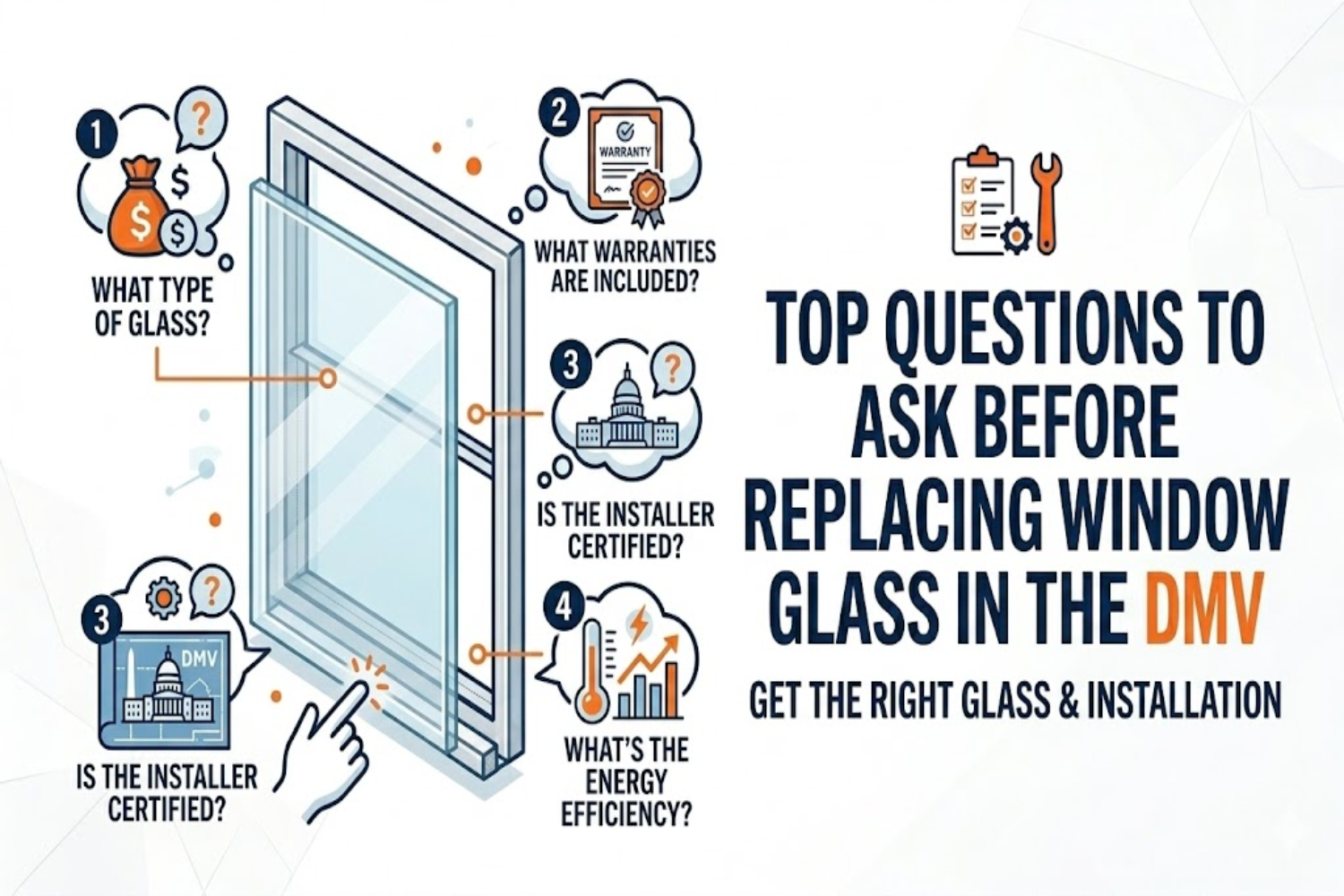
Replacing window glass is a major home improvement decision that affects energy bills, comfort, noise levels, security, and long-term property value, especially in the DMV area where hot humid summers and cold winters put extra stress on windows. Asking the right questions upfront helps homeowners avoid common pitfalls, choose the best glass type and contractor, understand realistic costs, and secure strong warranties. Many people rush into replacement without clarifying key details, leading to surprises in pricing, performance, or installation quality.
The best professionals welcome detailed questions and provide clear, written answers. In regions with variable weather, temperature swings, and occasional storms, the answers to these questions become even more critical for selecting energy-efficient, durable solutions. This guide lists the most important questions to ask contractors, suppliers, and manufacturers before committing. Knowing what to ask empowers you to make confident, informed choices that deliver lasting results.
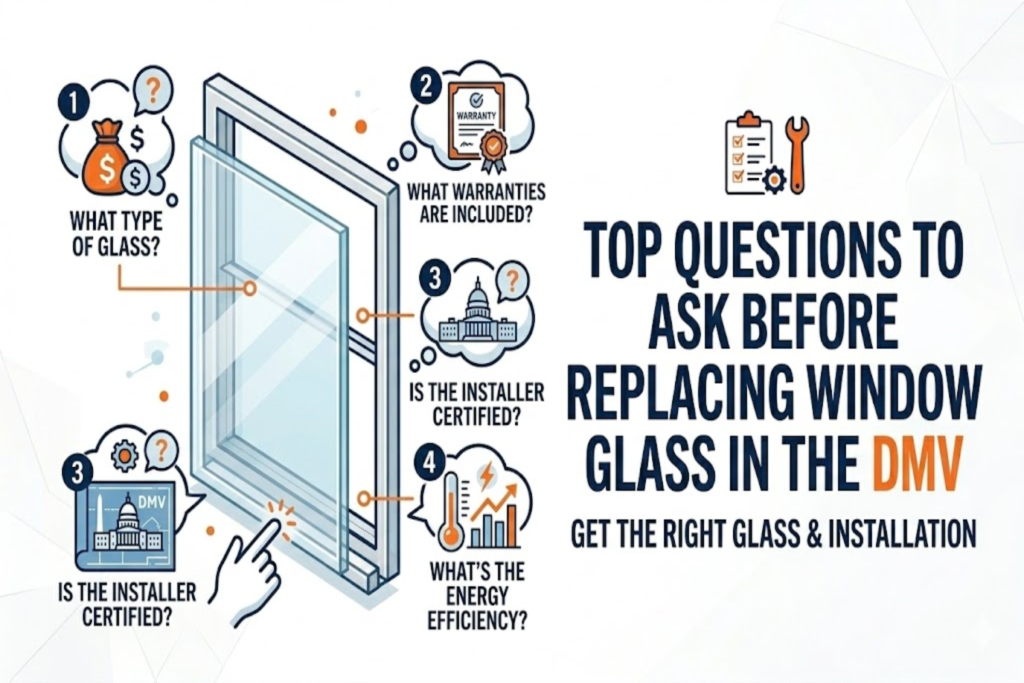
Questions About the Contractor’s Experience and Credentials
Start by verifying the company’s qualifications to ensure they have the expertise needed for proper double-pane or triple-pane glass replacement. Ask how many years they have specialized in residential window glass work and how many similar projects they complete annually in the local area. Inquire about certifications from organizations like the National Glass Association (NGA),
manufacturer training programs (Pella, Andersen, Marvin, etc.), and any state licensing requirements. Request proof of general liability insurance and workers’ compensation coverage to protect your property and family. Ask for references from recent customers with similar window types and get contact information for follow-up calls. Experienced contractors answer these questions confidently and provide documentation immediately.
Why Contractor Credentials Matter for Glass Replacement
Proper installation is critical—poor sealing, incorrect shimming, inadequate flashing, or improper glazing can cause premature seal failure, leaks, drafts, or even cracked glass within months. Certified technicians follow industry best practices and manufacturer specifications that protect warranties. In areas with freeze-thaw cycles and high humidity, incorrect installation accelerates condensation and rot issues. Choosing a credentialed contractor significantly reduces the risk of callbacks and costly rework.
Questions About Glass Type and Performance Specifications
Ask exactly what glass configuration they recommend—double-pane, triple-pane, low-E coating placement (surface #2, #3, or dual), gas fill (argon or krypton), spacer type (warm-edge vs standard aluminum), and any laminated or acoustic interlayers. Request the specific U-factor, solar heat gain coefficient (SHGC), visible light transmission (VLT), and condensation resistance (CR) ratings for the proposed glass. Inquire whether the glass meets or exceeds ENERGY STAR requirements for the Northern/Central climate zone. Ask about UV protection percentage and noise reduction (STC rating) if those matter to you. Demand written specifications rather than vague promises. Clear performance data ensures the glass matches your climate and priorities.
After installation, ask the lead technician to walk you through operation (opening, closing, locking, tilting, cleaning access) and maintenance instructions. Confirm all weep holes are clear and properly draining. Request written copies of all warranties and product registration information. Inquire about any follow-up visits or performance checks they offer. Ask how to contact them if minor adjustments are needed in the first few weeks. These final questions ensure you start with full knowledge and support.
Understanding U-Factor, SHGC, and How They Affect Your Bills
- U-factor measures heat loss (lower is better for winter insulation); SHGC measures solar heat gain (lower is better for summer cooling).
- For mixed climates, aim for U-factor ≤ 0.30 and SHGC 0.25–0.40.
- Triple-pane with double low-E and argon often achieves U-factor 0.15–0.22 and SHGC 0.20–0.30.
- These ratings directly translate to lower heating bills in winter and reduced air-conditioning use in summer.
- Contractors should explain how their proposed glass meets these targets.
Questions About Frame Material and Compatibility
Ask whether they recommend replacing only the glass (IGU swap) or the entire window unit (frame + sash + glass). Inquire about frame material options—vinyl (low maintenance, affordable), fiberglass (strong, stable), aluminum-clad wood (premium aesthetics), or full wood (traditional look). Confirm whether the new frame will fit the existing rough opening without major siding or drywall modifications. Ask about color options, grid styles (internal vs external), and any impact on interior trim or exterior brickmould. Verify compatibility with your home’s architecture and any HOA restrictions. Frame choice affects durability, maintenance, and overall appearance.
After installation, ask the lead technician to walk you through operation (opening, closing, locking, tilting, cleaning access) and maintenance instructions. Confirm all weep holes are clear and properly draining. Request written copies of all warranties and product registration information. Inquire about any follow-up visits or performance checks they offer. Ask how to contact them if minor adjustments are needed in the first few weeks. These final questions ensure you start with full knowledge and support.
When Glass-Only Replacement Makes Sense vs Full Unit
Glass-only replacement (retaining existing frame) costs 40–70% less but requires sound, square frames without rot or warping. Full unit replacement provides modern frame features, better thermal breaks, and stronger warranties but involves more labor and disruption. Professionals should inspect frames on-site to recommend the most cost-effective path.
Questions About Installation Process and Timeline
Ask for a detailed step-by-step explanation of their installation method—rough opening prep, flashing, shimming, fastening, sealing, and insulation. Inquire about how they protect interior floors, furniture, and exterior siding during work. Request the typical timeline for your project size (single window vs full house) and whether they work in stages to minimize daily disruption. Ask who will supervise the job and handle any unexpected issues. Confirm cleanup standards—interior vacuuming, exterior debris removal, and final walk-through. Clear answers about process help you plan your day and set realistic expectations.
Interior and Exterior Protection During Installation
Reputable crews use heavy drop cloths, plastic sheeting, shoe covers, and containment barriers to keep dust and debris contained. They mask off adjacent surfaces and use HEPA-filtered vacuums. Exterior tarps catch falling debris. Ask how they protect hardwood floors, carpet, and landscaping. Good protection prevents scratches, scuffs, or water damage during work.
Questions About Warranty Coverage and Long-Term Support
Ask for the full manufacturer warranty details—glass seal (typically 20 years to lifetime against fogging), frame (10–20 years), hardware (lifetime or 10 years), and installation workmanship (1–10 years). Inquire about transferable warranties if you sell the home. Ask what conditions void the warranty (improper cleaning, physical damage, etc.). Request written warranty documents before signing. Confirm their process for handling claims—response time, repair/replacement policy, and who covers labor. Strong warranties provide peace of mind and protect your investment.
After installation, ask the lead technician to walk you through operation (opening, closing, locking, tilting, cleaning access) and maintenance instructions. Confirm all weep holes are clear and properly draining. Request written copies of all warranties and product registration information. Inquire about any follow-up visits or performance checks they offer. Ask how to contact them if minor adjustments are needed in the first few weeks. These final questions ensure you start with full knowledge and support.
What a Lifetime Glass Seal Warranty Really Covers
Most lifetime warranties cover seal failure (internal fogging) for as long as you own the home, with replacement glass provided at no cost. Some exclude labor after the first few years. Read the fine print for exclusions (acts of God, improper installation, neglect). Transferable warranties add resale value. Ask for sample warranty language during quoting.
| Question Category | Key Questions to Ask | Why the Answer Matters | Red Flags to Watch For |
| Contractor Credentials | Years in business? Certifications? Insurance proof? References? | Ensures expertise and financial protection | Vague answers, no documentation |
| Glass Performance Specs | Exact U-factor, SHGC, gas fill, low-E type? ENERGY STAR certified? | Confirms efficiency and climate suitability | Generic claims without numbers |
| Frame & Compatibility | Glass-only or full replacement? Frame material options? Fit guarantee? | Determines cost, disruption, and longevity | Pressure to replace everything unnecessarily |
| Installation Process | Step-by-step method? Protection measures? Timeline? Cleanup standards? | Minimizes damage and disruption | No mention of flashing or shimming |
| Warranty & Support | Length of glass seal warranty? Transferable? Claim process? | Protects long-term investment | Short warranties or verbal promises only |
| Cost & Payment | Full itemized quote? Any hidden fees? Payment schedule? Financing? | Prevents surprises and overcharges | High-pressure sales tactics |
| Energy Savings & ROI | Expected annual savings? Payback period estimate? | Justifies investment | Unrealistic promises without calculations |
Red Flags to Watch For During Consultations
Be cautious if a contractor avoids giving written specifications, pressures you for immediate decisions, provides unusually low quotes without explanation, refuses to show insurance certificates, or downplays the importance of flashing and sealing details. Vague answers about warranties, no references, or reluctance to provide energy performance numbers are warning signs. High-pressure sales tactics often indicate lower-quality work. Trust your instincts and walk away if anything feels off.
After installation, ask the lead technician to walk you through operation (opening, closing, locking, tilting, cleaning access) and maintenance instructions. Confirm all weep holes are clear and properly draining. Request written copies of all warranties and product registration information. Inquire about any follow-up visits or performance checks they offer. Ask how to contact them if minor adjustments are needed in the first few weeks. These final questions ensure you start with full knowledge and support.
Post-Replacement Follow-Up Questions to Ask
After installation, ask the lead technician to walk you through operation (opening, closing, locking, tilting, cleaning access) and maintenance instructions. Confirm all weep holes are clear and properly draining. Request written copies of all warranties and product registration information. Inquire about any follow-up visits or performance checks they offer. Ask how to contact them if minor adjustments are needed in the first few weeks. These final questions ensure you start with full knowledge and support.
Conclusion
Asking the right questions before committing to double pane window replacement ensures you choose a qualified contractor, appropriate glass performance, fair pricing, strong warranties, and a smooth installation process that delivers lasting energy savings and comfort. The answers reveal the true expertise and transparency of the company while helping you compare options accurately.
In Woodbridge VA, where seasonal extremes test window performance year after year, detailed questioning becomes even more important for selecting glass and installation that withstands humidity, freeze-thaw cycles, and intense summer sun. Take time to get written answers, multiple quotes, and on-site assessments. The right preparation turns window replacement from a stressful project into a confident investment that improves your home for decades.
Frequently Asked Questions
- How many quotes should I get before choosing a window replacement contractor?
Get at least three detailed, written quotes from licensed, insured companies to compare pricing, specifications, warranties, and installation methods fairly. More quotes help spot outliers. Always request itemized breakdowns and on-site measurements.
- What’s the most important performance number to ask about for double-pane glass?
Ask for the whole-window U-factor (heat loss) and SHGC (solar heat gain). For mixed climates, aim for U-factor ≤ 0.30 and SHGC 0.25–0.40. These ratings directly predict energy savings and comfort. ENERGY STAR certification confirms compliance.
- Should I replace only the glass or the entire window unit?
Glass-only replacement (IGU swap) costs less and works well if frames are sound, square, and rot-free. Full unit replacement provides modern frame features, better thermal breaks, and stronger warranties but involves more disruption. Professional frame inspection determines the best option.
- How long should a good window replacement warranty last?
Look for 20-year to lifetime coverage on the glass seal (against internal fogging), 10–20 years on the frame, and at least 1–10 years on installation workmanship. Transferable warranties add resale value. Get written copies before signing.
- Will replacing double-pane windows increase my home’s resale value?
Yes—modern energy-efficient windows with low-E, gas fill, and proper installation are highly attractive to buyers. Appraisers and real estate agents often note them as a positive feature. ENERGY STAR labels and lower utility bills strengthen listing appeal.
- How much disruption should I expect during replacement?
Most single-window jobs take 2–4 hours with moderate noise and dust. Full-house projects (8–12 windows) usually span 1–3 days. Professional crews use drop cloths and containment to keep mess contained. Interior trim and exterior siding are typically protected.
- What questions should I ask about installation methods?
Ask about rough opening preparation, flashing techniques, shimming for level/plumb, insulation methods, and sealing details. Inquire how they prevent water intrusion and ensure proper drainage. Good answers include pan flashing, low-expansion foam, and quality exterior caulking.
- Can I finance window replacement and what should I ask about financing?
Many contractors offer financing through third-party lenders with 0% interest promotional periods. Ask about interest rates after promo, loan terms, monthly payments, and any fees. Confirm whether financing affects the quote price. Compare rates independently.
- How do I verify a contractor’s insurance and licensing?
Request certificates of insurance (general liability and workers’ comp) and verify licensing through your state contractor board website. Ask for their contractor license number and check for complaints. Legitimate companies provide documentation immediately.
- What should I do during the final walk-through after installation?
Test every window for smooth operation, secure locks, proper tilt function, and tight weatherstripping. Check interior/exterior caulking for even beads. Verify no leaks during water testing. Note any minor concerns immediately so the crew can fix them before leaving.
Visit our DMV Window Repairs LLC blog to explore our residential and commercial glass services for customers in Woodbridge, VA.