
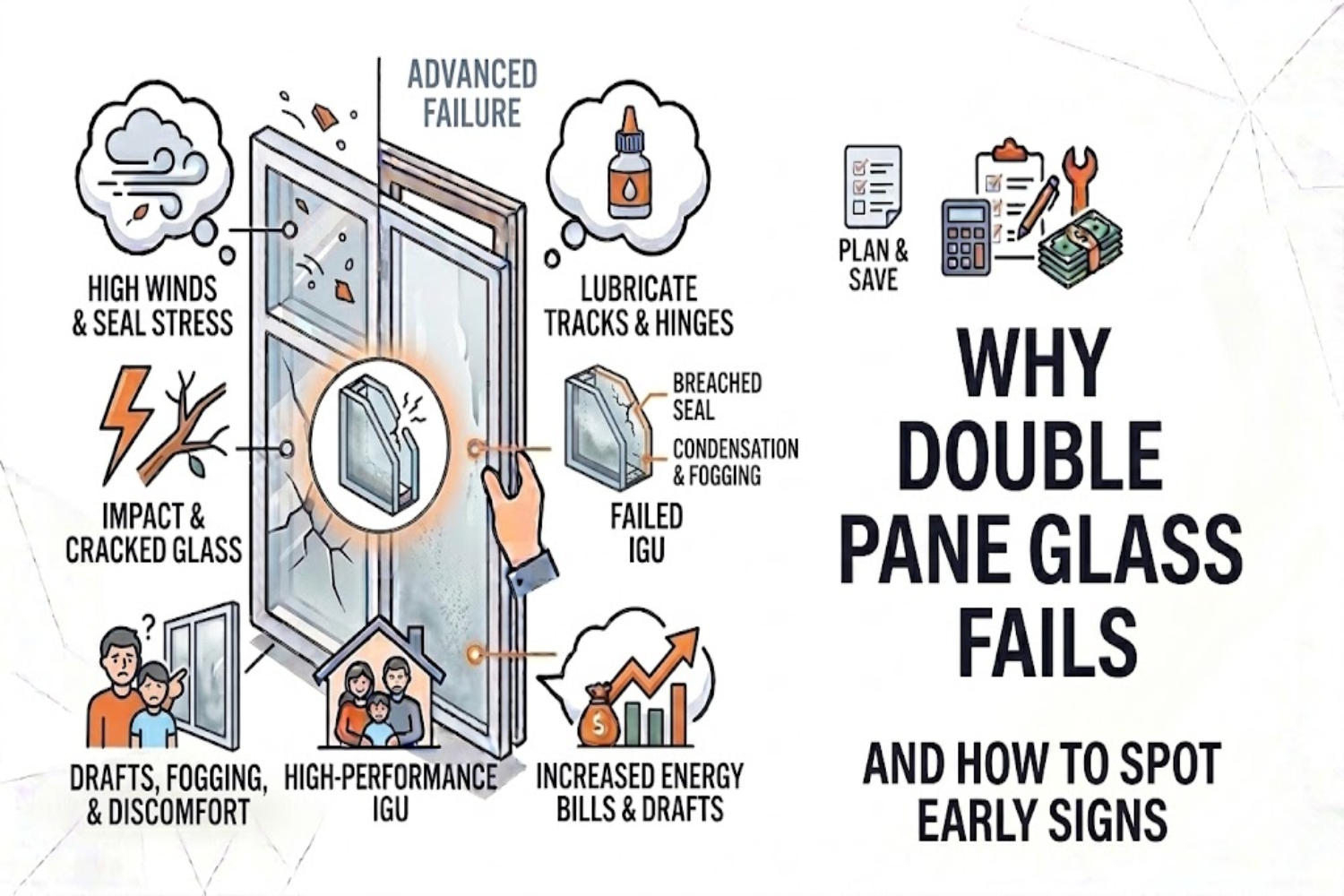
Double-pane glass, also known as insulated glass units (IGUs), provides excellent thermal insulation when functioning properly but can fail over time, leading to reduced energy efficiency, visible fogging, and potential structural issues. Failure occurs primarily when the hermetic seal around the perimeter breaks down, allowing moisture to enter the sealed space between the two panes. Once moisture penetrates, it condenses on the inner surfaces during temperature changes, creating permanent fog or cloudiness that cannot be cleaned from outside. Early detection of failing double-pane glass helps homeowners address problems before they worsen,
often allowing cost-effective resealing or gas refilling instead of full replacement. Common causes include age, manufacturing defects, thermal stress, physical impact, and installation errors—all of which compromise the edge seal integrity. Recognizing subtle warning signs empowers you to act quickly and protect your home’s comfort and value. This comprehensive guide explains the main reasons double-pane glass fails and provides clear methods to identify problems in the earliest stages. Timely attention prevents escalation into expensive full-window replacements.
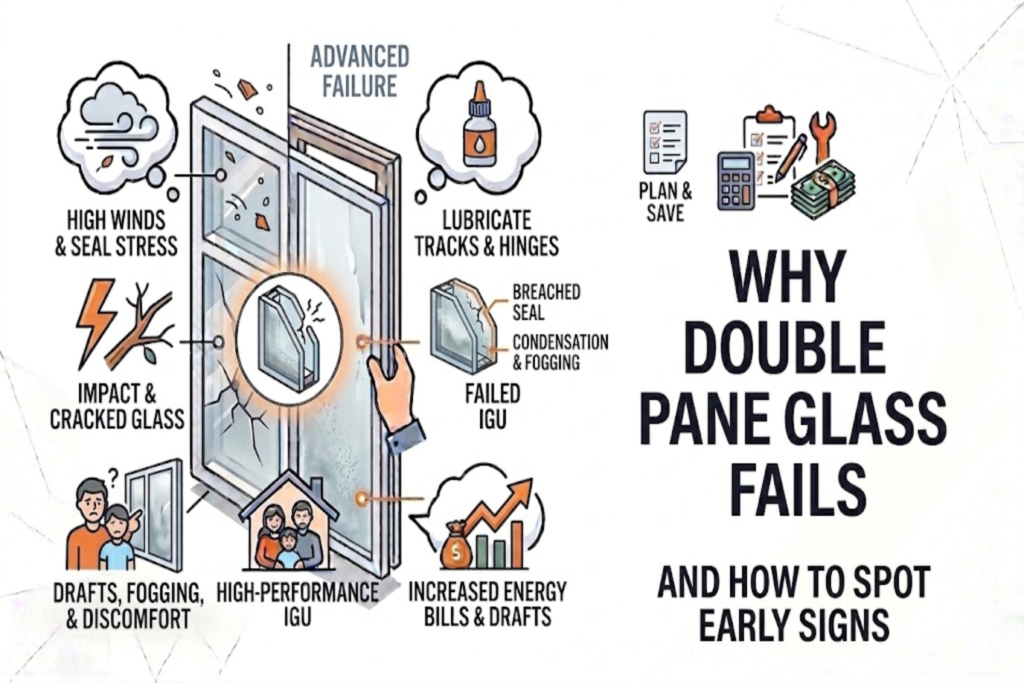
Primary Causes of Double-Pane Glass Seal Failure
The seal around double-pane glass is the most vulnerable component, typically made of butyl rubber or silicone applied at the factory edges. Over years of exposure to ultraviolet light, extreme temperature cycles, and humidity fluctuations, these sealants gradually degrade and lose adhesion. Thermal expansion and contraction cause micro-movements at the edges, eventually creating tiny gaps that allow air and moisture exchange.
Once the seal is compromised, inert gas (argon or krypton) slowly escapes while humid outside air enters, setting the stage for internal condensation. Poor initial installation—such as uneven pressure, inadequate sealant application, or frame misalignment—accelerates this process significantly. Physical impacts, even minor ones, can stress edge seals and initiate failure. In regions with pronounced seasonal temperature swings, seal degradation occurs noticeably faster than in more stable climates.
How Age and Natural Wear Contribute to Seal Breakdown
Most double-pane windows begin showing seal failure signs between 10 and 25 years after installation, depending on quality and exposure conditions. Constant expansion and contraction from daily and seasonal temperature changes fatigue the sealant material over time. Ultraviolet radiation from sunlight weakens the outer silicone layer, while humidity accelerates chemical breakdown of the inner butyl seal.
Older units manufactured before modern desiccant improvements are especially prone to early moisture absorption. Even high-quality IGUs eventually reach the end of their design life when the seal can no longer maintain gas retention and moisture exclusion. Age-related failure is predictable and progressive—early detection through regular inspections extends functional life considerably.
Thermal Stress and Temperature Cycling Effects
Rapid or uneven temperature changes across a window pane create internal stresses that concentrate at the edges where the seal meets the glass. When one side of the glass heats or cools faster than the other (due to partial shading, reflected sunlight, or interior heat sources), differential expansion occurs. This movement strains the perimeter seal repeatedly until micro-cracks form and propagate. Large south- or west-facing windows without adequate shading experience the most severe thermal cycling. In climates with hot days followed by cool nights, or sudden cold fronts after warm periods, stress accumulates quickly. Over years, even small thermal movements compound into seal failure. Using low-E coatings and gas fills helps mitigate some stress, but cannot eliminate it entirely.
Why Partial Shading Accelerates Thermal Damage
- Partial shading from trees, overhangs, neighboring buildings, or blinds creates hot spots and cool zones on the same pane simultaneously.
- The resulting temperature gradient causes one section to expand while another contracts, placing twisting forces on the edge seal.
- This differential stress is far more damaging than uniform temperature change.
- Reflective surfaces like light-colored siding or water bodies can intensify localized heating.
- Windows with inconsistent shading patterns commonly develop seal failure earlier than fully exposed or fully shaded units.
- Homeowners can reduce this risk by trimming vegetation or using exterior shading devices to promote more uniform solar exposure.
Moisture Intrusion and Internal Fogging
The most visible and common symptom of double-pane failure is permanent fogging or condensation between the two panes. Once the seal allows humid air to enter, moisture condenses on the cold inner surfaces during temperature drops. This fog cannot be wiped away because it forms inside the sealed unit. Over time, mineral deposits and oxidation create a cloudy or hazy appearance even when dry. Persistent moisture inside the unit also accelerates spacer bar corrosion and glass surface degradation. Early fogging often appears only in corners or along edges before spreading across the entire pane. Internal condensation signals complete seal failure and total loss of insulating gas.
Role of Desiccant in Preventing Early Fogging
The desiccant material inside the spacer bar absorbs residual moisture trapped during manufacturing. When the seal fails and humid air enters, the desiccant quickly becomes saturated and can no longer prevent condensation. Once saturated, fogging appears rapidly during temperature changes. High-quality units use molecular sieve desiccants with greater capacity, delaying visible failure. Regular professional inspection can sometimes identify seal issues before desiccant saturation occurs. Replacing the entire IGU becomes necessary once fogging is visible.
Physical Impact and Edge Damage
Even minor impacts—such as a ball, lawn equipment debris, or closing a window too forcefully—can damage the edge seal or create micro-cracks in the glass near the perimeter. These small defects allow air and moisture exchange over time. Edge damage from improper installation or handling during manufacturing also weakens the seal bond. Vibrations from nearby traffic, construction, or heavy doors slamming repeatedly stress the seal edges. Any visible chip, nick, or crack near the perimeter should be evaluated immediately, as these often lead to accelerated seal failure. Protective window films can help absorb minor impacts and reduce risk.
How Manufacturing Defects Lead to Premature Failure
Factory defects such as incomplete sealant application, contaminated bonding surfaces, or inadequate desiccant loading cause some units to fail much earlier than expected—sometimes within 5–10 years. Nickel sulfide inclusions in tempered glass can cause spontaneous shattering. Poor spacer alignment or seal thickness variation creates weak points. While rare with reputable manufacturers, these issues do occur. Warranty coverage usually applies when manufacturing defects are confirmed. Professional diagnosis distinguishes factory flaws from environmental or installation causes.
Table of Common Failure Signs and What They Indicate
| Early Warning Sign | What It Usually Indicates | Severity Level | Recommended Action Before Professional Help | Potential Consequence if Ignored |
| Slight haze or faint fog in corners | Early seal failure, moisture beginning to enter | Low–Medium | Monitor closely, check for drafts | Full fogging, complete insulation loss |
| Condensation only on very cold mornings | Marginal seal compromise, high indoor humidity | Low | Reduce indoor humidity, improve ventilation | Progression to permanent internal fog |
| Visible fog/cloudiness between panes | Complete seal failure, saturated desiccant | High | Document for warranty/insurance | Zero insulation value, mold risk |
| Tiny bubbles or water droplets inside | Advanced moisture intrusion | High | Immediate professional assessment | Accelerated spacer corrosion, glass etching |
| Drafts near window edges | Secondary seal degradation or frame issues | Medium | Test with incense/tissue, caulk gaps | Increased energy loss, discomfort |
| Difficulty opening/closing sash | Frame pressure from failing IGU bowing | Medium–High | Lubricate hardware, check alignment | Glass cracking from stress |
| Unusual reflection distortion | Pane bowing due to gas loss/pressure imbalance | Medium | Monitor for progression | Optical distortion, eventual seal rupture |
| Cracks starting at edges | Thermal stress or impact damaging seal bond | High | Protect area, avoid pressure | Rapid spreading, shattering risk |
Preventive Maintenance Tips to Delay Seal Failure
Maintain indoor relative humidity between 30–50% year-round using dehumidifiers or proper ventilation to reduce pressure on seals. Clean weep holes and drainage channels twice yearly to prevent water backup. Apply UV-protective film on sunny exposures to reduce thermal stress. Avoid placing heat sources (lamps, vents) too close to windows. Trim vegetation to prevent uneven shading that causes localized thermal gradients. Use window treatments to moderate temperature swings on glass surfaces. These simple habits extend the functional life of double-pane units noticeably.
When Professional Replacement Becomes Necessary
If fogging covers more than 20–30% of the pane, multiple windows show similar failure patterns, or energy bills rise despite other efficiency measures, full IGU or window replacement often becomes the most practical solution. When seals have failed completely, resealing rarely restores long-term performance reliably. Professional evaluation confirms whether frame condition allows glass-only replacement or requires full unit swap. Waiting too long after visible failure accelerates secondary damage like spacer corrosion or glass etching. Expert diagnosis guides the most economical and effective path forward.
Conclusion :
Double-pane glass failure follows a predictable progression from microscopic seal breaches to visible fogging and complete insulation loss, driven primarily by age, thermal stress, moisture intrusion, and occasional physical damage. Recognizing early warning signs—such as corner haze, occasional condensation, subtle drafts, or operation difficulties—allows homeowners to address issues before they require expensive full-unit replacement.
Regular seasonal inspections, proper humidity control, and basic preventive maintenance significantly delay failure in most cases. In Woodbridge VA, where temperature fluctuations and humidity place extra stress on window seals, vigilant monitoring proves especially valuable. When early signs appear or fogging becomes permanent, professional assessment determines whether resealing, gas refilling, or IGU replacement offers the most cost-effective solution. Acting promptly on subtle indicators protects energy efficiency, indoor comfort, and long-term window investment.
Frequently Asked Questions
- How long should double-pane windows last before seal failure occurs?
Quality double-pane windows typically last 15–30 years before noticeable seal failure, depending on manufacturing quality, installation, and exposure conditions. Units with modern warm-edge spacers and high-grade sealants often reach the upper end of this range. Harsh climates accelerate failure. Regular inspection helps catch issues early.
- What does early fogging in the corners of double-pane windows mean?
Corner fogging usually indicates the beginning of seal failure, where moisture first enters at the weakest points along the perimeter. The desiccant near corners saturates first, allowing condensation during temperature drops. This early sign often progresses to full-pane fogging within 1–3 years. Professional evaluation determines if resealing can extend life.
- Can failed double-pane windows be repaired without full replacement?
In some cases, yes—specialized services can drill, drain moisture, replace desiccant, and reseal units, restoring partial performance. Success rates vary widely and longevity is typically shorter than original seals. Complete IGU replacement often proves more reliable long-term. Professional assessment determines feasibility.
- Why does double-pane glass sometimes bow or appear wavy?
Bow waves result from pressure imbalance after significant gas loss or temperature extremes. The outer pane may flex inward or outward depending on internal vacuum or overpressure. This indicates advanced seal failure and loss of insulating gas. Bowed units usually require replacement to prevent cracking.
- Is internal condensation always a sign of complete seal failure?
Yes—persistent condensation between panes means the seal has failed, allowing humid air entry and desiccant saturation. Temporary surface condensation on the interior pane is different and relates to indoor humidity. Internal fogging cannot be fixed without resealing or replacement.
- How can I tell if my double-pane windows still have insulating gas inside?
Visible fogging or significantly reduced energy performance indicates gas loss. Professionals use specialized gas-detection equipment or measure thermal performance on-site. Homeowners cannot accurately test gas levels themselves. If seals remain intact with no fogging, gas retention is usually assumed.
- Does partial shading really cause double-pane seal failure faster?
Yes—uneven shading creates hot spots and cool zones on the same pane, generating differential expansion that stresses edge seals more severely than uniform exposure. Windows with tree shadows or partial overhangs commonly fail earlier. Trimming vegetation or adding uniform shading helps extend seal life.
- Can impacts or cracks near the edge cause seal failure?
Definitely—any crack or chip near the perimeter can compromise the seal bond, allowing air and moisture exchange. Even minor edge damage accelerates failure. Protective window films reduce impact risk. Immediate professional evaluation is recommended for any edge-adjacent damage.
- What should I do if I notice early signs of double-pane failure?
Document the issue with photos, monitor progression, reduce indoor humidity, and schedule a professional inspection promptly. Early intervention sometimes allows resealing or gas refilling before full fogging occurs. Delaying usually results in complete unit replacement. Quick action saves money and maintains efficiency.
- Are newer double-pane windows less likely to fail prematurely?
Yes—modern manufacturing uses improved sealants, warm-edge spacers, better desiccants, and quality control standards that extend average lifespan significantly. Units produced in the last 10–15 years generally outlast older ones. Choosing reputable brands with strong warranties further reduces premature failure risk.
Visit our DMV Window Repairs LLC blog to explore our residential and commercial glass services for customers in Woodbridge, VA.