
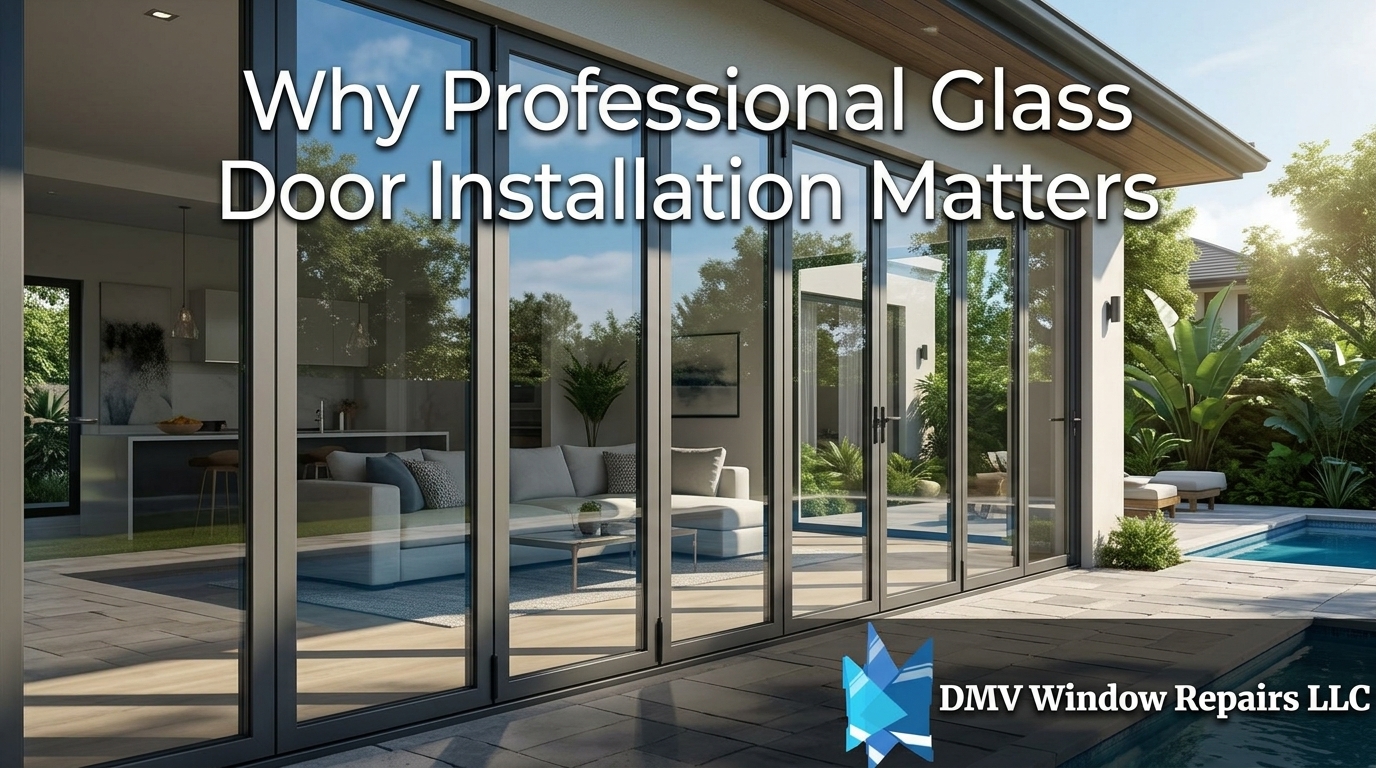
Professional glass door installation ensures your patio, sliding, or French doors perform safely, efficiently, and beautifully for decades rather than becoming a source of frustration and costly repairs. Incorrectly installed doors lead to persistent leaks, drafts, misalignment, difficult operation, premature hardware failure, and even structural damage to surrounding framing over time. DIY attempts or hiring general contractors without specialized experience frequently result in improper leveling, inadequate flashing, poor sealing, incorrect shimming, and missing weep systems that allow water intrusion.
Professional installers follow manufacturer specifications precisely, use the right tools, and apply proven techniques that meet current building codes and energy standards. The difference shows immediately in smooth gliding, weather-tight performance, quiet operation, and long-term durability. Many homeowners underestimate how much installation quality affects daily usability, energy bills, home security, and resale value. Investing in certified professionals protects your significant financial outlay in quality doors while avoiding common post-installation headaches. Ultimately, expert installation transforms a good product into an exceptional home feature that delivers reliable performance season after season.
Risks of Improper or DIY Installation
Improper installation creates hidden problems that worsen gradually and become expensive to correct later. Doors installed out of plumb or level bind during operation, strain rollers and tracks, and develop uneven gaps that allow air and water infiltration. Inadequate flashing and sealing permit moisture to enter wall cavities, leading to rot, mold growth, and costly structural repairs. Incorrect shimming causes frames to twist over time, misaligning locks and hardware while reducing weather resistance.
Missing or improperly placed weep holes trap water inside tracks, accelerating corrosion of metal components. DIY efforts often overlook manufacturer torque specifications for fasteners, resulting in loose anchors that compromise wind resistance and security. These issues frequently void product warranties because most manufacturers require certified installation for coverage. Professional work eliminates these risks through systematic checks and adherence to detailed protocols.
Common DIY Installation Mistakes
Homeowners frequently skip using a laser level or long straightedge to verify frame plumb and track flatness before anchoring. They often neglect proper flashing integration at the sill, allowing water to wick behind the threshold. Fasteners get over-tightened or under-tightened, either crushing frames or leaving them loose under load. Weatherstripping gets pinched, torn, or omitted in corners during panel insertion. Rollers remain unadjusted after installation, causing dragging or excessive play right from day one. Sealant application stays inconsistent, leaving gaps that invite drafts and insects. Professionals avoid these errors through experience and checklists that ensure every critical step gets completed correctly.
Hidden Consequences of Poor Workmanship
Water intrusion behind poorly sealed thresholds leads to subfloor rot and mold that requires invasive remediation. Misaligned multi-point locks fail to engage fully, creating security vulnerabilities and frustrating daily use. Uneven roller pressure accelerates wear on tracks and wheels, necessitating early replacement. Drafts around improperly flashed jambs increase heating and cooling costs noticeably. Warranty claims get denied when installers find evidence of non-professional work. Structural shifts from inadequate anchoring cause ongoing binding and noise. These cascading problems turn what should be a simple upgrade into a long-term headache and financial burden.
Benefits of Hiring Certified Installers
Certified professionals bring specialized training, manufacturer certifications, and years of hands-on experience with various door systems. They perform precise measurements multiple times to confirm rough openings match door specifications exactly. Proper leveling and shimming create perfectly plumb frames that operate smoothly without strain. Expert flashing and sealing techniques divert water away from vulnerable areas year-round.
They adjust rollers and hardware to factory tolerances for balanced weight distribution and effortless gliding. Post-installation testing verifies weather-tightness, lock engagement, and quiet performance under real conditions. Warranties remain fully valid because certified work meets all requirements. The result delivers doors that feel premium from the first use onward.
Manufacturer Warranty Protection
- Most premium door manufacturers explicitly require professional installation by certified technicians to activate full warranty coverage.
- DIY or general contractor installations often lead to partial or complete warranty denial when issues arise.
- Certified installers provide documentation proving proper methods were followed.
- This protection covers defects in materials and workmanship for 10–20 years or longer on many products.
- Labor warranties from the installation company add another layer of security.
- Professionals handle any warranty claims efficiently with direct manufacturer contacts.
- The peace of mind from valid coverage justifies professional costs significantly.
Code Compliance and Safety Assurance
Professional installers stay current with local building codes, energy standards, and wind-load requirements specific to your region. They ensure impact-rated doors meet hurricane-zone specifications if applicable. Proper anchoring resists wind uplift and forced-entry attempts effectively. Safety glass placement complies with impact-safety regulations near walking surfaces. Electrical integration for smart locks or sensors follows code guidelines. Inspectors approve professionally installed doors more readily during permitting processes. The installation meets or exceeds standards that protect your home and family long-term.
The Professional Installation Process Step by Step
Certified teams start with a detailed site assessment measuring the rough opening at multiple points for squareness and plumb. They verify subfloor levelness and address any discrepancies before proceeding. Old doors get removed carefully to avoid damaging surrounding trim or framing. New units arrive pre-assembled whenever possible to minimize on-site adjustments. Installers apply high-performance flashing tape and self-adhered membranes around the entire perimeter.
The frame gets set into the opening, shimmed precisely, and anchored with appropriate fasteners at manufacturer-specified intervals. Panels insert smoothly with rollers adjusted for even clearance and balanced operation. Perimeter sealing uses flexible, long-lasting caulks and backer rod where needed. Final testing includes repeated opening/closing cycles, water spray tests for leaks, and lock function verification.
Tools and Techniques Professionals Use
Laser levels and digital inclinometers ensure perfect plumb and level across all planes. High-quality shims maintain consistent spacing without compression over time. Professional-grade sealants remain elastic for decades without cracking. Torque-controlled drivers apply exact fastener tension to avoid frame distortion. Specialized pry bars and suction cups handle heavy glass panels safely. Infrared cameras sometimes detect hidden leaks or thermal bridging post-installation. These advanced tools and methods produce results far superior to standard DIY approaches.
Cost Comparison: Professional vs DIY Installation
Professional installation typically adds $400–$1,200 to the project depending on door size, complexity, and regional labor rates. DIY saves upfront labor costs but often incurs hidden expenses from mistakes. Improper flashing repairs can cost $2,000–$10,000+ when water damage appears years later. Premature hardware replacement due to strain adds hundreds more. Warranty denials force owners to pay full repair costs out-of-pocket. Professionals complete work in 1–2 days with minimal disruption. The total cost of ownership remains lower with expert installation due to avoided callbacks and extended product life.
| Aspect | Professional Installation | DIY Installation | Long-Term Impact Difference | Cost Savings/Risk | Warranty Validity | Time Required | Quality Outcome |
| Frame Leveling & Plumb | Laser-level precision, multiple checks | Often eyeball or basic level | Prevents binding, extends hardware life | Avoids $500–$2,000 future adjustments | Fully valid | 1–2 days | Excellent |
| Flashing & Water Diversion | Continuous self-adhered membranes, proper laps | Tape or caulk only, inconsistent | Eliminates rot/mold risk | Prevents $3,000–$15,000 water damage | Fully valid | Included | Superior |
| Sealing & Weatherproofing | Flexible sealants, backer rod, full perimeter | Spot caulking, gaps common | Reduces drafts, lowers energy bills | Saves $200–$600/year on utilities | Fully valid | Included | Reliable |
| Roller & Hardware Adjustment | Factory-spec torque, balanced pressure | Hand-tightened, often uneven | Smooth operation, minimal wear | Avoids $300–$800 premature replacement | Fully valid | Included | Optimal |
| Code & Wind-Load Compliance | Meets current local codes automatically | Risk of non-compliance | Passes inspections, higher safety | Avoids fines or forced rework | Fully valid | Included | Code-compliant |
| Warranty Coverage | Full manufacturer & labor protection | Frequently denied or limited | Covers defects for 10–20+ years | Saves thousands on future claims | 100% | N/A | Protected |
| Overall Project Timeline | 1–2 days with minimal disruption | 3–7 days or longer with mistakes | Faster return to normal use | Less inconvenience | N/A | Shorter | Efficient |
Long-Term Value and Resale Advantages
Professionally installed glass doors maintain their performance and appearance far longer than poorly fitted units. Smooth operation, weather-tight seals, and quiet function impress potential buyers during showings. Energy-efficient installation supports higher energy ratings that appeal to eco-conscious purchasers. Valid warranties transfer with the home, adding tangible value.
Detailed installation documentation reassures inspectors and appraisers. Homes with expert-installed exterior doors often command stronger offers in competitive markets. The upgrade contributes positively to overall curb appeal and perceived quality.
Woodbridge VA homeowners discover that professional glass door installation delivers exceptional performance in local humid and variable weather conditions.
Choosing the Right Installation Company
Look for companies with manufacturer certifications, verifiable references, and membership in professional trade associations. Request proof of current licensing, bonding, and liability insurance coverage. Review recent project photos and speak directly with past clients about their experience. Obtain detailed written proposals including timelines, cleanup policies, and warranty terms. Confirm they use manufacturer-approved materials and methods exclusively. Avoid lowest-bid contractors that cut corners on flashing or adjustments. A reputable company stands behind their work with meaningful guarantees.
Woodbridge VA residents benefit greatly from selecting installers experienced with regional code requirements and climate challenges.
Woodbridge VA properties achieve superior long-term results when professional installation follows best practices strictly.
Woodbridge VA sees measurable energy savings and durability improvements from certified door installations.
Conclusion
Professional glass door installation matters because it protects your investment, ensures code compliance, maximizes energy efficiency, enhances security, and delivers reliable performance that DIY methods rarely achieve. Expert work prevents water intrusion, premature wear, warranty voids, and hidden defects that plague improperly fitted doors. Certified installers apply precision techniques, specialized tools, and proven protocols that create doors operating smoothly and quietly from day one.
The upfront cost difference pays for itself through avoided repairs, lower utility bills, valid warranties, and increased home value. Choosing professionals eliminates guesswork and frustration while providing lasting peace of mind. Quality installation turns premium doors into exceptional home features that serve your family beautifully for decades to come.
Frequently Asked Questions
- Why can’t I just install glass doors myself to save money?
DIY saves labor costs initially but risks improper flashing, leveling, and sealing that cause leaks, drafts, and hardware failure later. Mistakes often void warranties and lead to expensive water damage repairs. Professionals complete the job correctly first time with proper tools and experience.
- How much extra does professional installation usually cost?
Professional installation typically adds $400–$1,500 depending on door size, type, and complexity. This includes removal of old units, precise adjustments, and full cleanup. The added expense prevents far higher costs from future problems and warranty issues.
- Will improper installation really void my door warranty?
Yes—most manufacturers require certified professional installation for full warranty coverage. DIY or uncertified work provides evidence that voids material and sometimes labor protection. Always verify requirements before proceeding without professionals.
- What specific problems arise from poor flashing during installation?
Inadequate flashing allows water to enter behind the threshold and jambs, causing rot, mold, and structural damage over time. Repairs involve removing siding, replacing framing, and resealing—often costing thousands. Proper professional flashing diverts water effectively from the start.
- How do professionals ensure doors operate smoothly long-term?
They use laser levels for perfect plumb, adjust rollers to factory specifications, and balance weight distribution evenly. Precise shimming prevents twisting while proper sealing maintains weather-tightness. These steps eliminate binding, dragging, and premature wear.
- Is professional installation required by building codes?
Not always explicitly, but codes require proper flashing, anchoring, and weatherproofing that professionals achieve consistently. Permits and inspections pass more easily with certified work. Non-compliant installation risks fines or forced corrections later.
- What should I look for when hiring a door installation company?
Seek manufacturer certifications, positive references, full insurance, and detailed written proposals. Confirm experience with your specific door brand and type. Ask about post-installation testing and cleanup procedures. Reliable companies provide meaningful labor warranties.
- How long does a professional glass door installation typically take?
Most standard patio or sliding door replacements complete in 1–2 full days including removal, preparation, installation, and testing. Larger or more complex projects may require an additional day. Professionals minimize disruption and leave the area clean.
- Does professional installation improve energy efficiency noticeably?
Yes—proper sealing, flashing, and alignment eliminate air leaks and thermal bridging that waste energy. Correct Low-E orientation and gas-fill integrity maximize performance. Many homeowners see reduced utility bills within the first season.
- Can professional installers fix issues from a previous bad installation?
Absolutely—experienced teams assess existing problems, correct leveling, replace damaged flashing, and realign hardware. They restore performance while preventing recurrence. Starting with professionals avoids compounding previous errors long-term.
Visit our DMV Window Repairs LLC blog to explore our residential and commercial glass services for customers in Woodbridge, VA.