

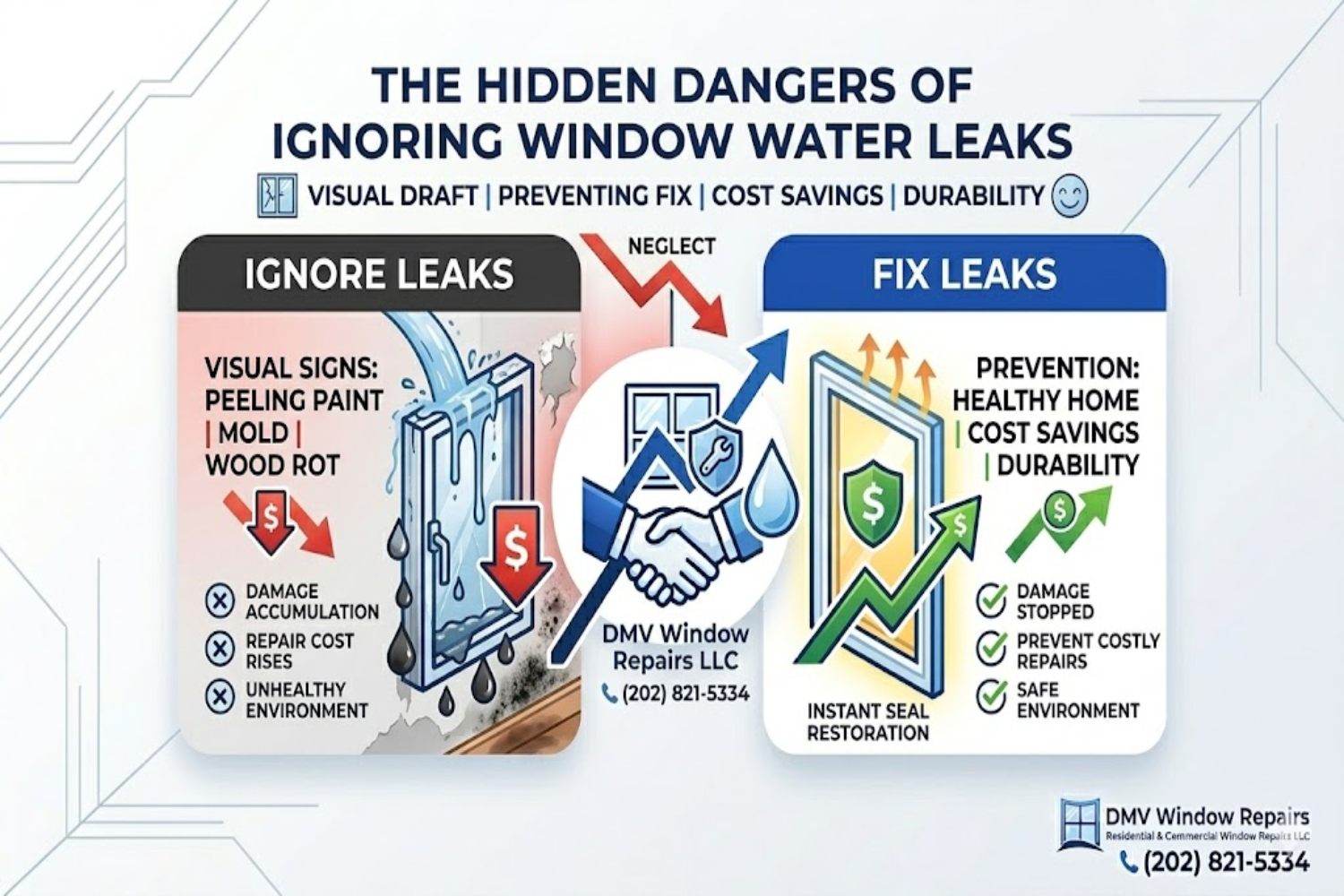
Ignoring window water leaks allows small drips to quietly transform into major structural and health threats inside your home. Rainwater seeps through failed caulk, cracked frames, or poor flashing, saturating interior materials over repeated storms. This persistent moisture creates ideal conditions for mold colonies to flourish behind walls, in sills, and within insulation cavities. Woodbridge VA Structural wood begins to rot slowly, weakening window frames, surrounding trim, and even nearby floor joists or wall studs. Indoor air quality deteriorates as mold spores circulate, triggering allergies, asthma attacks, respiratory irritation, and chronic fatigue in sensitive family members.
Energy efficiency plummets because wet insulation loses thermal performance, forcing heating and cooling systems to work harder and inflate utility bills noticeably. Cosmetic damage appears as bubbling paint, stained drywall, warped baseboards, and musty odors that permeate entire rooms. Prompt attention to even minor leaks prevents these cascading problems and safeguards both health and property value long-term. In regions experiencing frequent rain and humidity swings, such as Woodbridge VA, overlooking window leaks often leads to accelerated deterioration and unexpected repair expenses.
Why Window Water Leaks Are More Serious Than They Appear
Water leaks around windows rarely remain isolated incidents; they initiate a chain reaction of hidden damage that spreads far beyond the visible drip or stain. Moisture infiltrates porous materials like drywall, wood framing, and insulation, creating environments where mold thrives undetected for months or years. Structural integrity weakens gradually as rot compromises load-bearing elements near windows.
Health risks escalate from continuous exposure to airborne mold spores and volatile organic compounds released during decay. Financial consequences compound through skyrocketing repair costs, reduced energy efficiency, and diminished property resale value when buyers discover extensive water damage.
The Silent Progression of Water Damage from Window Leaks
Water begins entering through tiny gaps in caulk, weatherstripping, or flashing during rain events. Initial saturation affects sills and interior trim first, often going unnoticed because damage hides behind paint or curtains. Over weeks and months, moisture migrates upward into walls and downward into subflooring. Mold growth accelerates in dark, damp cavities where humidity remains consistently elevated. Visible signs eventually emerge as stains, bubbling, or odors, but by then significant hidden deterioration has already occurred.
Early Warning Signs You Should Never Ignore
Look for dark streaks or yellowing on interior walls directly below windows after storms. Check sills for persistent dampness even on dry days. Notice musty smells emanating from window corners or soft spots in drywall when pressed gently. Inspect exterior caulk lines for cracks, shrinkage, or complete detachment allowing water pathways.
How Moisture Travels Inside Walls Unseen
Water follows gravity and capillary action, wicking upward through drywall paper and insulation fibers. It spreads laterally along sill plates and downward into floor cavities. Trapped vapor condenses repeatedly, keeping materials wet long after rain stops. This constant dampness prevents natural drying and promotes aggressive microbial activity.
Structural Damage Caused by Prolonged Window Leaks
Wood rot weakens window frames, sashes, and surrounding trim first because these elements stay in direct contact with moisture. Over time, rot extends into wall studs, header beams, and floor joists near the window opening.
Compromised framing reduces overall home stability and creates safety hazards during high winds or heavy snow loads. Repairing extensive rot requires removing large sections of drywall, insulation, and sometimes structural members, driving costs dramatically higher.
Rot in Window Sills and Frames
Sills absorb water most readily due to their horizontal position and exposure. Rot softens wood, causing sills to crumble or sag noticeably. Frames warp and twist as moisture content changes unevenly, leading to sticking windows and larger gaps.
Damage to Wall Studs and Sheathing
Moisture migrates from sills into vertical studs and exterior sheathing. Soft, spongy wood loses load-bearing capacity over years. In severe cases, entire wall sections require replacement to restore structural integrity.
Health Hazards from Mold and Mildew Growth
Mold colonies release millions of microscopic spores into indoor air whenever disturbed by air currents or movement. Inhalation triggers allergic reactions, asthma exacerbations, sinus infections, and persistent coughing in sensitive individuals. Certain molds produce mycotoxins that cause neurological symptoms, fatigue, headaches, and immune system suppression with prolonged exposure. Children, elderly residents, and those with pre-existing respiratory conditions face heightened risks from ongoing mold presence.
Common Mold Types Found Near Leaky Windows
Aspergillus, Penicillium, and Stachybotrys (black mold) frequently appear in water-damaged window areas. Each species thrives in consistently damp, poorly ventilated conditions behind walls or under sills. Visible black, green, or white patches often indicate advanced infestation.
Symptoms of Mold Exposure in the Home
Family members report worsening allergies, frequent sinus headaches, eye irritation, skin rashes, and unexplained fatigue. Respiratory issues intensify during rainy seasons when moisture levels peak. Removing the moisture source remains the only effective way to stop spore production.
Indoor Air Quality Decline and Respiratory Risks
Elevated humidity from leaks promotes dust mite proliferation and bacterial growth in carpets and upholstery near windows. Volatile organic compounds released during wood decay add to chemical irritants in the air. Poor ventilation traps these pollutants, creating a stuffy, unhealthy indoor environment. Long-term exposure contributes to chronic respiratory conditions and reduced overall well-being.
Window water leaks rarely resolve themselves and almost always worsen with each passing storm season. What starts as a minor drip or faint stain frequently evolves into widespread mold infestation, extensive structural rot, significant health risks, skyrocketing energy bills, pest problems, and costly cosmetic repairs. The hidden nature of this damage makes it especially dangerous because problems grow silently behind walls until major intervention becomes necessary.
Impact on Vulnerable Household Members
Infants, young children, seniors, and immunocompromised individuals experience more severe reactions to mold and humidity. Asthma attacks increase in frequency and severity near affected windows. Allergy symptoms become year-round rather than seasonal.
Cosmetic and Aesthetic Damage Over Time
- Paint bubbles, blisters, and peels in patches directly around window frames as moisture lifts it from surfaces.
- Drywall stains darken from yellow to brown to black with repeated wetting cycles.
- Warped baseboards, swollen door casings, and discolored flooring appear gradually.
- These visible defects detract from home appearance and signal deeper problems to visitors or potential buyers.
Repairing Interior Finishes After Water Damage
Stripping affected paint, replacing stained drywall sections, and repainting require extensive preparation. Mold remediation adds specialized cleaning steps before refinishing. Costs escalate quickly when damage spreads beyond immediate window areas.
Increased Energy Bills from Wet Insulation
Wet insulation loses up to 50% of its thermal resistance when saturated, allowing greater heat transfer through walls. Heating systems work harder in winter to compensate for lost efficiency. Cooling costs rise in summer as humid air infiltrates more easily. Utility bills climb steadily until leaks and moisture issues are fully resolved.
How Moisture Reduces Wall Insulation Performance
Fiberglass batts clump and sag when wet, creating voids that permit air movement. Foam board and spray foam lose effectiveness when water compromises their structure. Continuous energy loss occurs until materials dry completely or are replaced.
Pest Infestations Attracted to Damp Areas
Termites, carpenter ants, and silverfish thrive in consistently moist wood near leaky windows. These pests accelerate structural damage by tunneling through softened framing. Rodents may enter through enlarged gaps created by rot and warping. Pest control becomes more difficult and expensive when moisture sources remain active.
Window water leaks rarely resolve themselves and almost always worsen with each passing storm season. What starts as a minor drip or faint stain frequently evolves into widespread mold infestation, extensive structural rot, significant health risks, skyrocketing energy bills, pest problems, and costly cosmetic repairs. The hidden nature of this damage makes it especially dangerous because problems grow silently behind walls until major intervention becomes necessary.
Preventing Pest Problems Through Leak Control
Sealing windows eliminates the damp conditions pests prefer. Regular inspections catch early infestations before they spread extensively. Combining leak repairs with pest barriers provides comprehensive protection.
Overview of Hidden Dangers from Ignoring Window Water Leaks Table
| Danger Category | Primary Consequences | Affected Areas | Potential Repair Cost Range | Urgency Level |
| Mold & Health Risks | Allergies, asthma, respiratory issues | Walls, ceilings, air quality | $500–$8,000+ | High |
| Structural Rot & Weakening | Frame/sill decay, stud damage | Windows, walls, floors | $2,000–$15,000+ | Very High |
| Energy Efficiency Loss | Higher heating/cooling bills | Walls, insulation | Ongoing $100–$500/year | Medium |
| Cosmetic Damage | Stains, bubbling paint, warped trim | Interior finishes | $300–$3,000 | Medium |
| Pest Infestations | Termites, ants, rodents | Damp wood areas | $500–$5,000+ | High |
| Reduced Property Value | Buyer-detected water damage history | Overall home appraisal | 5–20% value drop | High |
Immediate Actions to Take When You Spot Window Water Leaks
Conduct thorough interior and exterior inspections after every major rain event. Document all visible damage with dated photographs for insurance and repair records. Dry affected areas immediately using fans and dehumidifiers. Avoid covering stains with new paint until moisture sources are eliminated completely. Contact professionals promptly if rot, mold, or structural concerns appear.
Window water leaks rarely resolve themselves and almost always worsen with each passing storm season. What starts as a minor drip or faint stain frequently evolves into widespread mold infestation, extensive structural rot, significant health risks, skyrocketing energy bills, pest problems, and costly cosmetic repairs. The hidden nature of this damage makes it especially dangerous because problems grow silently behind walls until major intervention becomes necessary.
Long-Term Strategies to Prevent Future Window Water Leaks
Schedule biannual professional window inspections to catch early seal and caulk deterioration. Maintain proper exterior grading and drainage away from foundations and sills. Reapply high-quality exterior caulk every 1–2 years around all window perimeters. Install or upgrade flashing systems during any renovation work. Consider replacing older single-pane or failed double-pane windows with modern, well-sealed units for superior long-term protection.
Conclusion – Stop Small Leaks Before They Become Major Disasters
Window water leaks rarely resolve themselves and almost always worsen with each passing storm season. What starts as a minor drip or faint stain frequently evolves into widespread mold infestation, extensive structural rot, significant health risks, skyrocketing energy bills, pest problems, and costly cosmetic repairs. The hidden nature of this damage makes it especially dangerous because problems grow silently behind walls until major intervention becomes necessary.
Proactive homeowners who address even small leaks promptly avoid thousands in remediation expenses, preserve indoor air quality, protect family health, maintain structural integrity, and safeguard property value. Regular inspections, timely maintenance, proper drainage, and quality materials prevent most water intrusion issues before they escalate. Taking action now eliminates the hidden dangers and ensures your home remains safe, dry, comfortable, and efficient for many years ahead.
Frequently Asked Questions About Window Water Leaks
How quickly can mold start growing from an ignored window leak?
Mold colonies often begin forming within 24–48 hours of continuous moisture exposure in warm conditions. Behind walls or in hidden cavities, growth can remain undetected for months while spreading extensively. Prompt drying and leak repair stop spore production early.
What health symptoms should make me suspect hidden mold from window leaks?
Persistent sinus congestion, frequent headaches, unexplained fatigue, eye irritation, skin rashes, and worsening asthma or allergies often indicate mold exposure. Symptoms typically intensify in rainy weather or near affected windows.
Can small window leaks really cause significant structural damage over time?
Yes—even minor leaks introduce enough moisture to initiate wood rot in sills and studs over 2–5 years. Once rot begins, it spreads steadily, weakening framing and requiring expensive structural repairs.
How do window leaks increase my energy bills without obvious drafts?
Wet insulation loses thermal resistance dramatically, allowing greater heat transfer through walls. HVAC systems run longer to compensate, raising bills even when air leaks seem minimal.
Are certain types of windows more prone to hidden water leaks?
Older single-pane and early double-pane units with failing seals leak more readily. Wood frames absorb moisture faster than vinyl or fiberglass, accelerating rot when leaks occur.
What should I do immediately after discovering water stains below a window?
Dry the area with fans and dehumidifiers, inspect exterior caulk and flashing, and avoid painting over stains until the source is fixed. Professional mold testing becomes necessary if odors or health symptoms appear.
Can insurance cover damage from ignored window leaks?
Most standard policies exclude damage from gradual leaks or lack of maintenance. Sudden storm-related leaks may qualify for coverage if reported promptly. Document everything thoroughly for claims.
How much does professional mold remediation cost after window leaks?
Costs typically range from $500–$6,000 depending on affected area size and mold extent. Extensive wall removal and structural repairs push totals much higher.
Is it worth replacing windows to prevent future leak dangers?
Yes—modern energy-efficient windows with superior sealing and flashing reduce leak risks dramatically. Replacement often proves more economical than repeated repairs on failing older units.
How can I tell if leaks have caused hidden damage behind my walls?
Use a moisture meter on drywall near windows for elevated readings. Musty odors, soft spots, or bulging paint indicate probable hidden issues. Professional thermal imaging or invasive inspection confirms extent reliably.