

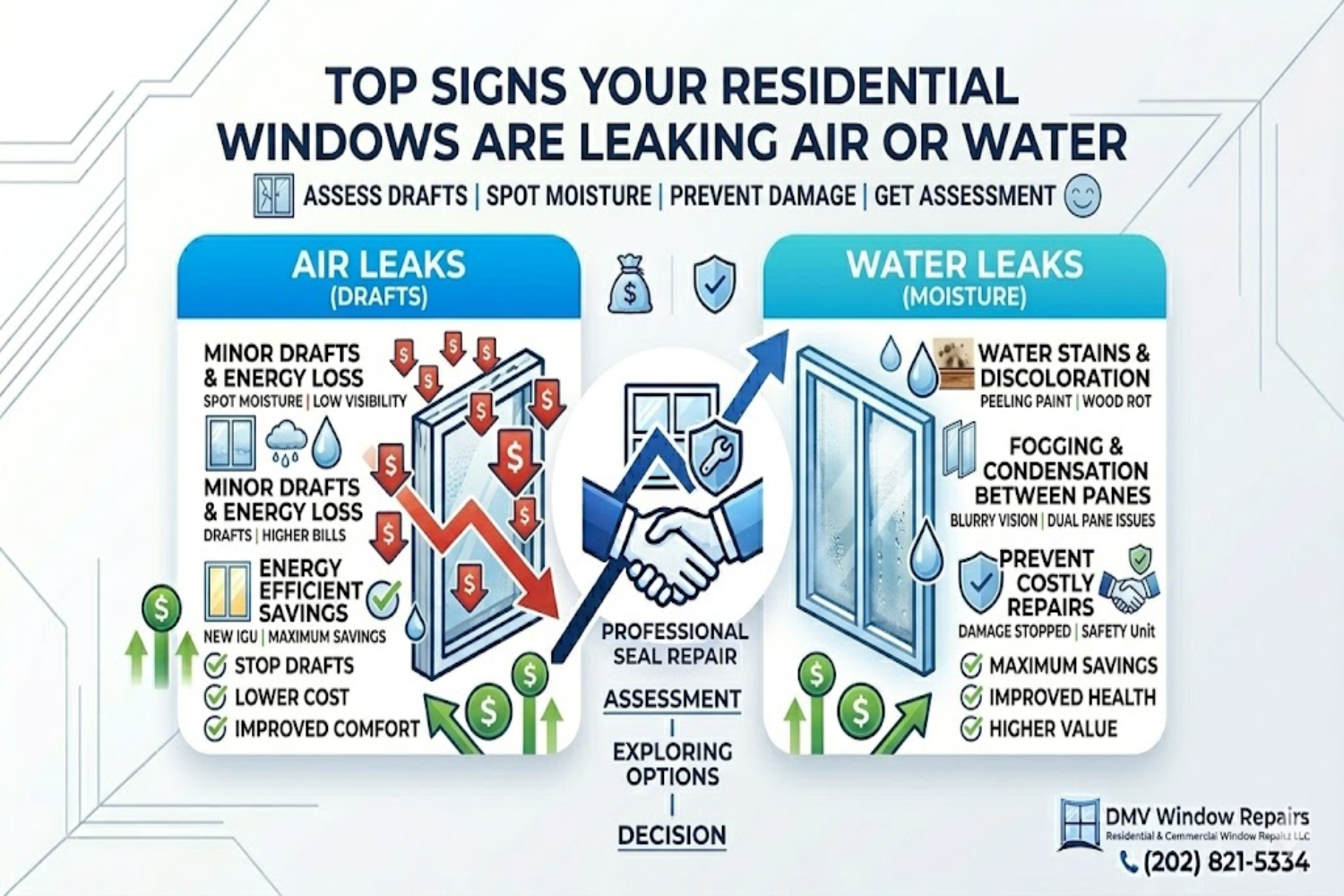
Leaking windows quietly undermine home comfort, inflate energy costs, and invite long-term structural damage that often goes unnoticed until it becomes expensive. Small gaps in seals or caulk allow drafts to carry away heated or cooled air, forcing HVAC systems to work harder and driving up monthly utility bills significantly. Water intrusion during rain creates persistent damp spots that lead to peeling paint, stained drywall, warped wooden sills, mold colonies, musty odors, and eventually hidden rot in framing or sheathing.
Identifying warning signs early lets homeowners apply simple fixes that restore energy efficiency, improve indoor air quality, reduce allergen exposure, block pest entry, and protect property value over many years. Consistent attention to windows prevents small issues from turning into major renovations, water damage claims, or health concerns from prolonged mold exposure. In areas that experience distinct seasonal changes and occasional heavy storms, such as Woodbridge VA, maintaining tight window seals becomes especially valuable for year-round comfort and predictable energy expenses.
Why Detecting Window Leaks Matters for Your Home Comfort and Budget
Early leak detection keeps indoor temperatures stable without frequent thermostat changes. Air infiltration wastes energy continuously while water leaks add uncontrolled moisture that promotes mold, mildew, and wood decay. Prompt action avoids secondary problems like damaged insulation, rotted subflooring, compromised electrical components near windows, and costly interior refinishing.
Well-sealed windows create a quieter, more comfortable living environment with fewer temperature swings and better sound insulation from outside noise. Families notice reduced allergy symptoms, fewer pest intrusions, and noticeably lower heating and cooling costs after addressing leaks. Regular monitoring protects the long-term integrity and market value of the home.
Understanding the Difference Between Air Leaks and Water Leaks
Air leaks allow drafts to flow through gaps in weatherstripping, caulk lines, frame joints, or sash alignment, causing constant temperature loss and energy waste. Water leaks occur primarily during precipitation when exterior seals, flashing, sill pans, or glazing fail to stop rainwater from entering.
Air problems manifest as drafts, cold spots, higher bills, and noise penetration year-round. Water problems produce visible stains, bubbling paint, damp sills, musty smells, and eventual rot after repeated rain exposure. Frequently both issues coexist as seals degrade together, so comprehensive inspection addresses both air and water pathways simultaneously.
Sign 1: Noticeable Drafts and Cold Spots Near Windows
You feel steady cold air movement against your face or hands when standing close to closed windows, especially on windy or sub-freezing days. Rooms show obvious hot-and-cold zones with noticeably cooler areas directly beside windows despite the furnace running. This indicates degraded seals permitting uncontrolled air exchange between indoors and outdoors. Drafts pull pollen, dust, vehicle exhaust, and other pollutants inside, worsening indoor air quality and allergy symptoms over time.
Simple At-Home Tests to Confirm Air Leaks
Hold a lit incense stick, candle, or match near all edges, corners, and meeting rails while watching smoke direction carefully. Sharp bending, swirling, or smoke being drawn outward reveals active leaks. Run your bare hand Woodbridge VA slowly along every perimeter joint feeling for sudden cold currents. Hold a thin strip of facial tissue or lightweight ribbon near gaps—if it moves noticeably then air is escaping or entering. These quick, zero-cost checks confirm problems in minutes.
Long-Term Consequences of Ignoring Persistent Drafts
- Heating and cooling equipment cycles more frequently, increasing wear and raising annual utility costs by 10–25% depending on severity.
- Repeated thermal expansion and contraction stress frames, gradually widening gaps and accelerating component failure.
- Family members experience chronic discomfort with cold feet, drafty sitting areas, and interrupted sleep.
- Dust and allergen infiltration requires more frequent whole-house cleaning.
Sign 2: Visible Water Damage and Interior Stains
Dark streaks, yellow-brown discoloration, or irregular patches appear on interior walls, ceilings, or window trim after rain events. Paint bubbles, blisters, cracks, or peels in concentrated areas immediately around frames. These marks signal repeated moisture penetration that has saturated drywall, plaster, or wood over multiple seasons. Sills often feel damp or soft even on dry days long after storms pass.
Identifying Early Water Intrusion Before Major Damage
Gently press drywall near windows to feel for sponginess or give under light pressure. Notice faint earthy or musty odors specifically around window corners. Inspect exterior caulk, trim, and siding joints for shrinkage, cracking, or separation. Look for white powdery efflorescence on brick or concrete near frames indicating mineral deposits from evaporating water.
Strategies to Prevent Mold and Mildew Development
- Immediately wipe sills and surrounding areas dry after any moisture appears and run exhaust fans or portable fans to speed drying.
- Maintain indoor relative humidity between 40–50% with dehumidifiers during humid months.
- Clean visible mold spots promptly with appropriate EPA-approved solutions while eliminating the ongoing moisture source.
Sign 3: Excessive Interior Condensation on Glass Panes
Heavy fog covers the room-side glass during cool or cold weather, with water droplets running down and pooling on interior sills. Double- or triple-pane windows show persistent cloudiness, haze, or actual moisture trapped between glass layers. This almost always indicates a failed insulated glass unit (IGU) seal allowing outside air and humidity to enter the sealed space.
Common Causes Leading to Interpane Fogging
Factory edge seals break down from years of thermal cycling, ultraviolet exposure, and mechanical stress. Contaminants during manufacturing or installation, edge damage, or extreme temperature swings accelerate seal failure significantly.
Benefits of Replacing Compromised Insulated Glass Units
New IGU replacement restores optical clarity, original thermal performance, noise reduction, and UV protection. Modern replacement units frequently include upgraded low-E coatings, warm-edge spacers, and argon or krypton gas fill for better efficiency than the original.
Sign 4: Cracked, Peeling, or Missing Caulk and Weatherstripping
Exterior caulk shrinks, cracks, splits, or detaches completely leaving exposed gaps. Foam, vinyl, or rubber weatherstripping hardens, compresses permanently, or pulls away from sash and frame surfaces. Paint covering old caulk flakes off revealing powdery or crumbly material underneath.
Thorough Inspection Techniques for Window Seals
Feel along all joints and edges for soft, brittle, powdery, or missing sections. Use strong side lighting or a flashlight at night to spot light leaking through closed windows from inside. Remove loose old material before accurate condition assessment.
Cost-Effective DIY Sealing and Stripping Solutions
Choose premium exterior-grade polyurethane or silicone caulk and high-quality compression or adhesive-backed weatherstripping. Clean surfaces thoroughly, apply in continuous beads, and tool for smooth finish. Mask adjacent areas with painter’s tape for clean lines.
Sign 5: Increased Outside Noise Penetration
Traffic, conversations, lawn equipment, aircraft, or wind sounds become noticeably louder near windows compared to previous years. Distinct whistling or howling occurs through gaps during gusty weather.
How Leaky Seals Compromise Soundproofing
Even small openings create direct sound pathways that bypass the mass and air space of insulated glass. Failed seals in multi-pane units reduce acoustic performance substantially.
Sign 6: Insects and Pests Entering Through Windows
Small ants, spiders, flies, wasps, or earwigs appear regularly on interior window sills or inside frames even when windows remain closed. Spider webs accumulate faster near problematic units.
Effective Sealing Methods to Block Pest Access
Apply continuous high-quality silicone caulk around all exterior perimeter joints. Install or replace tight-fitting insect screens on operable sashes and vents.
Sign 7: Difficult Operation or Sticking Windows
Sashes bind tightly, resist sliding or tilting, or demand excessive force to open and close. Locks misalign, feel loose, or fail to engage properly after years of use.
Practical Adjustments and Lubrication Tips
Remove dirt, old grease, and debris from tracks using a soft brush and vacuum. Apply dry silicone spray or white lithium grease sparingly to hinges, tracks, and operators. Tighten all visible screws on hardware.
Sign 8: Daylight Visible Around Closed Frames
Thin rays or strips of daylight appear around the perimeter of closed windows when viewed from a darkened interior room during bright daytime.
Quick Visual Checks for Gap Detection
Close curtains or blinds completely and observe all edges from different angles on sunny days.
Sign 9: Higher Than Expected Utility Bills
Energy costs rise noticeably from one year to the next without increases in household size, new appliances, or changed usage habits.
Analyzing Bills for Leak-Related Patterns
Compare bills from similar weather months across multiple years to identify unexplained spikes attributable to window performance.
Sign 10: Musty Odors or Mildew Smells Near Windows
A persistent damp, moldy, or earthy smell lingers in rooms near windows even after thorough cleaning and airing out.
Sources and Elimination Approaches
Hidden moisture trapped behind trim, in wall cavities, or under sills supports microbial growth. Seal all entry points, improve local ventilation, and reduce overall indoor humidity.
Overview of Common Signs in a Table
| Sign Number | Key Indicators | Primary Causes | Best Initial Action |
| 1 | Drafts, cold spots | Degraded weatherstripping, gaps | Incense/hand test + replace stripping |
| 2 | Interior stains, peeling paint | Failed caulk, poor sill/flashing | Exterior reseal + sill inspection |
| 3 | Heavy interior/interpane fog | Failed insulated glass seal | Professional IGU replacement |
| 4 | Cracked/peeling/missing caulk | Age, UV exposure, weathering | Annual recaulking of all joints |
| 5 | Louder outside noise | Seal & gap degradation | Add acoustic seals & weatherstripping |
| 6 | Insects inside near windows | Small perimeter cracks | Full exterior sealing + tight screens |
| 7 | Sticking, hard-to-operate sashes | Dirt buildup, misalignment | Clean tracks, lubricate, adjust hardware |
| 8 | Visible daylight around edges | Large unsealed gaps | Immediate perimeter caulking |
| 9 | Unexpected utility bill increases | Multiple combined leaks | Professional blower-door/energy audit |
| 10 | Musty/mildew odors near windows | Hidden ongoing moisture | Ventilation boost + source sealing |
When to Call a Professional Window Contractor
If multiple signs appear together (drafts + interior stains + condensation between panes + rising bills), the problem likely extends beyond simple surface sealing. Extensive water damage behind walls, rotted wooden sills, failed flashing, bowed frames, or leaking insulated glass units usually require experienced technicians. Professionals use specialized tools like moisture meters, infrared cameras, and blower-door tests to locate hidden issues accurately. In many cases they identify improper original installation or design flaws that DIY methods cannot fully resolve. Getting expert help early prevents small leaks from causing thousands in secondary damage to drywall, flooring, insulation, and framing.
Benefits of Upgrading to Modern Energy-Efficient Windows
Replacing older leaky windows with today’s ENERGY STAR-rated models delivers multiple long-term advantages beyond stopping current leaks. New windows feature low-E coatings, argon-filled panes, warm-edge spacers, stronger frames, and superior weatherstripping that reduce heat transfer dramatically. Homeowners typically see 10–30% savings on annual heating and cooling costs depending on climate and original window condition. Modern units also provide better noise reduction, stronger security, easier operation, and enhanced UV protection that helps furniture and flooring last longer. Many manufacturers offer transferable warranties of 20 years or lifetime on glass seals and hardware. The combination of energy savings, comfort improvement, and increased resale value frequently makes replacement pay for itself within 8–15 years.
Conclusion
Window leaks almost never improve on their own and nearly always worsen with each passing season of heat, cold, rain, wind, and UV exposure. Minor drafts evolve into major energy waste, condensation turns into permanent fogging, small stains grow into widespread mold and rot, and simple seal failures become full structural repairs. The encouraging reality is that most early-stage issues respond extremely well to affordable DIY maintenance or targeted professional intervention.
Twice-yearly inspections, timely caulk renewal, weatherstripping replacement, track cleaning, and prompt attention to any new symptom keep windows performing like new for decades. Proactive homeowners enjoy dramatically lower utility bills, healthier indoor air, fewer pest problems, superior noise control, and significantly extended window lifespan. Taking action now saves thousands of dollars in future repairs and preserves both comfort and property value for years to come.
FAQs:
How can I detect air leaks around windows using only items I already have at home?
Feel along all edges and corners with your bare hand on a cold or windy day to sense moving air. Light a match, lighter, or incense stick and watch if smoke gets pulled toward or blown away from the frame. Hold a thin piece of tissue paper or plastic bag near gaps—if it flutters or moves noticeably a leak is present. These simple household tests reliably identify problem areas in just a few minutes.
What health issues can develop from leaving window leaks unrepaired for years?
Ongoing moisture promotes mold and mildew colonies that release spores triggering allergies, asthma attacks, chronic sinus congestion, coughing, and eye irritation. Infiltrating dust and pollen through air gaps further degrade indoor air quality. Some occupants experience persistent headaches, fatigue, skin rashes, or worsened respiratory conditions until all moisture sources and entry points are properly sealed.
Which window leak problems can usually be fixed by homeowners themselves?
Most homeowners successfully handle recaulking exterior joints, replacing worn weatherstripping, cleaning and lubricating tracks, tightening hardware, installing compression seals, and applying temporary foam tape. These tasks require only basic tools and materials available at any hardware store. More complex issues like rotted sills, failed insulated glass, improper flashing, or extensive interior water damage almost always need professional expertise.
At what point should I replace my windows rather than keep repairing them?
Consider full replacement when windows are 15–25+ years old and show several symptoms simultaneously—persistent drafts, inter-pane condensation, interior stains, difficult operation, and high energy bills. Single-pane or early double-pane units rarely regain good performance through repairs. Modern high-efficiency replacements typically deliver enough utility savings to recover the investment within 7–12 years while greatly improving comfort and curb appeal.
How frequently should I check my windows for leaks and wear?
Perform a detailed inspection twice each year—once in spring before summer storms and again in fall before winter arrives. Check immediately after any severe weather event that includes high winds, heavy rain, hail, or extreme temperature swings. Schedule a professional evaluation every 2–3 years to catch subtle issues that may not be obvious during homeowner checks.
Do window leaks increase summer cooling costs just as much as winter heating costs?
Yes—air leaks allow cool, expensive-to-produce conditioned air to escape while letting hot, humid outdoor air infiltrate, forcing air conditioners to run longer and harder. In humid climates the extra moisture load makes dehumidification more difficult and increases perceived stuffiness. Many households see roughly similar percentage increases in summer cooling bills when windows leak badly.
Why do even some relatively new windows develop leaks prematurely?
Premature failure often stems from improper installation—insufficient flashing, inadequate caulking, poor shimming, missing drip caps, or incorrect sill pan setup. Lower-quality materials, manufacturing defects, edge seal contamination, or unusually harsh local weather can also shorten service life dramatically. Choosing reputable installers and manufacturers helps avoid many early problems.
How do I tell normal condensation apart from a serious seal failure?
Ordinary condensation forms only on the interior glass surface when indoor humidity is high and the glass is cold. Persistent fog, haze, cloudiness, or visible water droplets trapped between the panes of double- or triple-glazed units almost always indicate a broken seal allowing air and moisture to enter the insulated space. This requires insulated glass unit replacement.
Can small window leaks really make a measurable difference in my monthly energy bill?
Even modest leaks around several windows add up significantly because conditioned air escapes continuously 24 hours a day. Studies show poorly sealed windows can increase heating and cooling costs by 10–30% depending on climate, house size, and number of affected units. Sealing those same leaks often produces one of the highest returns on investment among home efficiency improvements.
What single habit provides the biggest long-term protection against recurring window leaks?
Establish a consistent twice-yearly maintenance routine: thoroughly clean frames, sills, and tracks; inspect all caulk and weatherstripping for cracks or detachment; reapply fresh exterior-grade caulk where needed; lubricate moving parts; verify proper drainage around exterior sills; and address any new symptoms immediately. This disciplined approach dramatically reduces leak frequency, severity, and repair costs over the full life of the windows.