
Window screens serve as essential barriers that allow fresh air circulation while keeping insects, dust, pollen, debris, and small animals outside your home. When screens become damaged, torn, sagging, corroded, or improperly fitted, they lose effectiveness and can create bigger problems like pest infestations, higher allergy symptoms, reduced airflow, and even security vulnerabilities. Many homeowners ignore early warning signs until insects invade living spaces or energy efficiency suffers noticeably.
Professional assessment becomes necessary when simple DIY fixes no longer restore performance or when damage affects structural integrity of the frame itself. Recognizing these signs early prevents minor issues from escalating into costly full replacements or interior pest control treatments. Regular inspection of all window screens—especially during seasonal changes—helps catch problems before they worsen. In humid or variable climates, screens face accelerated wear from moisture, temperature swings, and UV exposure. Timely professional repair or replacement restores protection, improves ventilation, enhances curb appeal, and maintains home comfort year-round.
Visible Tears, Holes, or Rips in the Mesh
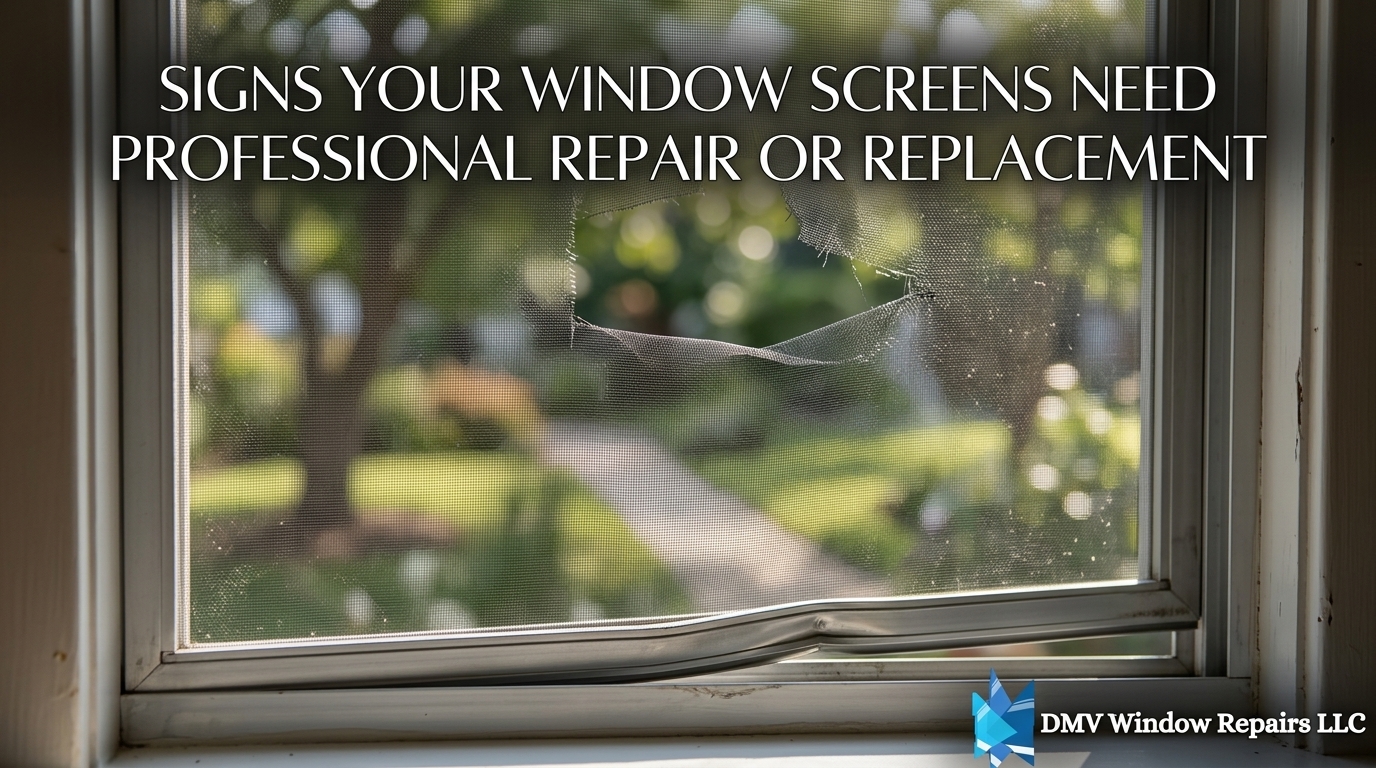
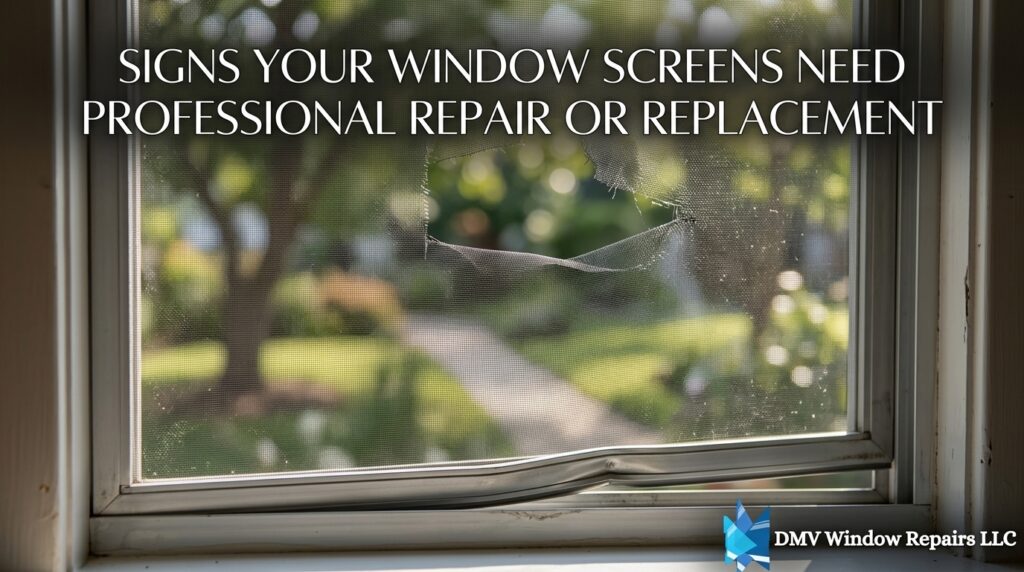
The most obvious sign that window screens require attention is any tear, hole, or rip in the fiberglass or aluminum mesh fabric. Even small punctures from pets, branches, or accidental impacts allow insects to enter freely and let dust accumulate indoors. Larger tears compromise the entire screen’s integrity, causing sagging sections that no longer sit flush against the frame. Insects exploit these openings immediately, leading to noticeable bug presence inside rooms.
DIY patch kits provide temporary solutions but rarely match original tension or appearance. Professional repair involves removing damaged sections and re-screening with proper mesh tension for seamless results. Replacement becomes necessary when multiple tears exist or when mesh has become brittle from age and UV degradation.
Pet Damage and Claw Marks
Cats, dogs, and other pets frequently claw or scratch at screens trying to reach birds, squirrels, or outdoor stimuli. These repeated actions create irregular holes and stretched weak spots that enlarge over time. Fiberglass mesh tears more easily than aluminum but costs less to replace when damaged. Professional technicians reinforce repaired areas or install pet-resistant heavier-gauge mesh for long-term durability. Ignoring pet damage allows insects easy access and reduces overall screen lifespan significantly.
Weather-Related Tears and Brittleness
High winds, hail, falling branches, or heavy storms often cause sudden tears or complete blow-outs in window screens. Prolonged sun exposure makes fiberglass mesh brittle and prone to cracking with minimal contact. Aluminum screens dent or bend rather than tear but lose tension when deformed. Professional evaluation determines whether spot repairs suffice or if full re-screening or frame replacement offers better value. Weather damage frequently affects multiple screens simultaneously, making professional service more cost-effective.
Sagging, Bulging, or Loose Mesh
Screens that sag in the middle, bulge outward, or appear wavy indicate loss of tension in the mesh or frame deformation. Gravity, age, heat expansion, and repeated opening/closing cycles gradually stretch fiberglass mesh beyond its elastic limit. Loose mesh allows gaps at edges where insects crawl through easily. Sagging reduces airflow and makes screens look neglected from both inside and outside. Professional re-tensioning restores tight, flat appearance and proper insect barrier function. In cases of severe sagging, frame replacement prevents recurring problems.
Frame Warping and Misalignment
- Wooden or vinyl frames warp from moisture exposure, causing mesh to pull unevenly and create permanent bulges.
- Aluminum frames bend from impact or improper installation pressure.
- Warped frames prevent screens from seating properly in window channels or tracks.
- Misaligned corners create gaps that compromise protection.
- Professionals use specialized tools to straighten frames or fabricate new ones for perfect fit.
- Ignoring frame issues leads to repeated mesh stretching and eventual complete failure.
Corner Separation and Frame Joint Failure
Screen corners often separate first due to repeated stress during removal and reinstallation. Loose corner joints allow frames to twist and mesh to loosen progressively. Separated corners create visible gaps and reduce structural stability. Professional corner repair or reinforcement restores square alignment and tension. Severe joint failure usually requires full frame replacement for reliable long-term performance.
Corrosion, Rust, or Discoloration on Frames
Aluminum frames develop white powdery oxidation (aluminum corrosion) when protective coatings wear away from weather exposure. Steel or low-quality metal frames rust, creating brown stains that transfer to siding or window sills. Corroded frames weaken over time and eventually crack or break during normal handling. Discoloration signals advanced deterioration that affects both appearance and function. Professional refinishing or replacement with corrosion-resistant materials prevents further damage and restores clean appearance. Continuing use of corroded frames risks complete failure and costly interior repairs.
Rust Stains on Surrounding Surfaces
Rust from deteriorating frames drips onto window sills, siding, or concrete below, leaving permanent stains that require cleaning or repainting. These stains indicate active corrosion that will worsen without intervention. Professionals treat affected areas and replace compromised frames to stop the cycle. Ignoring rust stains allows structural damage to spread to window frames and walls.
Powder Coating Failure and Fading
Factory-applied powder coatings on aluminum frames fade, chip, or peel after years of UV and moisture exposure. Exposed bare metal oxidizes quickly once coating fails. Faded or peeling frames look neglected and reduce curb appeal noticeably. Professional recoating or replacement with durable finishes restores original appearance and protection. Modern powder coatings and anodized finishes resist fading far longer than older versions.
Insect Entry and Increased Pest Activity
The clearest functional sign that screens need attention is a sudden or persistent increase in indoor insects—flies, mosquitoes, ants, spiders, or wasps. Even tiny holes or gaps allow easy entry for small pests. Screens with damaged mesh or poor fit cannot block determined insects effectively. Professional inspection identifies all entry points and restores complete barrier protection. Pest control treatments become unnecessary expenses when screens function properly again.
Seasonal Pest Surges After Screen Damage
Spring and summer bring insect population booms that exploit weakened screens immediately. Wasps build nests in sheltered gaps created by loose or torn mesh. Ants trail through edge separations seeking indoor food sources. Professional repair timed before peak seasons prevents infestations entirely. Replacement with finer mesh or pet-resistant options addresses specific pest pressures effectively.
Allergy and Respiratory Issues Worsening
Damaged screens allow more pollen, mold spores, and dust to enter living spaces freely. Increased airborne allergens trigger more frequent sneezing, itchy eyes, and respiratory irritation. Families with allergies notice symptoms worsening when screens fail to filter properly. Professional re-screening with tighter mesh reduces allergen infiltration significantly. Improved air quality becomes one of the most appreciated benefits of timely repair or replacement.
Table of Common Signs and Recommended Actions
| Sign / Symptom | Severity Level | Typical Repair Cost Range | Replacement Cost Range | When to Repair vs Replace | Urgency Level | Potential Consequences if Ignored | Professional Benefit |
| Small tears/holes in mesh | Low-Medium | $75–$250 per screen | $150–$400 per screen | Repair unless multiple | Medium | Insect entry, gradual enlargement | Precise re-tensioning |
| Large rips or pet claw damage | Medium-High | $150–$400 per screen | $200–$500 per screen | Replace if widespread | High | Major pest access | Pet-resistant mesh |
| Sagging/bulging/loose mesh | Medium | $100–$300 per screen | $200–$450 per screen | Repair if frame OK | Medium-High | Reduced airflow, gaps | Frame realignment |
| Frame warping or corner separation | High | $200–$600 per screen | $300–$700 per screen | Replace in most cases | High | Permanent mesh failure | New square frames |
| Rust/corrosion on metal frames | High | $150–$500 (refinish) | $250–$600 per screen | Replace usually | High | Stains, structural weakness | Corrosion-resistant |
| Increased indoor insects | High | $100–$400 (full service) | $200–$600 per screen | Repair or replace | Very High | Infestations, allergies | Complete sealing |
| Visible rust stains on sill/siding | Very High | $200–$700 (clean + repair) | $300–$800 per screen | Replace frame | Very High | Permanent staining, rot | Stain removal + new |
| Mesh discoloration/brittleness | Medium-High | $100–$350 per screen | $200–$500 per screen | Replace mesh | Medium-High | Cracking, reduced lifespan | UV-resistant mesh |
| Gaps at edges when closed | Medium | $75–$250 per screen | $200–$450 per screen | Repair fit | Medium | Insect/dust entry | Precise adjustment |
| Multiple screens showing same issue | High | $500–$2,000 total | $1,500–$5,000 total | Replace all usually | High | Systemic wear | Uniform quality |
Professional Inspection Benefits
Certified technicians spot subtle issues like micro-tears, early corrosion, or frame stress that untrained eyes miss. They measure mesh tension accurately and check frame squareness with precision tools. Professionals recommend pet-resistant, finer mesh, or solar screens based on specific household needs. They handle removal and reinstallation safely without damaging windows or frames. Warranty-backed repairs provide peace of mind for future issues. Comprehensive service often includes cleaning tracks and lubricating related hardware.
Woodbridge VA homeowners frequently notice screen damage from seasonal storms and pollen-heavy springs.
Woodbridge VA residents benefit from professional screen services that address local humidity and insect pressures effectively.
Woodbridge VA properties maintain better indoor air quality when damaged screens receive prompt professional attention.
Woodbridge VA continues to see high demand for durable, pet-resistant screen upgrades and repairs.
Long-Term Value of Timely Action
Addressing screen problems early avoids escalation into pest control expenses, allergy medication costs, or complete window frame repairs from prolonged exposure. Professional repairs restore factory-tight performance and appearance quickly. Full replacement with modern high-quality mesh extends protection for 10–20+ years. Upgraded screens with better UV resistance and tighter weaves improve energy efficiency slightly by reducing solar heat gain. Well-maintained screens enhance curb appeal and signal overall home care to visitors and potential buyers. The modest investment in professional service delivers substantial returns in comfort, health, and property protection.
Conclusion
Recognizing signs that window screens need professional repair or replacement protects your home from insects, allergens, dust, and unnecessary energy loss while preserving clean aesthetics. Visible tears, sagging mesh, corroded frames, increased pest activity, and edge gaps serve as clear indicators that DIY patches no longer suffice. Professional intervention ensures proper tension, material compatibility, precise fit, and long-lasting results that simple fixes cannot achieve.
Timely action prevents minor damage from becoming expensive structural or health-related problems. Whether repairing individual screens or upgrading multiple units, expert service restores full protective function and visual appeal effectively. Regular professional maintenance keeps window screens performing optimally through changing seasons and daily use for many years ahead.
Frequently Asked Questions
- How can I tell if a small tear in my window screen needs professional repair?
Even tiny tears allow insects and pollen to enter freely over time. If the hole is larger than a pencil eraser or shows fraying edges, professional re-screening prevents enlargement. DIY patches rarely maintain tension or appearance long-term. Early professional attention saves money and hassle.
- Is it worth repairing old aluminum screens or should I replace them?
Repair makes sense if only mesh is damaged and frames remain straight and corrosion-free. Professional re-meshing with modern fiberglass or pet-resistant material costs far less than full replacement. Severely corroded or bent frames usually justify complete new screens.
- What are the signs that my screen frames are corroding and need replacement?
White powdery oxidation on aluminum, brown rust stains on steel, or visible pitting/cracking indicate advanced corrosion. Rust stains on sills or siding confirm active deterioration. Professional replacement with corrosion-resistant materials stops further damage and staining.
- How much does professional window screen repair usually cost?
Standard screen re-meshing ranges $75–$250 per window depending on size and mesh type. Pet-resistant or solar mesh adds $50–$150 per screen. Multiple screens often qualify for volume discounts. Full frame replacement costs $150–$500 per window typically.
- Can damaged screens affect my indoor air quality or allergies?
Yes—torn or loose screens allow more pollen, dust, mold spores, and pet dander indoors. Increased allergens trigger sneezing, itchy eyes, and respiratory issues. Professional repair with tighter mesh reduces airborne irritants noticeably.
- What makes pet-resistant screens different from standard ones?
Pet-resistant screens use thicker, tightly woven polyester or heavy-gauge aluminum mesh that withstands claws and paws. They maintain tension better against scratching pressure. Professional installation ensures proper fit to prevent gaps pets exploit.
- How often should I have window screens professionally inspected?
Annual inspection catches early tears, corrosion, or tension loss before major damage occurs. Spring checks prepare for summer insect season. Fall inspections address storm damage and prepare for winter. Consistent checks extend overall lifespan dramatically.
- Is it better to repair or replace all screens at once when multiple show damage?
Replacing or re-screening all at once ensures uniform appearance, performance, and often volume pricing discounts. Mixed old/new screens look inconsistent and may have varying fit quality. Professionals coordinate matching materials for seamless results.
- Do professional screen repairs come with any warranty?
Most reputable companies offer 1–10 year warranties on workmanship and materials. Mesh warranties typically cover 5–10 years against tearing or stretching. Warranty terms vary—always request written documentation. Coverage provides protection against premature failure.
- How can I prevent future window screen damage after professional repair?
Install pet guards or heavier mesh where animals scratch. Trim nearby branches to avoid wind damage. Clean screens gently twice yearly to remove debris buildup. Avoid leaning objects against screens. Professional maintenance visits every 1–2 years catch emerging issues early.
Visit our DMV Window Repairs LLC blog to explore our residential and commercial glass services for customers in Woodbridge, VA.